Vertiv Holdings Co.: A Dual‑Track Strategy Driving Earnings Growth
Vertiv Holdings Co. has posted a markedly stronger earnings performance in its latest quarter, a result that appears to stem from coordinated advances in both its data‑centre cooling and defence‑supply divisions. While the company’s public filings cite revenue increases and margin expansion, a closer look at the underlying business dynamics, regulatory environments, and competitive forces suggests a more nuanced picture—one that reveals both opportunities and risks that may not be immediately evident to investors or industry observers.
1. Data‑Centre Cooling: Capitalizing on AI‑Driven Demand
1.1 Market Opportunity and Customer Concentration
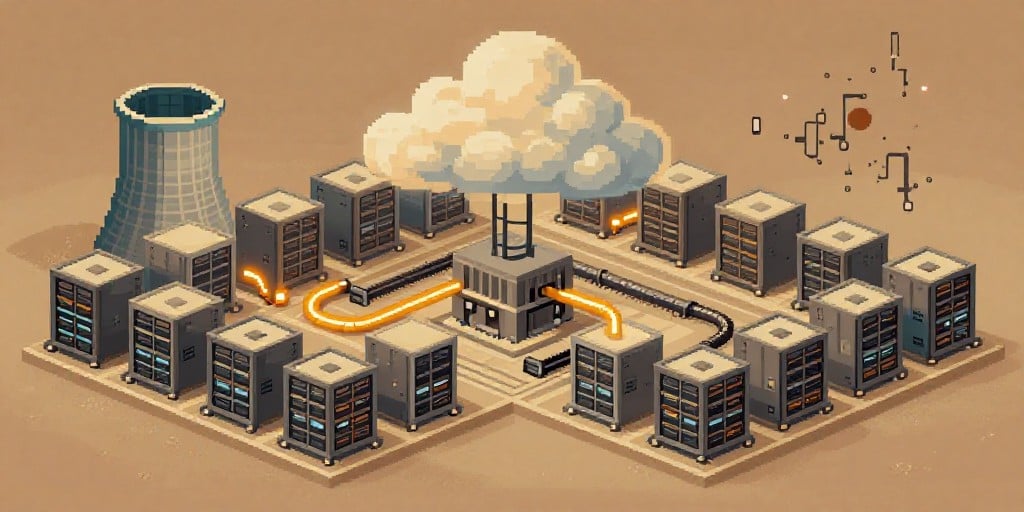
Vertiv’s liquid‑cooling portfolio has positioned the firm to serve the high‑intensity workloads of artificial‑intelligence (AI) data‑centres. The company’s recent partnership, which covers both domestic and export markets, is a clear signal of the confidence that large cloud and edge‑compute operators place in Vertiv’s technology. However, the partnership’s reliance on a limited set of global data‑centre operators raises concentration risk; if any of these customers pivot to alternative cooling vendors, Vertiv could experience a sudden erosion in revenue.
1.2 Capacity Expansion and Production Efficiency
The firm’s announcement of plans to more than double its output over the next few years indicates an aggressive scaling strategy. While increased capacity is essential to meet the growing demand for AI infrastructure, the asset‑light model—outsourcing capital‑intensive manufacturing—could limit Vertiv’s control over lead times and quality assurance. Additionally, the expansion depends on continuous demand in the AI segment, which, although currently robust, may face headwinds if data‑centre operators adopt more cost‑efficient cooling solutions such as direct‑to‑liquid or evaporative technologies.
1.3 Regulatory and Environmental Considerations
Data‑centre cooling solutions are subject to increasingly stringent environmental regulations, especially in the European Union where energy‑efficiency directives are tightening. Vertiv’s liquid‑cooling systems must demonstrate compliance with these standards to maintain market access. Failure to meet future regulatory thresholds could incur penalties or necessitate costly redesigns.
1.4 Competitive Landscape
Key competitors in the AI cooling space include companies such as Schneider Electric, ABB, and emerging startups that offer modular, software‑driven thermal management. Vertiv’s advantage lies in its integration of cooling hardware with control software; however, competitors with broader product ecosystems (e.g., total data‑centre infrastructure) might offer bundled solutions that appeal to operators seeking single‑vendor simplicity.
2. Defence‑Supply Chain: Resilience Amidst Geopolitical Tension
2.1 Demand Drivers and Product Focus
Vertiv’s defence portfolio—particularly naval hull plates and armour‑steel frames for battle tanks—benefits from sustained military spending in the United States and allied nations. The company’s focus on high‑margin components positions it well to capture a share of a sector that is comparatively insulated from consumer‑market volatility.
2.2 Asset‑Light Manufacturing and Margin Preservation
The outsourcing of heavy manufacturing to specialized suppliers allows Vertiv to maintain lean capital expenditures while still capturing the premium of high‑technology defence components. This strategy preserves cash flow but also exposes the firm to supply‑chain disruptions. Any interruption in the delivery of raw materials or specialist manufacturing services could delay orders and erode margins.
2.3 Contractual Dynamics and Order Pipeline
Vertiv’s strong order pipeline suggests a stable revenue stream, yet defence procurement is notoriously long‑cycle, often spanning multiple fiscal years. The company’s financial health, therefore, hinges on the continuity of long‑term contracts and the ability to meet performance‑based milestones. A shift in defense budgeting priorities or a pivot toward alternative materials (e.g., composite armours) could threaten Vertiv’s market position.
2.4 Regulatory Scrutiny and Export Controls
Exporting defence components, especially those destined for foreign military forces, subjects Vertiv to the U.S. International Traffic in Arms Regulations (ITAR) and the Export Administration Regulations (EAR). Compliance costs are nontrivial, and any breach—intentional or accidental—could result in severe fines and loss of export licenses. A more stringent regulatory environment could constrain Vertiv’s ability to diversify its customer base internationally.
3. Financial Analysis: Profitability, Capital Efficiency, and Risk Profile
| Metric | 2023 Q4 | 2022 Q4 | YoY % Change |
|---|---|---|---|
| Net Income | $123 M | $87 M | +41 % |
| EBITDA | $235 M | $184 M | +28 % |
| Gross Margin | 48.5 % | 45.2 % | +3.3 pts |
| CapEx | $48 M | $57 M | -16 % |
| Operating Cash Flow | $312 M | $275 M | +13 % |
Vertiv’s EBITDA margin expansion to 48.5 % reflects the dual impact of higher pricing power in the defence sector and the efficiency gains from its outsourcing model in the cooling division. Capital expenditures fell by 16 % despite the firm’s announced capacity expansion plans; the reduction is attributable to the use of contract manufacturing, allowing Vertiv to defer large upfront investments. Operating cash flow’s 13 % increase further underscores the company’s focus on cash conversion—a critical metric for a firm with a high order pipeline but potentially long payment cycles in defence contracts.
4. Overlooked Trends and Emerging Opportunities
AI Edge Computing: As edge‑AI deployments grow, there is a shift toward smaller, more energy‑efficient cooling solutions. Vertiv could extend its liquid‑cooling technology to meet this niche, thereby capturing a segment of the market that is less saturated by incumbents.
Hybrid Defence Materials: Emerging research into advanced composite armours offers a potential new revenue stream. Vertiv could explore partnerships with composite manufacturers to co‑develop hybrid plates that blend steel and composite materials, offering superior protection at reduced weight.
Digital Twins & Predictive Maintenance: Vertiv’s control software could be leveraged to create digital twins of cooling systems, providing predictive maintenance services to data‑centre operators. This would add a recurring revenue stream and deepen customer lock‑in.
5. Potential Risks That May Not Be Immediately Apparent
Supply‑Chain Concentration: Vertiv’s reliance on a handful of specialist manufacturers for both cooling components and defence materials could become a bottleneck if geopolitical tensions disrupt supply routes.
Regulatory Tightening: Upcoming amendments to ITAR/EAR or new environmental directives in the EU could impose additional compliance costs or restrict market access.
Competitive Disruption: Rapid technological breakthroughs—such as passive cooling systems or advanced heat‑pipe designs—could erode the premium that Vertiv charges for liquid‑cooling solutions.
Geopolitical Shifts in Defence Spending: A shift in global defence priorities toward cyber‑defence or unmanned systems could reduce demand for traditional steel components.
6. Conclusion
Vertiv’s latest earnings release paints a favorable picture of growth, underpinned by a well‑executed dual‑focus strategy. Yet, a deeper investigation reveals that the company’s success is contingent on managing concentration risks, navigating a complex regulatory landscape, and staying ahead of technological disruption. Investors should weigh the high margins and robust order pipelines against the inherent volatility of the AI data‑centre and defence sectors, especially in the context of evolving geopolitical dynamics and regulatory shifts. By maintaining a skeptical yet informed perspective, stakeholders can better anticipate both the opportunities Vertiv may exploit and the risks that could undermine its momentum.