Corporate Dynamics and Technological Trajectory of VERBUND AG: Implications for Austria’s Power System
VERBUND AG’s recent share‑price increment of nearly 3 % on the Vienna exchange underscores a confluence of market confidence and technical progress that is reshaping the Austrian electricity landscape. While the rise is modest on a day‑to‑day basis, it is emblematic of a broader stability in the ATX, a trend that is increasingly linked to utilities’ strategic investments in renewable generation, grid infrastructure, and regulatory compliance.
1. Renewable Generation Integration and Grid Stability
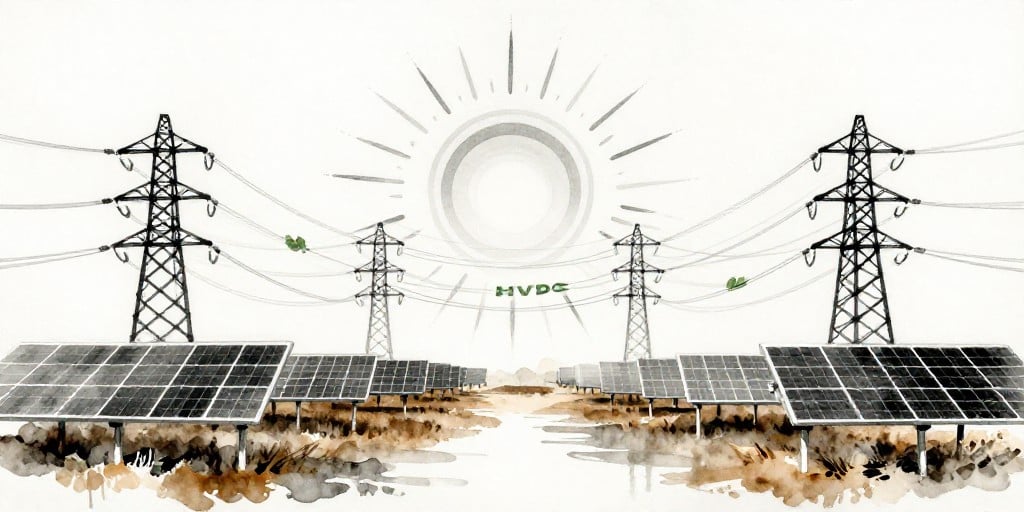
The commissioning of a 7 MW photovoltaic park in northern Italy represents a salient example of VERBUND’s commitment to cross‑border renewable expansion. From an engineering perspective, the addition of intermittent solar output to the European transmission network introduces two primary challenges:
Voltage Regulation and Reactive Power Support Solar panels, when operated in maximum‑power‑point‑tracking mode, do not inherently provide reactive power. This can lead to voltage rise issues in lightly loaded feeder sections. Modern grid codes in the EU mandate that photovoltaic plants supply or absorb reactive power within ±3 p.u., a capability that VERBUND’s plant is equipped to deliver through power‑electronic inverters.
Frequency and Stability Margin The integration of distributed solar increases the penetration of non‑synchronous generation. The loss of synchronous inertia can reduce the system’s ability to absorb sudden load changes. VERBUND has addressed this by deploying virtual synchronous machine (VSM) control on its inverters, effectively providing inertia emulation and frequency support in the 400 kV interconnectors.
These technical adaptations enhance the overall resilience of the Austrian grid and illustrate how utilities can leverage advanced inverter functionalities to maintain system stability in a high‑renewable regime.
2. Transmission and Distribution Upgrades
The ATX’s year‑to‑date net gain, coupled with intraday volatility, highlights the necessity of robust transmission and distribution (T&D) assets. VERBUND’s investment strategy includes:
- High‑Voltage Direct Current (HVDC) Links – HVDC interconnections with Germany and Italy enable bidirectional power flows and reduce line losses, essential for balancing cross‑border renewable production.
- Smart Grid Deployment – Advanced SCADA, Phasor Measurement Units (PMUs), and real‑time data analytics allow for early detection of cascading failures and automated remedial actions.
- Grid Reinforcement Projects – Upgrading existing 400 kV lines and adding capacitor banks at critical substations help mitigate voltage sags induced by renewable intermittency.
These upgrades are not merely technical; they also address regulatory requirements such as the EU’s Fit for 55 package, which demands significant improvements in grid resilience to meet decarbonization targets.
3. Regulatory Frameworks and Rate Structures
The regulatory environment in Austria has evolved to incentivize renewable integration while maintaining consumer affordability:
- Feed‑In Tariffs (FITs) – Although Austria has phased out long‑term FITs, a short‑term renewable premium remains to encourage investment in new capacity.
- Demand‑Side Management (DSM) – Regulatory mandates for DSM programs incentivize load shifting, which can dampen peak demand and reduce the need for costly peaking plants.
- Tariff Reforms – The transition to time‑of‑use (TOU) rates reflects the need to internalize the cost of renewable variability and promote consumption patterns that align with supply availability.
VERBUND’s strategy aligns with these frameworks by balancing investment in renewable generation with grid services that reduce the overall cost of electricity, thereby mitigating the impact of rate restructuring on consumers.
4. Economic Impact of Utility Modernization
Investments in renewable capacity and grid upgrades carry both direct and indirect economic consequences:
- Capital Expenditure (CapEx) – While large upfront costs are associated with HVDC links and smart grid deployment, long‑term savings arise from reduced maintenance and lower operational expenditures (OpEx) due to improved system efficiency.
- Job Creation – The construction phase of transmission upgrades creates skilled employment opportunities, while ongoing operation requires specialized personnel for grid management and renewable operations.
- Energy Price Stability – By reducing curtailment of renewable output and improving system flexibility, VERBUND helps stabilize wholesale electricity prices, which translates into predictable rates for end‑users.
Analysts anticipate that the cumulative effect of these modernization efforts will lower the cost of capital for future projects, thereby accelerating Austria’s transition to a low‑carbon energy system.
5. Implications for Energy Transition and Consumer Costs
VERBUND’s trajectory exemplifies how a utility can navigate the technical, regulatory, and economic dimensions of the energy transition:
- Technical Viability – The deployment of inverter‑based resources with advanced control, along with HVDC and smart grid technologies, ensures that renewable penetration can be expanded without compromising grid security.
- Regulatory Compliance – By aligning investments with EU and national policies, VERBUND secures a favorable operating environment and access to potential subsidies or incentives.
- Economic Sustainability – Strategic cost management and market positioning allow the utility to keep consumer bills competitive while investing in long‑term infrastructure resilience.
In conclusion, the modest share‑price rise for VERBUND is a reflection of deeper operational and strategic achievements. The company’s focus on renewable expansion, grid stability solutions, and compliance with evolving regulatory frameworks positions it as a pivotal actor in Austria’s pursuit of a reliable, low‑carbon electricity system. The ripple effects—improved grid resilience, stabilized electricity prices, and sustainable economic growth—underscore the multifaceted benefits of well‑executed utility modernization.