Verbund AG Prepares for 79th Ordinary General Meeting Amid Ongoing Grid Modernization Efforts
Verbund AG, a state‑owned energy provider listed on the Wiener Börse, will conduct its 79th ordinary general meeting on 21 April 2026 at the Wiener Stadthalle. The agenda includes a comprehensive review of the 2025 annual accounts and management report, allocation of retained earnings, appointment of auditors for 2026, remuneration reports for board members, and the election of supervisory board members. All related documents, including the consolidated financial statements and corporate governance reports, will be published on the company’s website by 31 March 2026 to comply with Austrian securities regulations.
Market Context
In mid‑day trading on the ATX and ATX Prime indices, Verbund shares exhibited modest volatility, with price movements remaining within a narrow percentage range. The company’s shares occupy a middle‑tier position within the index’s performance spectrum and contribute noticeably to the ATX’s overall market capitalization. Investor confidence is sustained through routine disclosures and the scheduled shareholder meetings that provide a platform for governance oversight and strategic dialogue.
Strategic Implications for Power Generation and Grid Stability
Renewable Energy Integration Challenges
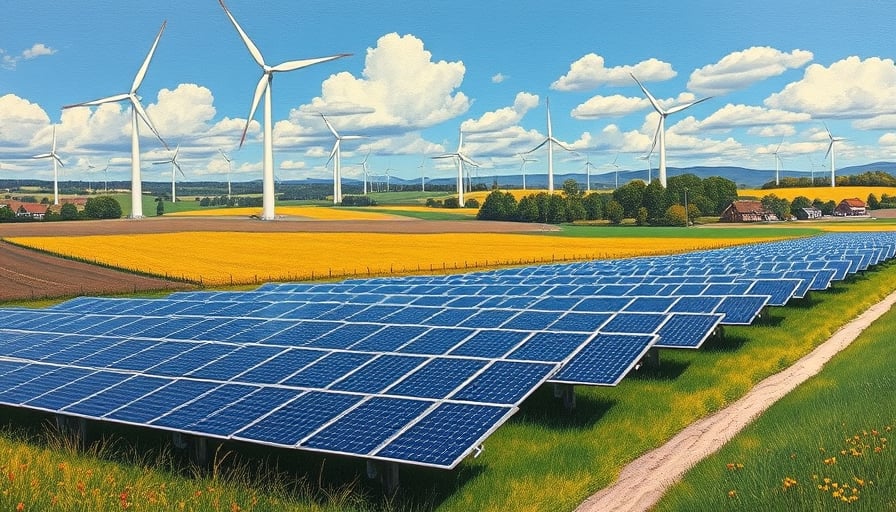
Verbund’s portfolio is heavily weighted toward hydroelectric generation, yet the company is actively expanding wind, solar, and energy storage capacities to meet Austria’s renewable targets. The integration of intermittent renewable sources imposes significant challenges on grid stability:
| Challenge | Technical Impact | Mitigation Strategy |
|---|---|---|
| Frequency Regulation | Variable generation causes frequency deviations, requiring fast-acting reserves | Deployment of battery storage and demand‑response programs |
| Voltage Support | Wind farms can cause voltage sag at high penetration levels | Implementation of static VAR compensators and smart inverters |
| Transmission Congestion | Increased interconnection flows strain existing corridors | Upgrades of high‑voltage corridors and dynamic line rating |
The company’s ongoing investment in grid infrastructure—including the modernization of substations and the deployment of digital twins for real‑time monitoring—aims to enhance the resilience of the transmission network against these disturbances.
Infrastructure Investment Requirements
Projected capital expenditures for 2026‑2030 indicate a need for €8–10 billion in grid upgrades, covering:
- High‑Voltage Transmission (HVTL) Expansion: Extending 400 kV lines to accommodate cross‑border interconnectors and offshore wind projects.
- Substation Automation: Introducing IEC 61850‑compliant control systems for rapid fault isolation and topology reconfiguration.
- Energy Storage Integration: Deploying multi‑megawatt battery systems to buffer renewable output and provide ancillary services.
These investments are expected to generate incremental capacity of approximately 1.5 GW by 2030, thereby supporting Austria’s decarbonization trajectory.
Regulatory Frameworks and Rate Structures
Austrian policy, guided by the Energy Transition Act (Energiewendegesetz), imposes stringent requirements for grid stability and renewable integration. Key regulatory elements impacting Verbund include:
- Grid Code Compliance – Mandates active frequency and voltage support from all connected generators.
- Investment Subsidies – Offers tax incentives for renewable capacity and storage projects, influencing capital allocation.
- Tariff Regulation – The Austrian regulator, Energie-Control, oversees tariff structures that balance investment recovery with consumer affordability.
Verbund’s remuneration reports and audit appointments will reflect the need to align executive incentives with the successful implementation of these regulatory mandates. Transparent disclosure of cost structures and rate development ensures that shareholders understand the economic implications of grid modernization.
Economic Impacts of Utility Modernization
The transition to a more flexible, renewable‑rich grid has both macroeconomic and microeconomic repercussions:
- Consumer Costs: While initial capital investments may lead to short‑term tariff adjustments, long‑term savings are anticipated through reduced fuel import dependence and improved energy efficiency.
- Market Competitiveness: Upgraded transmission assets will enable Verbund to participate more effectively in cross‑border electricity markets, potentially increasing revenue streams.
- Job Creation: Infrastructure projects are projected to create approximately 15,000 direct and indirect jobs over the next decade, stimulating local economies.
From an engineering perspective, the adoption of smart grid technologies—such as Phasor Measurement Units (PMUs) and adaptive protection schemes—will enhance fault detection speeds and reduce downtime, translating into higher system reliability and lower operating costs.
Conclusion
Verbund AG’s upcoming general meeting provides a critical juncture for shareholders to evaluate the company’s progress in navigating the complexities of renewable integration, grid stability, and regulatory compliance. The detailed financial disclosures and strategic plans will offer insight into how the company intends to balance infrastructural investment with economic stewardship, ensuring that Austria’s energy transition proceeds both sustainably and efficiently.