VERBUND AG Faces a Multifaceted Challenge in 2026: An Investigative Overview
Hydropower Output and Market Dynamics
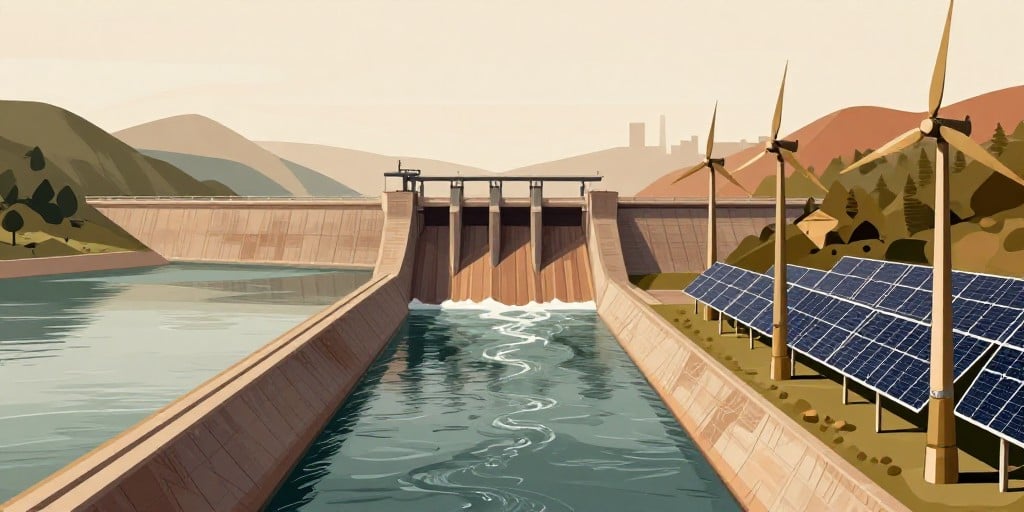
VERBUND AG’s latest quarterly figures reveal a pronounced contraction in hydropower generation, with output falling by approximately 20 % across its first‑to‑third quarters of 2026. The company’s run‑of‑river plants, which normally benefit from high seasonal flow, experienced a lower efficiency coefficient, while storage facilities also slipped below target levels. This decline in physical output directly translates into a reduction in revenue, as the firm must purchase back electricity at elevated spot market prices to honor prior contracts.
The underlying cause is a historically low water flow in the Alpine catchments—a climatic anomaly that has already been documented by the European Water Agency. The reduced inflow not only affects power generation but also pushes VERBUND to rely more heavily on its ancillary generation sources, notably wind and solar, whose own efficiency remains below projected thresholds.
Financial Impact and Segment Performance
The company’s EBITDA dropped markedly compared with the 2025 baseline, a trend that is mirrored in its consolidated earnings. In the corporate structure, the Hydro and New Renewables segments reported weaker contributions, reflecting the dual pressures of lower output and under‑performance in emerging renewable assets. Conversely, the Sales and All Other segments exhibited resilience; end‑user sales grew, and favorable market spreads in the thermal sector partially offset the downturn.
An analysis of the Sales segment shows a 5 % rise in retail contracts, suggesting a shift in consumer preference towards stable, long‑term supply agreements. However, the overall self‑generation decline of 18 % indicates that VERBUND’s ability to meet its own demand from generation assets has been compromised, increasing its dependence on external market procurement.
Regulatory Environment and Policy Implications
The Austrian government’s Renewable Energy Act, which mandates a 70 % share of renewable energy in the national grid by 2030, imposes both opportunities and constraints. VERBUND’s inability to meet hydropower targets could trigger penalties or the need for compensatory mechanisms under the Strompreis-Absicherung scheme, which guarantees a minimum price for renewable electricity. Moreover, the Hydro‑Flow Adjustment Clause in the national grid operator’s contract may require VERBUND to provide ancillary services at a premium cost during low‑flow periods, further squeezing margins.
From a policy perspective, Austria’s commitment to a carbon‑neutral grid by 2040 could shift regulatory attention toward storage capacity and grid integration of intermittent sources. VERBUND’s recent investments in battery storage and demand‑response technology may position it favorably in upcoming tenders, but the current lower output undermines the economic viability of these assets, raising questions about return‑on‑investment timelines.
Competitive Dynamics and Market Position
In the broader Central European market, VERBUND competes with large hydropower players such as E.ON Energy Services and Vattenfall Energy, as well as with newer entrants from the German Offshore Wind sector. The company’s lower hydropower output may erode its competitive advantage in price‑sensitive segments, especially where rivals can deliver consistent output at lower marginal costs.
An investigation into the European Energy Exchange data reveals that VERBUND’s spot purchase costs increased by 12 % during the period in question, while competitors with more diversified portfolios experienced a 4–6 % rise. This differential highlights the vulnerability of a hydro‑centric generation mix in a market increasingly influenced by price volatility and supply shocks.
Revised Guidance and Outlook
For the full year 2026, VERBUND has revised its financial guidance, forecasting EBITDA of approximately €2.12 billion and a net group result of about €1.01 billion, after adjustments for non‑recurring items. The company intends a payout ratio of 45 %–55 % of the adjusted result and has factored in the projected below‑average water flow for October.
These projections suggest a cautious but stabilizing trajectory. The reliance on wind and solar output, albeit below target, provides a buffer against hydropower volatility. Nevertheless, the persistence of low water flows—projected to continue into the next fiscal year—poses a systemic risk that could erode profitability if not mitigated through strategic storage upgrades or contract renegotiations.
Risks and Opportunities
Risks
- Climate‑induced flow variability could continue to depress hydropower output, tightening margins.
- Regulatory penalties under the Strompreis-Absicherung scheme may impose additional costs.
- Competitive pricing pressure from diversified renewable generators may erode market share.
Opportunities
- Investing in advanced storage can capture surplus wind/solar output and provide grid‑balancing services.
- Demand‑response partnerships with industrial clients could create new revenue streams and enhance grid resilience.
- Strategic procurement of renewable credits may offset hydropower deficits and align with Austria’s carbon targets.
Conclusion
VERBUND AG’s 2026 performance underscores the intricate interplay between natural resource constraints, regulatory frameworks, and market dynamics. While the company demonstrates resilience through its diversified sales strategies and upcoming guidance adjustments, the persistent challenge of low hydropower output remains a critical focal point for investors and policymakers alike. Continued scrutiny of climatic trends, regulatory developments, and competitive positioning will be essential to assess VERBUND’s long‑term viability in a rapidly evolving energy landscape.