
Corporate Analysis of Verbund AG in the Context of Austria’s Power Grid Transition
The performance of Verbund AG in the Vienna market continues to be a focal point for investors, and its recent trading activity offers a useful lens through which to examine broader industry dynamics. While the company’s share price displayed only a modest uptick—reflecting a broader trend of moderate gains in the Austrian market during the first half of the week—the underlying factors driving investor sentiment are rooted in the evolving power generation, transmission, and distribution (GTD) landscape in Austria and the region.
Market Dynamics and Investor Sentiment
In the morning session, Verbund’s shares rose slightly, positioning the stock among the better‑performing names in the ATX and ATX Prime indices. The gain coincided with a small increase in market activity; however, the overall trading volume for Verbund remained modest compared with the most heavily traded shares of the exchange. Analysts attribute this movement to a broader market momentum rather than a reaction to any new corporate announcement or earnings release. Comparable gains have been noted among other listed firms such as OMV and Wienerberger, indicating a sector‑wide confidence that is not yet driven by company‑specific catalysts.
From a valuation perspective, Verbund continues to trade at a level typical for the sector. Key ratios—including price‑to‑earnings and dividend yield—remain largely unchanged in recent analyst forecasts, and the company’s market capitalization, while lower than that of the largest listed names, suggests that investors maintain a neutral to slightly positive outlook. This stability in investor perception is essential as the company navigates the technical and regulatory challenges of modernizing its GTD infrastructure.
Grid Stability and Renewable Energy Integration
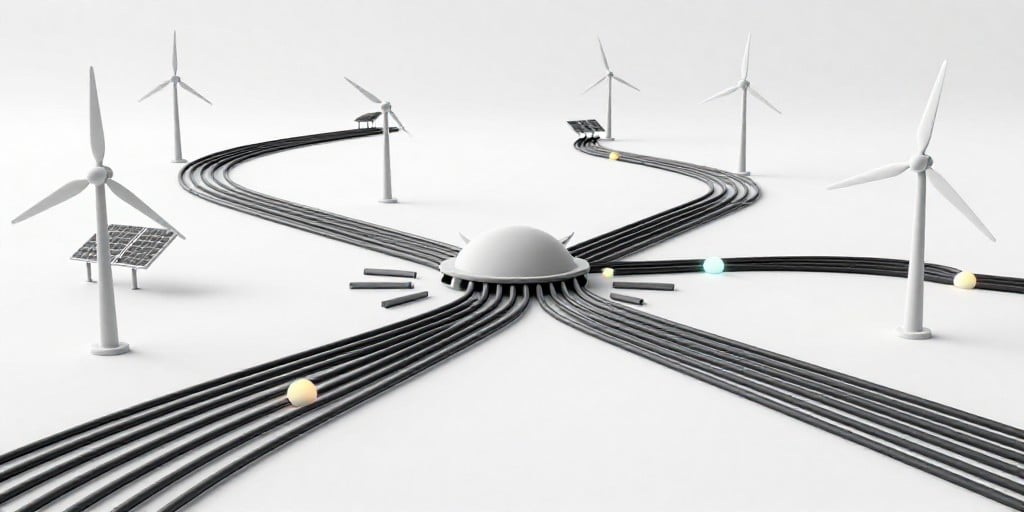
Verbund AG, as Austria’s largest electricity producer, plays a pivotal role in maintaining grid stability amid increasing penetration of variable renewable energy (VRE) sources such as wind and solar. The integration of VRE introduces new technical challenges:
Frequency Regulation: The fluctuating output of wind and solar plants requires sophisticated frequency control mechanisms. Verbund must employ fast‑acting balancing reserves, often supplied by gas turbines or pumped‑storage hydro plants, to counteract deviations from the nominal 50 Hz grid frequency.
Voltage Support: VRE generation can cause voltage sags or swells, particularly when large solar farms feed power into weak network sections. Advanced power electronics—such as STATCOMs and flexible AC transmission system (FACTS) devices—are essential for real‑time voltage regulation.
Protection Coordination: The dynamic nature of VRE flows necessitates adaptive protection schemes. Traditional overcurrent protection must be complemented by distance or impedance relays that can respond to rapid changes in fault characteristics caused by fluctuating generation.
Verbund’s strategy involves expanding its existing hydro‑electric capacity to serve as a flexible resource while investing in grid‑wide smart‑metering and monitoring systems. These investments enhance situational awareness, enabling operators to predict and mitigate instability risks before they manifest.
Infrastructure Investment Requirements
Modernizing Austria’s GTD system demands significant capital expenditure. Key areas include:
Transmission Upgrades: Extending high‑capacity lines, particularly HVDC interconnections, facilitates cross‑border power exchanges and smooths the integration of remote renewable projects. HVDC’s lower losses and enhanced controllability are crucial for balancing the national grid with neighboring countries’ fluctuating VRE supply.
Substation Modernization: Incorporating digital automation and advanced SCADA systems improves fault detection and isolation, reducing downtime. Smart substations also allow for better coordination between generation units and distribution networks.
Energy Storage Deployment: Pumped‑storage hydro remains Austria’s dominant storage technology; however, the growing cost competitiveness of battery storage offers complementary flexibility. Hybrid storage solutions—combining pumped hydro with batteries—provide both long‑term and short‑term reserve capabilities.
Smart Grid Infrastructure: Deploying advanced metering infrastructure (AMI) and distribution automation enhances demand‑side management (DSM). By providing real‑time price signals and load‑shifting capabilities, DSM reduces peak demand and enhances overall grid resilience.
Verbund’s investment plans align with the European Union’s Green Deal and the European Network of Transmission System Operators for Electricity (ENTSO‑E) framework, which emphasize the development of a cross‑border, resilient, and low‑carbon energy system.
Regulatory Frameworks and Rate Structures
Regulatory policies significantly influence investment decisions and consumer costs. Key elements include:
Feed‑In Tariffs (FITs): Austria’s FIT policy, while gradually transitioning to a market‑based approach, still provides incentives for renewable projects. The gradual phase‑out of FITs requires utilities to rely more on market mechanisms and balancing services, affecting revenue models.
Tariff Regulation: The Austrian Federal Power Regulation Authority (Bundesnetzagentur) oversees rate structures, ensuring that consumer prices reflect cost recovery while maintaining affordability. Recent reforms encourage transparency in tariff components, enabling consumers to discern the share of grid costs, renewable premiums, and environmental levies.
Cross‑Border Market Participation: The liberalization of the electricity market allows Austrian utilities to sell surplus power to neighboring countries. Regulatory alignment with ENTSO‑E ensures that cross‑border trades comply with coordinated reserve requirements and network codes.
These frameworks impact the economic viability of large infrastructure projects. Utilities must balance the upfront capital outlay against long‑term tariff recoveries and market revenue streams, while regulators aim to protect consumers from excessive cost pass‑through.
Economic Impacts of Utility Modernization
Investing in GTD modernization yields multifaceted economic outcomes:
Consumer Costs: While upfront investments elevate capital costs, advanced GTD systems can reduce long‑term operational expenditures through improved efficiency and reduced maintenance. Smart grid technologies also enable dynamic pricing, potentially lowering consumer bills during off‑peak periods.
Job Creation: Large‑scale transmission and substation projects generate employment across engineering, construction, and operations sectors. Additionally, renewable projects, particularly wind farms and solar parks, provide localized job opportunities.
Energy Security: Enhanced grid resilience mitigates blackout risks, ensuring reliable supply even under extreme weather events—a critical factor given Austria’s commitment to energy independence.
Environmental Benefits: Facilitating higher VRE penetration reduces greenhouse gas emissions, contributing to national and EU climate targets. The economic benefits of avoided carbon taxes or emissions trading credits can offset investment costs.
Competitive Positioning: Utilities that successfully modernize their GTD infrastructure gain a competitive edge in the evolving European electricity market, attracting foreign investment and participating in cross‑border capacity markets.
Engineering Insights into Power System Dynamics
A technical understanding of power system dynamics is essential for appreciating the implications of grid modernization:
Transient Stability: Following a disturbance, the system’s ability to maintain synchronism hinges on the inertia of generating units. Hydroelectric plants, with rapid turbine response, provide a critical stabilizing influence. Integrating battery storage with fast charge‑discharge cycles further enhances transient stability.
Load Flow Analysis: Accurate modeling of voltage profiles and line flows guides the placement of new transmission lines and substations. Real‑time state estimation, supported by AMI data, allows operators to detect and correct voltage violations before they cascade.
Control System Integration: Distributed energy resources (DERs) require coordinated control schemes, such as Volt/VAR control or power factor correction, to prevent congestion and maintain voltage limits. Advanced control algorithms—leveraging machine learning—can predict load patterns and optimize DER dispatch.
Cyber‑Physical Security: Modern GTD systems increasingly rely on digital communication networks. Robust cybersecurity protocols are essential to safeguard against potential intrusions that could disrupt grid operations.
By integrating these engineering considerations into strategic planning, Verbund AG and other utilities can navigate the complex interplay of technical performance, regulatory compliance, and economic viability.
Conclusion
Verbund AG’s modest share price gains reflect a broader confidence in the Austrian equity market, yet the company’s real value lies in its capacity to manage the technical challenges of a transitioning power system. Robust investments in transmission upgrades, smart grid technologies, and energy storage, coupled with a proactive regulatory approach, will enable Austria to achieve grid stability while accelerating renewable integration. The resulting economic benefits—reduced consumer costs, job creation, and environmental gains—underscore the importance of continued modernization efforts in the pursuit of a resilient, low‑carbon energy future.