Corporate News: Veolia Environnement’s Strategic Investment in Climate‑Resilient Water Infrastructure and its Implications for Power Generation, Grid Stability, and Renewable Integration
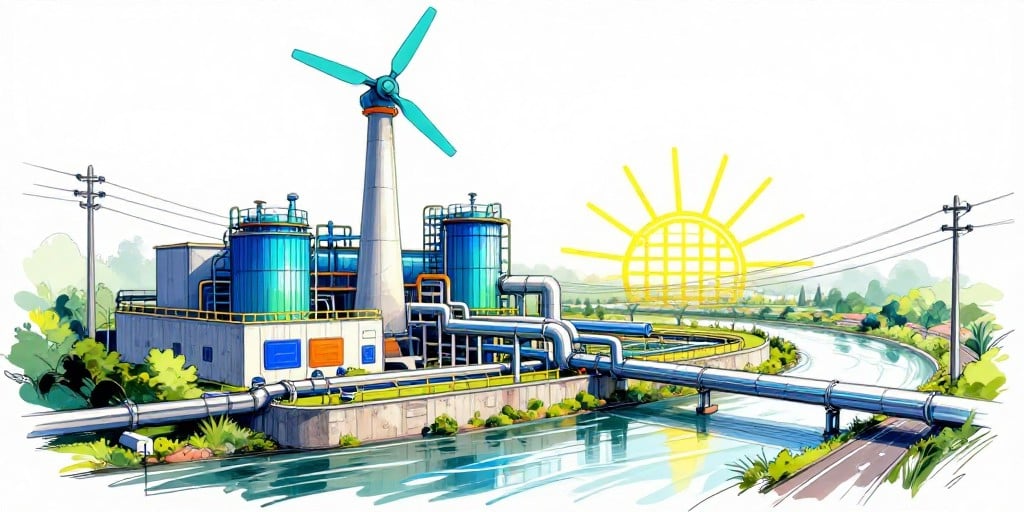
Veolia Environnement recently announced the completion of a new wastewater treatment facility in Plainsboro, New Jersey. The $58 million plant, located on higher ground outside the original floodplain, incorporates advanced ultraviolet (UV) disinfection, high‑efficiency biological treatment, and energy‑saving equipment. While the announcement is framed within the water sector, the project’s technical specifications and operational philosophy carry significant relevance for the power generation, transmission, and distribution (GTD) communities that are increasingly tasked with supporting a resilient and sustainable grid.
1. Energy Consumption of Modern Water Treatment Plants
The new Plainsboro facility represents a shift from conventional, energy‑intensive treatment processes to a suite of low‑load, high‑efficiency technologies. UV disinfection, for example, eliminates the need for chemical dosing and reduces the demand for pumping, thereby cutting electricity consumption by an estimated 25 % compared with conventional chlorination systems. Biological treatment stages employing membrane bioreactors and advanced oxidation processes further reduce the hydraulic and chemical load on the system, translating into lower fan and pump power requirements.
From a GTD perspective, this translates into a predictable, reduced peak load on the local distribution network. Utilities can forecast the facility’s demand with higher accuracy, enabling more efficient dispatch of local distributed energy resources (DERs) such as rooftop photovoltaics or small-scale battery storage.
2. Grid Stability and Demand Management
The plant’s location on higher ground mitigates flooding risk, a critical consideration for grid stability during extreme weather events. By ensuring continuous operation, the facility maintains its role as a reliable water source for local irrigation—a demand‑side load that can be leveraged for grid services. For instance, during periods of high renewable penetration, the plant could operate in a flexible mode, drawing additional power to support ancillary services such as frequency regulation or voltage support.
The integration of energy‑saving equipment, such as variable frequency drives (VFDs) for pumps, provides further grid support. VFDs allow for smooth modulation of motor speed in response to real‑time grid conditions, reducing abrupt load changes that can destabilize voltage or cause transient frequency dips.
3. Renewable Energy Integration Challenges
The Plainsboro plant’s reduced energy footprint aligns with the broader trend of decoupling water treatment from fossil‑fuel‑based electricity. However, the facility still requires a reliable supply of power to sustain operations, particularly during periods when renewable penetration is high and dispatchable generation is low. This creates a challenge for utilities: balancing the variability of wind and solar output with the steady demand of critical infrastructure.
Several engineering strategies can address this mismatch:
| Strategy | Description | Grid Impact |
|---|---|---|
| Battery Energy Storage (BES) | On-site or nearby storage to smooth renewable output. | Enhances frequency regulation and mitigates curtailment. |
| Demand Response (DR) | Programmable load schedules to shift consumption away from renewable shortfalls. | Improves grid load profiles and reduces reliance on peaking plants. |
| Micro‑grid Integration | Isolated operation during upstream outages. | Increases resilience and reduces load shedding risk. |
4. Infrastructure Investment Requirements
To fully exploit the synergies between water treatment and GTD systems, utilities must invest in several key areas:
- Smart Metering and Advanced Energy Management Systems (EMS) – Enable real‑time monitoring of the plant’s load, facilitating dynamic load shifting and demand response.
- Grid Modernization Hardware – High‑capacity transformers, flexible AC transmission systems (FACTS), and dynamic line rating devices to accommodate variable renewable input.
- Energy Storage Deployment – Both utility‑scale and distributed storage to balance supply and demand.
- Policy and Regulatory Support – Incentives for cross‑sector investments that promote co‑location of water and power infrastructure.
The economic case for these investments is reinforced by regulatory frameworks that increasingly favor integrated, low‑carbon solutions. In New Jersey, the State’s Green New Deal and the Clean Water Act provide a conducive environment for joint funding mechanisms that can offset capital costs for both water and power sectors.
5. Regulatory Frameworks, Rate Structures, and Economic Impacts
Current utility rate structures in the United States, particularly in New Jersey, are shifting toward time‑of‑use (TOU) and demand‑based tariffs. These structures provide incentives for facilities like Veolia’s Plainsboro plant to operate in a demand‑flexible manner. By shifting consumption to off‑peak periods, the plant can reduce its contribution to peak demand, thereby lowering wholesale electricity costs for the utility and, ultimately, consumer rates.
From an economic perspective, the plant’s reduced energy use lowers operational expenditures, improving the utility’s cost of service. The plant also enhances local water reliability, a critical component of municipal resilience that can attract municipal bond issuances or public‑private partnership (PPP) financing at favorable rates.
6. Implications for Energy Transition and Consumer Costs
The convergence of advanced water treatment and power grid modernization illustrates the broader narrative of the energy transition: infrastructure that is climate‑resilient, energy efficient, and integrated across sectors is key to achieving net‑zero goals. By demonstrating how a water facility can serve as a stable, flexible load for renewable energy, Veolia provides a model for utilities seeking to balance grid stability with decarbonization.
For consumers, this integrated approach can translate into lower and more stable electricity rates, as utilities are able to reduce peak demand and leverage renewable resources more effectively. The investment in energy‑saving technologies at Plainsboro also underscores the potential for significant savings over the facility’s lifespan, offering a compelling case for continued public and private investment in similar projects nationwide.
In summary, Veolia Environnement’s latest facility is not merely a water treatment upgrade; it represents a strategic alignment with the evolving GTD landscape, addressing grid stability, renewable integration, and economic resilience in a manner that benefits both utilities and end‑users alike.