
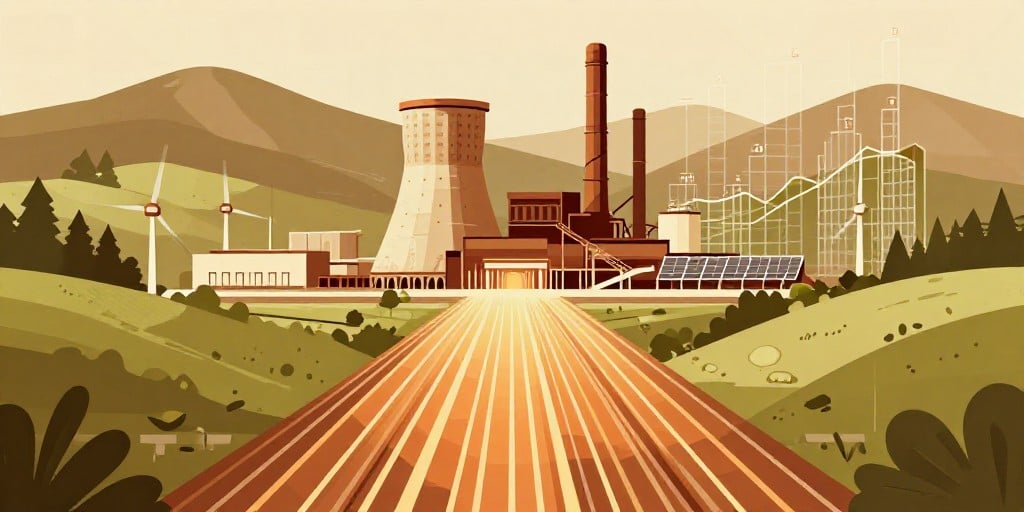
Veolia Environment Consolidates Its Standing in the European Energy Landscape
Veolia Environment’s continued investment in sustainable heat infrastructure has reinforced its role as a pivotal player in the European energy and infrastructure sector. Recent developments—particularly the expansion of its biomass‑powered district heating network in Austria—illustrate a strategic approach that balances technical innovation, regulatory stability, and local economic development.
Strengthening the Austrian Footprint
The Austrian subsidiary, operating under the EVN brand, recently commissioned a combined heat and power (CHP) plant that expands the district heating network’s capacity to supply renewable heat to municipalities, businesses, and public institutions. This addition underscores Veolia’s long‑term commitment to nature‑based energy solutions and aligns with Austria’s aggressive climate targets.
Key operational highlights include:
- Biomass sourcing strategy – Veolia integrates regional biomass supply chains with existing transmission infrastructure, ensuring a secure and low‑emission fuel base.
- Infrastructure synergy – By leveraging existing grid assets, the company minimizes capital outlays while maximizing dispatchable renewable generation.
- Regulatory certainty – Austria’s stable tariff regime for district heating provides predictable revenue streams, reinforcing the company’s defensible cash‑flow profile.
Market Position and Investor Perception
Veolia’s regulated business model and steady cash flow continue to attract institutional investors who view the company as a defensively positioned asset within the utilities sector. The firm’s performance—remaining largely unchanged amid broader market volatility—illustrates resilience in the face of evolving energy policy and competitive dynamics.
In the broader European context, technology and mining shares recorded gains, while major indices such as the Stoxx 600 closed on a firm note, reflecting cautious yet generally positive investor sentiment. In France, the CAC 40 posted modest gains, although environmental service stocks—including Veolia Environment—slipped slightly. This mixed performance highlights the sector’s sensitivity to regulatory developments and macroeconomic factors.
Alignment with Continental Decarbonisation Efforts
Veolia’s expansion of biomass‑based CHP plants dovetails with European decarbonisation objectives. By providing a reliable, low‑emission heat source, the company complements the growing deployment of heat pumps and other renewable technologies. The CHP model offers flexibility, enabling rapid response to grid demand fluctuations and reducing the need for fossil‑fuel peaking plants.
Furthermore, the firm’s approach demonstrates a broader trend toward nature‑based solutions within the energy transition. Biomass, when sourced sustainably, can play a complementary role to other renewables, particularly in regions where large‑scale wind or solar deployment is constrained by land or climatic factors.
Economic and Competitive Implications
From an economic perspective, the Austrian expansion has multiple ripple effects:
- Job creation – Local construction and operational roles support regional employment.
- Supply chain stimulation – Local biomass procurement supports agricultural and forestry sectors.
- Grid stability – Distributed renewable heat reduces peak demand on the electricity grid, enhancing overall system reliability.
Competitively, Veolia’s integrated model positions it favorably against newer entrants in the district heating space who may lack established transmission networks or regulatory footholds. Its long-term contracts and customer base provide a buffer against market volatility and policy shifts.
Conclusion
Veolia Environment’s recent investments reinforce its status as a key contributor to Europe’s transition toward low‑carbon energy systems. By expanding biomass‑powered CHP capacity in Austria and maintaining a stable, regulated business model, the company exemplifies how utilities can balance environmental stewardship with investor confidence. As Europe’s decarbonisation trajectory accelerates, firms that combine infrastructure resilience with nature‑based solutions—such as Veolia—are poised to capture enduring value in the evolving energy market.