
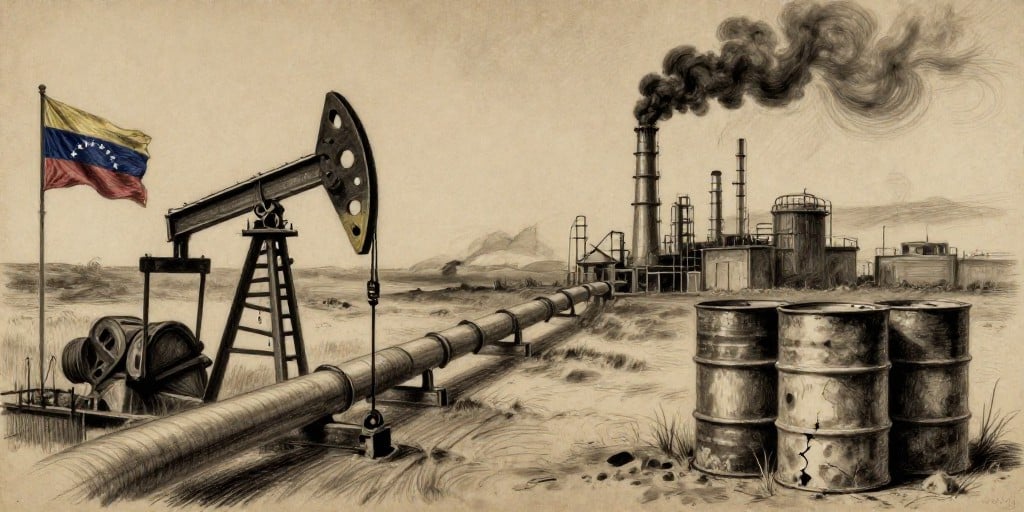
Venezuela‑United States Oil Collaboration and Its Strategic Implications
Political Context and the Long‑Term Agreement
In late August, Venezuela’s interim President Delcy Rodríguez announced a comprehensive, long‑term partnership with the United States that aims to revitalize the nation’s oil production. The agreement, set to span approximately 25 years, focuses on boosting output through the development of several strategically important fields and the identification of new greenfield sites. A key feature of the deal is the allowance for U.S. oil companies to access a significant portion of Venezuela’s proven reserves while preserving Venezuelan sovereignty over its natural resources. This dual‑pronged approach seeks to balance national control with foreign investment, a model that could reshape the regulatory environment for future hydrocarbon projects in the region.
Chevron’s Positioning and Asset Realignment
Reports indicate that Chevron Corp. is in advanced discussions to transfer its existing Venezuelan joint‑venture assets into the new framework. The company is also evaluating the acquisition of additional fields, notably the Bare field in Anzoátegui state. Historically pursued by Colombian investors, the Bare field has become a focal point under Venezuela’s updated hydrocarbons law, which seeks to foster an investor‑friendly environment. Chevron’s willingness to re‑structure its holdings reflects a broader strategy to secure a stable source of high‑quality crude while leveraging the country’s vast reserves.
U.S. Government Strategy Under President Trump
Concurrent with corporate initiatives, President Donald Trump has signalled an overarching strategy to enhance U.S. influence in global oil markets. The administration is pursuing 100‑year lease agreements and is open to taking majority shares in certain Venezuelan blocks—a move that would constitute a rare instance of direct U.S. federal government ownership of offshore oil interests. This approach underscores a desire to secure long‑term supply routes and to mitigate exposure to geopolitical disruptions in the Middle East and elsewhere.
Upcoming Refinery Conference and Domestic Capacity Expansion
The timing of these negotiations coincides with President Trump’s planned meeting with U.S. refining executives in early September. The agenda will address soaring fuel prices, partially driven by the Iran conflict, and will explore avenues to strengthen domestic refining capacity. Major refiners such as Valero and Chevron are expected to present proposals that could shape future policy on oil supply and refinery infrastructure. By aligning refining needs with upstream supply agreements, the administration aims to create a more resilient domestic energy ecosystem.
Economic and Strategic Implications
The convergence of Venezuelan political change, U.S. governmental interest, and Chevron’s active participation underscores a concerted effort to rebuild Venezuela’s oil industry while securing a reliable crude supply for the United States. This strategy aligns with broader economic trends that emphasize supply‑side diversification in response to global market uncertainties. It also illustrates how cross‑sector collaborations—between government, multinational corporations, and domestic refiners—can address both geopolitical risks and market volatility. Should the proposed agreements materialise, they could set a precedent for future public‑private partnerships in other resource‑rich but politically volatile regions, thereby reshaping the competitive landscape of the global energy sector.