
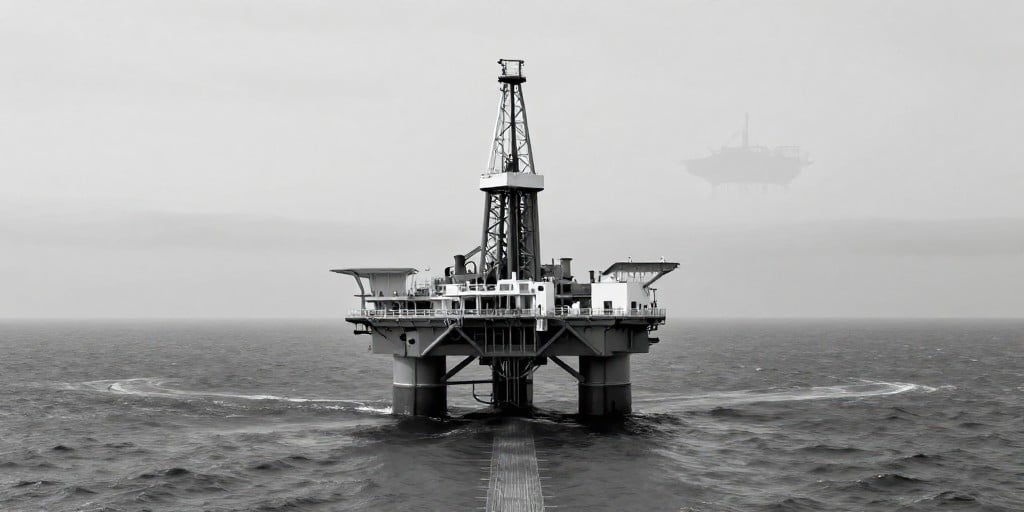
Vår Energi ASA, Equinor, and Aker BP Forge Strategic Exploration Partnership on the Norwegian Continental Shelf
In a move underscoring the prevailing trend of collaborative exploration in the hydrocarbon sector, Vår Energi ASA announced a new strategic partnership with Equinor and Aker BP. The alliance is designed to jointly evaluate approximately twenty to twenty‑five prospective exploration sites over the next four to five years, with the objective of drilling roughly five high‑potential wells annually.
Rationale Behind the Collaboration
The collaboration leverages the complementary strengths of each partner. Vår Energi brings a focused portfolio of exploration prospects and a willingness to assume a significant portion of the exploration risk. Equinor contributes substantial technical expertise, a proven track record in complex offshore projects, and access to advanced seismic and drilling technologies. Aker BP contributes a wealth of data analytics capabilities and an established network of supply chain relationships. Together, the consortium aims to:
- Share Risks – The high cost and inherent uncertainty of deep‑water exploration are mitigated through shared financial exposure and decision‑making processes.
- Improve Discovery Probability – Combining proprietary geological models and seismic data enhances the accuracy of target selection.
- Accelerate Development – Proximity to existing infrastructure, such as storage tanks, processing facilities, and subsea pipelines, reduces the time and capital required to bring new fields online.
- Strengthen Resource Base – Securing additional reserves ensures continued supply for existing customers and positions the partners favorably for future independent development projects.
Industry Context
The partnership reflects a broader shift in the upstream sector toward collaborative ventures. Key drivers of this trend include:
- Escalating Exploration Costs – Advanced drilling technologies and deeper water operations require capital investments that often exceed the budgets of single operators.
- Regulatory and Environmental Scrutiny – Joint ventures can streamline permitting processes by aligning environmental management plans and fostering shared responsibility for compliance.
- Market Volatility – By spreading risk, companies can maintain operational flexibility in the face of fluctuating oil and gas prices.
- Technology Sharing – The rapid evolution of digital oilfield solutions (e.g., AI‑driven reservoir modeling, real‑time drilling analytics) is more efficiently deployed across joint platforms.
Competitive Positioning
Equinor, as Norway’s largest oil and gas company, has historically led in both conventional and unconventional resource development. Its involvement in the partnership signals a continued commitment to maintaining a robust upstream portfolio while adapting to evolving market dynamics. Aker BP’s strong analytical capabilities complement this by providing a data‑driven approach to site selection. Vår Energi’s agility and willingness to take on higher risk roles allows the consortium to pursue more ambitious projects that may be beyond the scope of larger operators alone.
Economic Implications
The joint venture is expected to generate significant downstream benefits:
- Capital Efficiency – Shared expenditure on seismic surveys, drilling rigs, and subsea installation reduces individual capital outlays.
- Revenue Stream Diversification – Discovery of new fields translates into additional production volumes for existing pipelines, enhancing overall supply chain resilience.
- Employment and Skills Development – The partnership will create high‑skill job opportunities in engineering, geology, and data analytics, supporting Norway’s skilled workforce.
- Carbon Management – Leveraging existing facilities for new wells reduces the carbon footprint associated with constructing entirely new infrastructure.
Outlook
With a focus on high‑potential sites, the partnership is positioned to contribute substantially to Norway’s long‑term energy security and to the global supply of hydrocarbons. The alignment of resources, expertise, and risk-sharing mechanisms offers a compelling model for other operators seeking to navigate the complexities of modern offshore exploration. The collaboration’s success will likely influence future agreements across the sector, reinforcing the industry’s shift toward collective innovation and shared resilience.