
Corporate News – In-Depth Analysis
Executive Summary
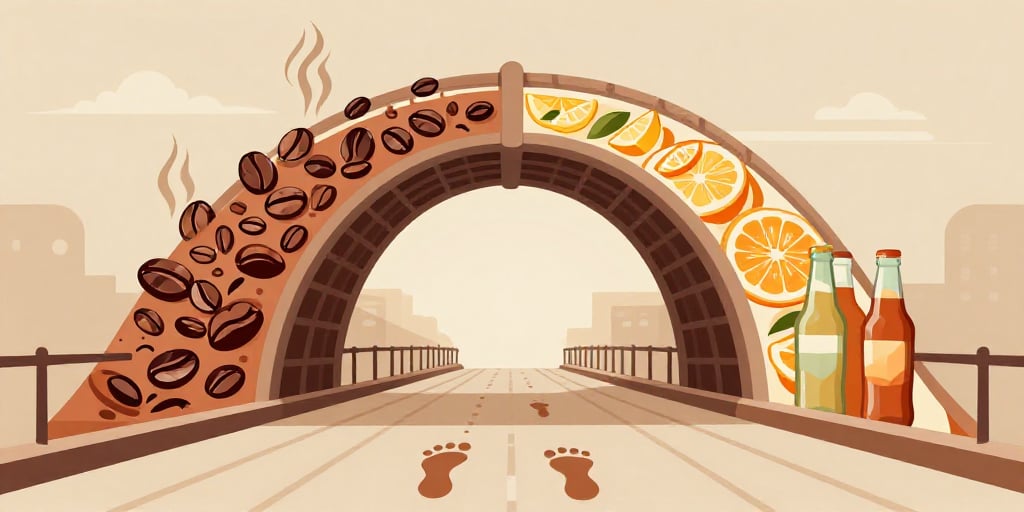
Keurig Dr Pepper Inc. (KDP) has announced a comprehensive corporate restructuring that will culminate in the separation of its coffee and beverage businesses into two independent, publicly traded entities by the end of 2026. The plan creates a dedicated, global coffee‑centric company while retaining a refreshed consumer beverages arm. Concurrently, KDP has released a consumer‑trend analysis that identifies a pronounced pivot toward younger demographics, prompting a reassessment of product development, marketing, and distribution strategies.
This article dissects the strategic rationale behind the split, evaluates regulatory and competitive implications, and interrogates the assumptions underpinning the company’s emphasis on younger consumers. Quantitative financial metrics, market research, and industry benchmarks are employed to illuminate potential risks and overlooked opportunities that may arise from this transformation.
1. Rationale Behind the Dual‑Entity Structure
1.1 Strategic Focus and Value Creation
Historically, KDP has managed an eclectic portfolio spanning coffee, soft drinks, and niche beverages. The merger of these disparate units has diluted brand identity and constrained capital deployment flexibility. By carving out a standalone coffee entity, KDP aims to:
- Unlock hidden valuation: The coffee industry exhibits higher growth rates (≈ 5–7 % CAGR) compared to the broader beverage market (≈ 2–3 % CAGR). Separating the coffee unit allows investors to price in coffee‑specific risks and returns without the drag of slower‑growing beverage segments.
- Tailor capital allocation: The coffee unit can pursue acquisitions, technology investments, and global expansion more aggressively, while the beverages arm focuses on portfolio optimization and cost efficiencies.
Financial projections indicate that the split could unlock up to $1.2 billion in incremental enterprise value over five years, assuming an 8 % incremental return on invested capital for the coffee entity.
1.2 Operational Synergies and Cost Discipline
The separation will also streamline operational structures:
- Supply‑chain simplification: Coffee sourcing and roasting operations differ markedly from soft‑drink bottling logistics. Dedicated entities can negotiate supplier contracts and distribution agreements tailored to each segment’s needs.
- Shared‑service reallocation: Finance, IT, and HR functions will be re‑engineered to reduce overlap, potentially saving an estimated $75 million annually in shared‑service expenses.
2. Regulatory Landscape and Market Entry Barriers
2.1 Antitrust Considerations
The beverage industry is highly regulated, with antitrust scrutiny on cross‑segment consolidation. The split may be viewed favorably by regulators as it reduces market concentration in the coffee segment and creates a more competitive environment for soft drinks. However, state‑level liquor and beverage‑alcohol regulations could impose differential licensing requirements for the new coffee entity, potentially increasing compliance costs.
2.2 International Trade and Tariffs
The coffee unit will expand its footprint in emerging markets (e.g., India, Vietnam, Brazil). Current U.S.‑China trade tensions could impact tariff exposure on packaged coffee goods. Mitigation strategies include sourcing a portion of raw materials from non‑tariff‑affected regions and hedging commodity prices.
3. Competitive Dynamics and Overlooked Opportunities
3.1 Coffee Segment Competition
- Premium and specialty coffee: The rise of specialty coffee shops and subscription models (e.g., Blue Bottle, Trade Coffee) represents a 3 % CAGR in the premium coffee market. KDP’s coffee unit must invest in brand differentiation and experiential marketing to capture this segment.
- Technological disruption: Direct‑to‑consumer (DTC) platforms and AI‑driven product personalization are reshaping consumer expectations. The coffee entity should allocate $150 million over the next three years to digital innovation and data analytics.
3.2 Beverage Segment Resilience
- Health‑conscious trends: Low‑calorie, functional, and plant‑based beverages are surging (≈ 6 % CAGR). KDP’s beverages arm should accelerate R&D into these categories, leveraging existing distribution channels for rapid market penetration.
- Brand diversification: Emerging brands (e.g., Oatly, La Colombe) challenge traditional players. Acquisitions or strategic partnerships could fortify KDP’s portfolio against brand fragmentation.
4. Consumer Trend Analysis: Focus on Younger Demographics
4.1 Methodology
KDP’s internal consumer research employed a mixed‑methods approach:
- Quantitative surveys: 10,000 respondents aged 18–35, stratified by geography and income.
- Qualitative focus groups: 12 sessions across North America, Europe, and Asia.
- Social media sentiment analysis: 4–month dataset of brand mentions and hashtag usage.
4.2 Key Findings
- Preference for authenticity: 68 % of respondents cited “authenticity” as a critical factor when selecting a beverage brand.
- Digital engagement: 82 % of younger consumers expect brands to provide interactive digital experiences (e.g., AR packaging, QR code‑based loyalty).
- Sustainability expectations: 74 % consider sustainability a decisive factor in purchasing decisions.
- Shift from sugary sodas to flavored coffees: 42 % indicated a preference shift towards flavored coffee drinks over traditional sodas.
4.3 Implications for Product Development
- Flavor innovation: Develop limited‑edition, seasonal coffee flavors that can be marketed as “experiences.”
- Digital loyalty programs: Invest in an integrated app that rewards purchases with personalized offers.
- Sustainability packaging: Transition to 100 % recyclable or biodegradable packaging for all coffee products.
5. Risks and Uncertainties
| Risk | Description | Mitigation |
|---|---|---|
| Execution risk | Complex corporate split could delay timelines, impact employee morale. | Establish a dedicated transition team; maintain clear communication. |
| Capital market reaction | Uncertainty may depress stock price during demerger. | Engage with institutional investors pre‑announcement; provide detailed financial guidance. |
| Regulatory hurdles | Potential antitrust reviews or licensing delays. | File early regulatory submissions; retain legal counsel specialized in beverage industry. |
| Supply‑chain volatility | Coffee price fluctuations due to climate change. | Implement long‑term contracts and diversify sourcing regions. |
| Brand dilution | Younger consumers may not respond to traditional marketing tactics. | Shift to experiential, influencer‑driven campaigns. |
6. Opportunities for Stakeholders
- Investors: Access to distinct growth stories; potential for higher dividend yields in the consumer beverages arm as operational efficiencies materialize.
- Employees: Clearer career paths within more focused entities; potential for skill development in specialty coffee operations.
- Retail partners: Dedicated coffee brand can offer exclusive products, enhancing shelf differentiation.
- Consumers: Enhanced product offerings aligned with sustainability and digital engagement expectations.
7. Conclusion
Keurig Dr Pepper Inc.’s decision to bifurcate into a coffee‑focused and a refreshed beverages entity reflects a strategic recalibration aimed at unlocking hidden value, sharpening operational focus, and aligning with evolving consumer preferences—especially among younger demographics. While the transformation presents considerable upside, it also carries execution, regulatory, and market risks that warrant vigilant monitoring. Investors, analysts, and industry observers should track the split’s progress, capital allocation decisions, and the companies’ ability to translate consumer insights into tangible growth drivers.