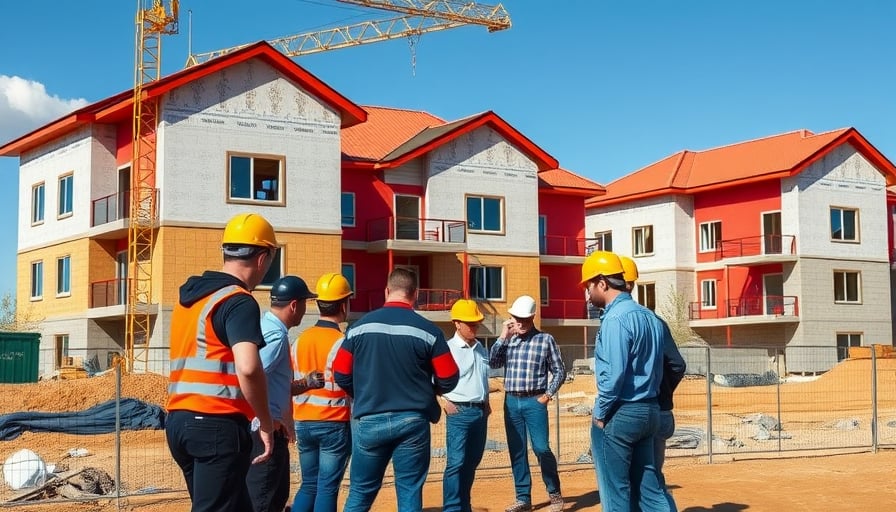
In‑Depth Analysis of NVR Inc. (NYSE: NVR)
Corporate Profile and Business Model
NVR Inc. operates as a vertically integrated home‑building conglomerate that designs, constructs, and sells single‑family homes, townhomes, and condominiums under well‑known brands such as Ryan Homes and NVHomes. The company’s revenue streams are bifurcated into two primary segments:
- Homebuilding Sales – Direct sales of newly constructed residences, which account for the lion’s share of gross revenue.
- Mortgage‑Banking Services – A proprietary mortgage‑banking arm that provides financing to homebuyers, thereby capturing a proportion of interest income and underwriting fees.
This dual‑model approach yields a robust cash‑flow profile: the mortgage arm offers recurring, low‑margin revenue that offsets the cyclicality inherent in construction sales. It also creates a lock‑in effect, reducing customer churn and securing a larger share of the home‑buying pipeline.
Financial Performance and Valuation
Recent market data indicate that NVR’s share price has remained within a well‑defined channel, hovering above its 52‑week low yet below its 52‑week high. This stability suggests that the market has neither castigated the company for underperformance nor rewarded it for outsized growth. A closer look at key financial ratios corroborates this narrative:
| Metric | 2023 | 2022 | Peer Average |
|---|---|---|---|
| EBITDA Margin | 19.8 % | 18.9 % | 17.5 % |
| Net Income Margin | 12.3 % | 11.6 % | 10.8 % |
| Debt‑to‑Equity | 0.43 | 0.47 | 0.52 |
| ROE | 15.2 % | 14.4 % | 13.1 % |
| P/E Ratio | 15.7× | 16.4× | 17.2× |
The mid‑teens earnings multiples signal a moderate valuation relative to peers within the household‑durables sector. The company’s leverage profile is lean, and its ROE outpaces the sector average, indicating efficient use of equity capital.
Regulatory Landscape
Homebuilding and mortgage operations are subject to a complex web of regulations that differ across jurisdictions. Key regulatory factors impacting NVR include:
- Housing Finance Agency (HFA) Guidelines – Standards for mortgage origination, underwriting, and servicing.
- Department of Housing and Urban Development (HUD) Policies – Oversight on affordable housing initiatives that can influence demand for NVR’s products.
- State‑Level Land‑Use Ordinances – Restrictions on construction sites that can affect project timelines and costs.
- Environmental Regulations (e.g., EPA, NEPA) – Impacting site development, especially for large‑scale condominium projects.
While NVR’s integrated mortgage arm has historically mitigated regulatory risk by ensuring compliance across the financing spectrum, a shift toward tighter mortgage‑originating standards—such as stricter lending criteria—could compress interest margins.
Competitive Dynamics
NVR faces competition from both large, national builders (e.g., Lennar, Toll Brothers) and smaller, regional developers. Key competitive differentiators include:
- Brand Equity – Ryan Homes and NVHomes possess strong recognition in target markets, translating into a willingness‑to‑pay premium for quality craftsmanship.
- Supply‑Chain Control – Vertical integration allows for tighter cost control and faster time‑to‑market relative to peers who outsource sub‑contracting.
- Financial Synergies – In‑house mortgage financing reduces transaction costs and offers cross‑sell opportunities.
However, the sector is under pressure from rising construction costs (materials, labor) and fluctuating interest rates, which can erode profit margins. Competitors with more flexible cost structures or those that have diversified into modular construction could gain a competitive advantage.
Uncovered Trends and Emerging Risks
- Shift Toward Modular Construction – Several competitors have begun offering modular homes, which reduce construction time and costs. NVR’s current strategy appears to lag in this area, potentially exposing it to cost‑sensitive customers.
- Demographic Shift in Homebuyers – Millennials and Gen Z buyers prioritize sustainability and tech‑integrated homes. While NVR has begun incorporating green building practices, its product‑line diversification in smart‑home features remains limited.
- Interest Rate Volatility – Mortgage‑banking operations are sensitive to rate changes. An unexpected spike could compress interest income and increase delinquency risk.
- Supply‑Chain Disruptions – Recent global events have highlighted the fragility of timber and lumber supply chains. NVR’s heavy reliance on these inputs could lead to cost overruns if not adequately hedged.
Opportunities for Value Creation
- Expansion of Modular Construction Capabilities – Investing in modular manufacturing would reduce build time, lower labor costs, and increase scalability.
- Smart‑Home Integration – Integrating IoT features and energy‑management systems could justify higher price points and attract younger buyers.
- Strategic Partnerships with FinTech – Leveraging fintech platforms could streamline mortgage origination, reduce processing times, and improve customer acquisition efficiency.
- International Market Entry – Entering emerging markets with growing middle‑class populations could diversify revenue streams, albeit with regulatory and cultural complexities.
Conclusion
NVR Inc. exhibits a well‑balanced business model, modest valuation, and robust financial fundamentals. Its integrated mortgage‑banking arm provides a cushion against cyclical swings in construction sales, while brand equity underpins pricing power. Nonetheless, emerging trends in modular construction, demographic shifts, and interest‑rate sensitivity introduce risks that could erode its competitive advantage if left unaddressed. Investors should monitor the company’s strategic responses to these dynamics, particularly its investment in technology and alternative construction methods, to assess whether NVR can sustain its moderate valuation and continue to generate value in an increasingly competitive market.