
Corporate News Analysis: Aker BP ASA’s Expanded Role in the Carmen Gas‑Condensate Discovery
Aker BP ASA, which holds a 10 % equity position in the DNO‑led partnership that owns the Carmen gas‑condensate discovery, has received a detailed appraisal of the resource. The latest data, obtained from a well drilled by the Deepsea Yantai rig, indicates that the bulk of recoverable volumes resides in the Etive Formation, where reservoir quality ranges from moderate to poor. This development is prompting the partnership—comprised of DNO Norge AS, Wellesley Petroleum AS, and Equinor Energy AS—to evaluate hydraulic fracturing as a potential means of unlocking additional recoverable resources from the sizeable in‑place volumes.
Technical Assessment and Development Options
The appraisal well has provided a clearer picture of the Carmen structure’s internal architecture. While the Etive Formation’s reservoir quality presents challenges, its extensive volume suggests that unconventional completion techniques, such as hydraulic fracturing, could substantially increase recovery rates. The partnership is considering additional appraisal and exploration drilling aimed at the northern extent of the Carmen structure, where preliminary seismic data indicate promising reservoir continuity.
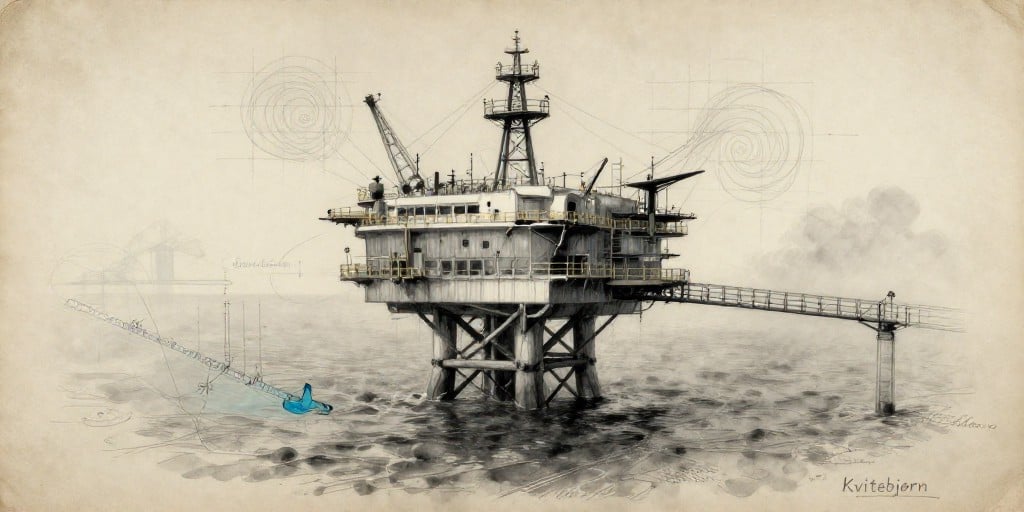
If hydraulic fracturing proves viable, the partnership may pursue a tie‑back strategy to the existing Kvitebjørn platform, of which DNO holds a minority interest. Tie‑back configurations can reduce capital expenditure by leveraging established infrastructure, thereby accelerating the project’s return on investment. This approach aligns with broader industry trends where operators seek to maximize asset utilization while mitigating upfront costs.
Aker BP’s Strategic Positioning
Aker BP’s participation in the Carmen partnership is consistent with its broader strategy to develop and optimise offshore assets within the North Sea. The company’s recent acquisitions of stakes in nearby discoveries—namely Atlantis and Afrodite—underscore its commitment to building a diversified portfolio of mature and high‑potential fields. By leveraging shared infrastructure and expertise across multiple projects, Aker BP can achieve economies of scale and enhance its competitive positioning in a market where operating costs and regulatory compliance are increasingly pressing concerns.
Economic and Market Context
The North Sea remains a mature yet strategically significant hydrocarbon region, characterized by a high level of technical sophistication and a dense cluster of infrastructure. Operators are increasingly focusing on cost‑efficient development models, such as tie‑backs and shared platforms, to maintain profitability amid volatile commodity prices. The potential implementation of hydraulic fracturing at Carmen reflects a broader industry shift toward unconventional completion techniques to extract value from lower‑quality reservoirs.
Moreover, the global transition to low‑carbon energy sources is intensifying the need for operators to balance resource development with environmental stewardship. Aker BP’s engagement in the Carmen project—alongside its other holdings—will likely involve rigorous environmental impact assessments and adherence to evolving regulatory frameworks governing offshore drilling and hydraulic fracturing.
Outlook
The partnership’s forthcoming appraisal and exploration drilling will determine the feasibility of hydraulic fracturing and the viability of a tie‑back to the Kvitebjørn platform. Success in these endeavors could unlock significant additional recoverable volumes, thereby enhancing the economic return of the Carmen discovery and reinforcing Aker BP’s standing as a key player in North Sea development. Continued monitoring of reservoir performance, completion technology efficacy, and market conditions will be essential for stakeholders to assess the long‑term value of this investment.