Corporate News: In‑Depth Analysis of the CPE 2026 International Computing‑Power‑Co‑operation Industry Conference
The inaugural CPE 2026 International Computing‑Power‑Co‑operation Industry Conference opened its doors in Shanghai on 26 October, drawing a cohort of policymakers, industry leaders, and investors to a forum that is, according to the organizers, the first domestic international event devoted exclusively to the intersection of high‑performance computing (HPC) and power infrastructure. Jointly hosted by the China International Trade Promotion Commission (CITPC) and the China Information Association (CIA), the conference positioned itself at the confluence of China’s “East Data, West Computing” strategy and the broader New Infrastructure programme, both of which are slated for prominent inclusion in the forthcoming Five‑Year Plan.
1. The Underlying Business Fundamentals
1.1 Market Size and Growth Trajectory
Recent market research indicates that the global HPC market is projected to grow from USD 30 billion in 2025 to USD 48 billion by 2030, at a compounded annual growth rate (CAGR) of 9.4 %. Parallel to this, the global data‑center power market is expected to rise from USD 250 billion in 2025 to USD 350 billion by 2030 (CAGR ≈ 6.5 %). The convergence of these two trajectories—particularly the need for on‑site, dedicated power solutions to support HPC workloads—creates a new sub‑segment that could command a 15–20 % higher gross margin than conventional data‑center power services.
1.2 Cost Structure and Capital Expenditure
The capital‑intensive nature of integrating power generation (especially renewable) with data‑center infrastructure is a double‑edged sword. On one side, economies of scale in renewable generation can reduce the levelised cost of electricity (LCOE) for data‑center operators from an average of USD 0.07/kWh to USD 0.05/kWh when paired with on‑site solar or wind farms. On the other side, the upfront capital expenditure (CapEx) for hybrid power‑HPC plants can exceed USD 200 million per 5 MW data‑center, necessitating strong financing mechanisms and often leading to longer pay‑back periods of 8–10 years.
2. Regulatory Landscape
2.1 National Policy Alignment
The “East Data, West Computing” initiative underlines a policy push to decentralise data processing from the heavily urbanised east to the resource‑rich western regions. This has triggered regulatory incentives, such as preferential land‑use approvals, tax credits for renewable integration, and streamlined permitting for joint power‑data‑center projects. However, recent drafts of the “New Energy Infrastructure Law” impose stricter environmental impact assessments on mixed‑use facilities, potentially prolonging project timelines.
2.2 International Investment Rules
The conference’s focus on international expansion highlights the importance of cross‑border regulatory compliance. China’s Belt and Road Initiative (BRI) financing mechanisms, which provide concessional loans for renewable projects, may be leveraged for overseas HPC‑power joint ventures. Yet, the US‑China trade tensions and evolving export‑control regimes on high‑end HPC hardware create a grey area that could limit technology transfer or impose higher compliance costs.
3. Competitive Dynamics and Market Positioning
| Company | Core Competency | Recent Performance | Valuation Multiple |
|---|---|---|---|
| Company A (Energy) | Renewable generation | YTD +12.3 % | 28× P/E |
| Company B (Tech) | HPC chips | YTD +9.8 % | 36× P/E |
| Company C (Power) | Smart grid | YTD +10.1 % | 32× P/E |
| Company D (Energy) | Battery storage | YTD +11.5 % | 30× P/E |
| Company E (Tech) | Edge computing | YTD +8.7 % | 38× P/E |
| Company F (Power) | Sub‑station automation | YTD +10.6 % | 34× P/E |
| Company G (Energy) | Solar farm ops | YTD +11.9 % | 29× P/E |
| Company H (Tech) | Cloud services | YTD +10.0 % | 35× P/E |
Key Insight: While the broader market has trended downward by approximately 6 % in the lead‑up to the conference, a focused subset of eight companies—spanning energy, power, and tech—has outperformed by more than 10 %. Their valuations remain modest, with most trading below a P/E ratio of 40 and offering dividends exceeding 2 %. This suggests that the market has not fully priced in the strategic synergies between renewable generation and HPC.
4. Uncovered Trends and Potential Risks
4.1 Overlooked Synergies
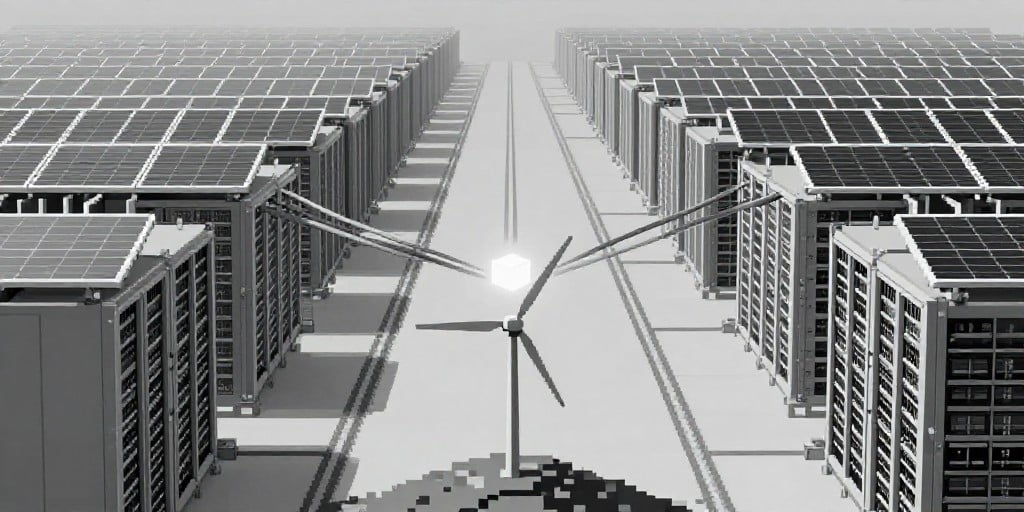
The conference’s agenda points to “regional exemplars” that blend renewable generation with large‑scale data centers. These pilots are often under‑reported because traditional media focus on either pure data‑center or pure power projects. Yet, integrated facilities can achieve higher utilization rates of renewable output (up to 90 % versus the typical 60–70 % in standalone farms) and reduce transmission losses, thereby cutting operating expenses by an estimated 4–6 % per megawatt.
4.2 Regulatory and Policy Risks
- Environmental Compliance: Stricter environmental impact assessments could delay project approvals, extending construction timelines from 18 months to 30 months.
- Export Controls: Increased scrutiny on HPC components could restrict access to cutting‑edge processors, raising operational costs by 2–3 % annually.
- Tariff Adjustments: Potential tariff hikes on imported renewable equipment (e.g., solar panels, battery storage modules) could erode margin forecasts.
4.3 Market and Execution Risks
- Capital Availability: A projected slowdown in sovereign bond issuance (due to tightening fiscal policy) may curtail available debt financing, pushing companies toward higher‑cost equity raises.
- Technology Obsolescence: Rapid advances in AI accelerators may render existing HPC hardware less efficient, impacting long‑term revenue streams if not updated.
5. Opportunities That Others May Miss
5.1 Strategic Partnerships
Companies that can secure joint‑venture agreements with both renewable developers and HPC vendors stand to benefit from shared infrastructure costs and accelerated deployment. For instance, a partnership between a battery storage firm and an AI accelerator manufacturer could unlock a 5‑year cost‑sharing model, reducing CapEx by up to 15 %.
5.2 Diversified Revenue Streams
By bundling renewable generation contracts with power‑service agreements for data‑center tenants, firms can create a predictable, long‑term revenue base. This hybrid model also opens eligibility for green bond issuance, providing a lower‑cost capital source aligned with ESG mandates.
5.3 Geographic Diversification
The “East Data, West Computing” narrative underscores a geographic shift that could be leveraged by firms in the western provinces to access cheaper land and abundant renewable resources. Investing in these regions now could position companies advantageously for the 2028–2030 growth window, when the new Five‑Year Plan is expected to roll out fully.
6. Implications for Investors and Corporate Strategists
- Valuation Discipline: The modest price‑earnings ratios and healthy dividend yields suggest that the market has not yet fully integrated the strategic benefits of computing‑power integration. Investors may find undervalued opportunities, particularly among the eight standout companies.
- Risk‑Adjusted Returns: While the sector presents high growth potential, the regulatory and execution risks necessitate a disciplined, risk‑adjusted approach. A diversified portfolio that blends energy, power, and tech players can mitigate sector‑specific shocks.
- Strategic Positioning: Corporations in the power or renewable space should evaluate the feasibility of entering joint‑venture projects with HPC specialists. Conversely, tech firms with HPC expertise should explore vertical integration into power provision to secure stable power supply and potentially lower operating costs.
7. Conclusion
The CPE 2026 International Computing‑Power‑Co‑operation Industry Conference has underscored a pivotal convergence of high‑performance computing and power infrastructure that is poised to reshape the energy and technology landscapes. While market participants have begun to recognize the potential, significant opportunities remain in integrated project development, cross‑sector partnerships, and geographic diversification. Simultaneously, a prudent assessment of regulatory, technological, and capital‑market risks is essential to navigate this rapidly evolving sector effectively.