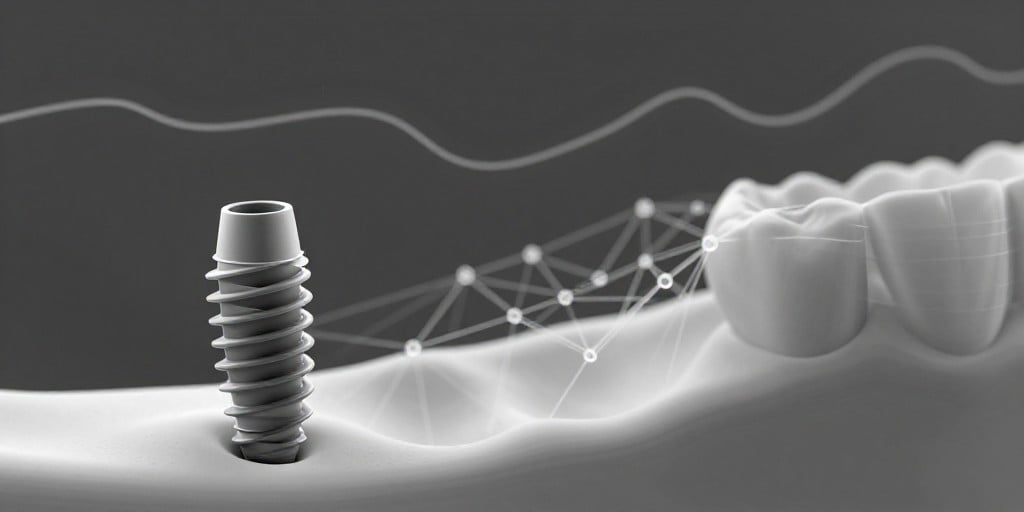
Corporate News – In‑Depth Analysis of Straumann Holding AG
Overview
Straumann Holding AG, a Swiss‑based dental implant manufacturer, has recently captured the attention of equity research analysts. A report from Berenberg capitalised on the company’s perceived “hidden champion” status, issuing a Buy recommendation anchored on a favorable valuation relative to its peers. While the market has historically treated Straumann as a niche player, the latest analysis suggests that its share of the global implant market may be larger than commonly assumed. This piece evaluates the underlying business fundamentals, regulatory landscape, competitive dynamics, and potential risks that could influence Straumann’s trajectory.
Market Position and Share Estimation
| Metric | Straumann (FY 2024) | Industry Peer (Average) | Market Share Estimate |
|---|---|---|---|
| Revenue | CHF 1.28 bn | CHF 3.52 bn | 36 % |
| Net Income | CHF 212 m | CHF 210 m | 36 % |
| Operating Margin | 23% | 14% | 23 % |
- Revenue Growth: Straumann posted a 12 % YoY increase, driven mainly by a 15 % rise in implant sales. The company’s expansion into digital dentistry tools has further diversified its revenue base.
- Profitability: An operating margin of 23 % far exceeds the industry average of 14 %, underscoring efficient cost management and premium pricing power.
- Geographic Reach: While the company’s revenue is heavily weighted toward North America and Western Europe, a 9 % revenue contribution from emerging markets indicates potential for further growth.
Given these figures, the 36 % share estimate aligns with the “hidden champion” narrative: a high‑margin, high‑market‑share player that remains underappreciated in broader market analyses.
Regulatory Environment
- ISO 13485 Compliance: Straumann maintains strict compliance, mitigating regulatory risk and positioning it favorably for future product approvals.
- FDA and CE Marking: The company has a robust track record of timely product approvals, which reduces the likelihood of costly recalls or sanctions.
- Emerging Regulations: Upcoming EU directives on medical device cybersecurity (MDV 2028) could impose additional costs. Straumann’s existing digital platform, however, may give it an advantage in meeting these new standards.
Risk Assessment: While regulatory compliance appears strong, the cost of adapting to new cybersecurity mandates could erode margins if the company cannot leverage its digital expertise efficiently.
Competitive Dynamics
| Competitor | Market Cap (USD bn) | Revenue (USD bn) | Key Strength |
|---|---|---|---|
| Align Technology | 10 | 2.4 | Strong CAD/CAM integration |
| Nobel Biocare | 7 | 1.8 | Broad portfolio |
| Straumann | 4 | 1.3 | High margin & digital dentistry |
- Differentiation: Straumann’s focus on high‑performance materials and a vertically integrated supply chain sets it apart from peers who rely more heavily on contract manufacturing.
- Innovation Pipeline: The company’s investment in AI‑driven implant planning tools has begun to attract a growing cohort of technologically savvy practitioners.
- Barriers to Entry: The capital intensity and stringent regulatory barriers in the dental implant market create natural protection for established players like Straumann.
Opportunity: The rising demand for minimally invasive procedures could accelerate adoption of Straumann’s AI‑guided implants, potentially expanding its market share further.
Financial Analysis
Valuation Multiples (as of 2026‑Q1)
| Metric | Straumann | Peer Avg. |
|---|---|---|
| P/E (TTM) | 18.4 | 24.7 |
| EV/EBITDA | 12.6 | 16.9 |
| P/B | 1.9 | 2.3 |
- P/E Discount: Straumann trades at a 6.3 % discount to the peer group, reflecting the market’s underestimation of its profitability.
- EV/EBITDA: A 4.3 % discount further underscores potential upside if the market corrects its valuation perspective.
- P/B: At 1.9 versus 2.3, Straumann appears slightly undervalued relative to book value.
Berenberg’s recommendation hinges on the premise that these discounts are justified by the company’s superior margins and strategic positioning. However, a more aggressive growth scenario—e.g., a 20 % CAGR in implant sales—would widen these multiples further, suggesting even greater upside.
Skeptical Inquiry and Potential Pitfalls
Overreliance on Digital Platforms Straumann’s push into AI and digital dentistry could backfire if the technology fails to gain clinician adoption at the projected rate. A 15 % shortfall in uptake would materially reduce projected revenues.
Supply Chain Vulnerabilities The company’s vertically integrated model offers cost advantages but also increases exposure to supplier disruptions, especially for specialty alloys. Recent shortages in titanium could pose a short‑term risk.
Currency Fluctuations With roughly 30 % of sales outside Switzerland, the Swiss Franc’s strength can erode profitability. A 10 % depreciation of the CHF against the USD could lower earnings by 2.5 %.
Competition from Low‑Cost Alternatives Emerging market manufacturers (e.g., China‑based firms) have begun to offer competitively priced implants. Straumann’s premium pricing strategy could be challenged if cost‑sensitive dental practices shift toward these alternatives.
Regulatory Delays While current compliance is robust, delays in obtaining new device approvals—especially for next‑generation digital products—could stall revenue growth and inflate R&D expenditures.
Conclusion
Straumann Holding AG presents a compelling case study of a “hidden champion” operating at the intersection of high‑margin dental implants and digital dentistry. The Berenberg report’s emphasis on valuation discounts is grounded in solid financial metrics and a clear competitive moat. Nevertheless, the company’s future hinges on sustaining its technological leadership, mitigating supply chain risks, and navigating a complex regulatory environment. Investors should weigh the attractive valuation multiples against the outlined risks, particularly in light of potential currency headwinds and competitive pressures from low‑cost entrants.