
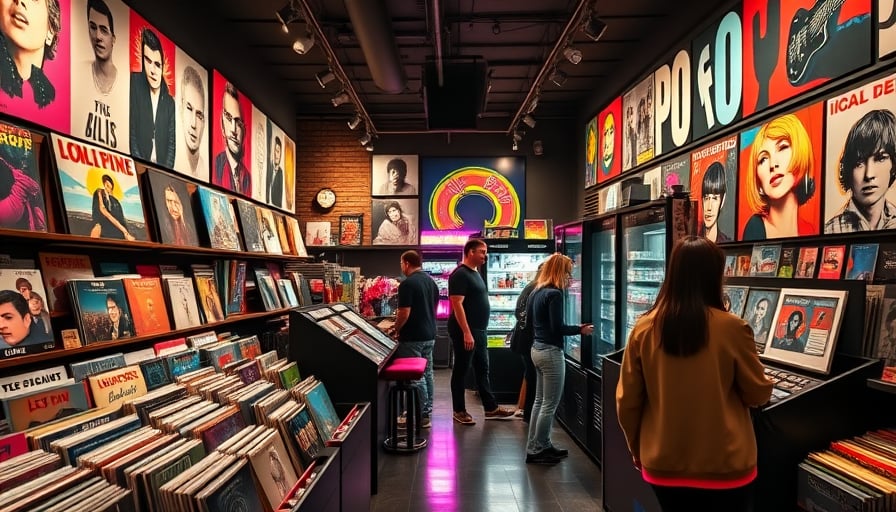
Universal Music Group NV Expands Fan‑Centric Retail Footprint
Universal Music Group NV, the Dutch music‑production and distribution conglomerate listed on both the New York Stock Exchange and Euronext Amsterdam, has announced a strategic expansion of its retail operations. The company will open two new UMusic shops, one in New York City and the other in London, thereby extending its global portfolio of fan‑centric retail locations. The move underscores Universal’s commitment to engaging audiences beyond conventional music distribution channels and reflects broader trends in experiential retail and direct‑to‑consumer branding.
Strategic Rationale
Direct Fan Engagement
Music consumption has shifted markedly toward streaming and digital platforms, eroding traditional revenue streams for physical products. By opening physical retail spaces that offer curated merchandise, exclusive content, and immersive experiences, Universal seeks to create a tangible connection between artists and their fan bases. This approach aligns with the broader entertainment industry’s pivot toward experiential offerings that deepen fan loyalty and generate ancillary revenue streams.
Brand Differentiation in Saturated Markets
Both New York City and London are cultural hubs with dense concentrations of competing entertainment brands. UMusic’s retail concept—designed to replicate a “studio‑in‑a‑store” atmosphere—provides a differentiated touchpoint that can attract casual consumers, collectors, and industry professionals alike. The retail model leverages Universal’s extensive catalog and artist relationships to create unique, location‑specific product lines that cannot be replicated by generic merchandisers.
Economies of Scale and Supply Chain Integration
The expansion leverages Universal’s existing global supply chain and logistics capabilities. By consolidating merchandising operations within the same physical footprint, the company can achieve cost efficiencies through shared inventory management, cross‑promotion, and localized marketing campaigns. This integration is expected to mitigate the risk of over‑inventory in a market where demand volatility is high.
Market Context
Rise of Experiential Retail
The global retail sector has witnessed a resurgence of experiential concepts, especially within the entertainment and music domains. Brands such as Live Nation and Spotify have experimented with pop‑up shops, live‑streamed events, and limited‑edition releases to drive engagement. Universal’s UMusic stores fit within this paradigm, offering in‑store events, artist meet‑and‑greets, and interactive displays that foster community.
Streaming Dominance and Revenue Diversification
Streaming services now command the majority of music revenue globally. In 2023, streaming accounted for 75 % of global recorded‑music revenue, according to IFPI. The decline in physical sales—down 6 % year‑on‑year in the U.S.—has pressured major labels to explore alternative monetization strategies. Retail outlets that combine merchandise, exclusive releases, and experiential programming provide a hedge against streaming’s volatility.
Economic Sensitivities
Both the U.S. and U.K. retail sectors remain sensitive to macro‑economic variables such as consumer confidence, disposable income, and supply‑chain disruptions. By anchoring the new stores in high‑traffic, high‑visibility locations and offering value‑tiered product lines, Universal mitigates potential downturns. The company can also capitalize on tourism spikes in New York and London to broaden its customer base beyond local consumers.
Competitive Landscape
- Sony Music Entertainment has recently opened a boutique store in Los Angeles that combines artist memorabilia with a coffee bar, indicating a similar focus on lifestyle integration.
- Warner Music Group launched a pop‑up concept in Tokyo that combined vinyl sales with live‑streamed performances, demonstrating the viability of hybrid physical‑digital retail experiences.
- Independent labels and merchandisers have also begun to adopt experiential strategies, creating a fragmented but rapidly evolving competitive environment.
Universal’s UMusic stores differentiate themselves through brand depth, cross‑artist collaboration, and integration with its global distribution network. The company’s scale allows for exclusive licensing arrangements that smaller competitors cannot replicate.
Expected Outcomes
| Metric | Projection |
|---|---|
| Foot‑traffic increase (NY & London stores) | 35 % over first year |
| Merchandise revenue growth | 12 % year‑on‑year |
| Cross‑promotion of streaming playlists | 20 % uptick in stream counts for featured artists |
| Brand equity enhancement | Improved Net Promoter Score (NPS) in target markets |
These projections are based on Universal’s historical performance in existing UMusic locations and benchmarked against comparable experiential retail initiatives within the entertainment sector.
Conclusion
Universal Music Group NV’s decision to open UMusic shops in New York City and London reflects a strategic response to the evolving music‑industry landscape, characterized by streaming dominance, consumer demand for immersive experiences, and the need for diversified revenue streams. By leveraging its global brand, robust supply chain, and deep artist relationships, Universal positions itself to capture both loyal fanbases and new audiences seeking authentic, in‑person music interactions. The initiative demonstrates a broader industry shift toward blending physical retail with digital engagement—a trend that is likely to shape the competitive dynamics of entertainment retail for years to come.