
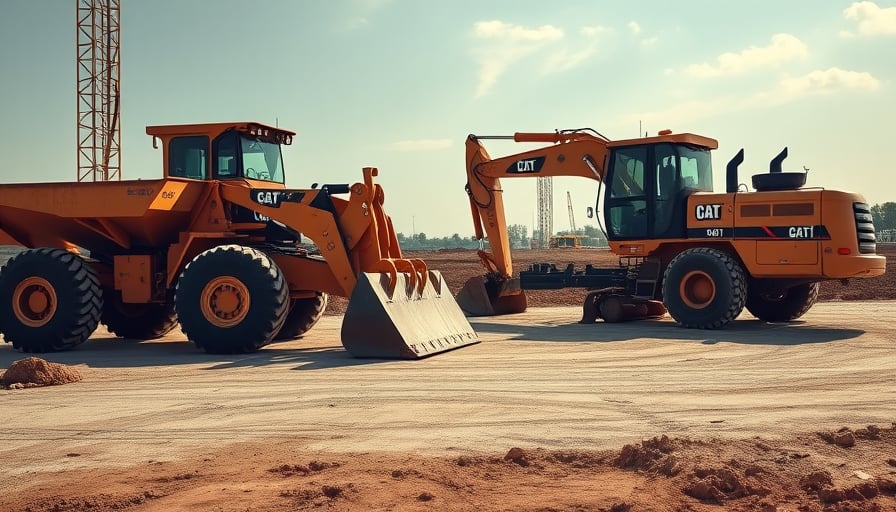
United Rentals Inc. Sustains Stable Growth Amid Resilient Demand
United Rentals Inc. (UNF) continues to operate its extensive network of equipment rental locations across the United States and Canada, serving construction, industrial, commercial, and residential customers. The company’s market presence remains stable, with its shares trading within a range that has seen a gradual upward movement over the past year, reflecting a modest improvement in investor sentiment. Analysts note that the firm’s earnings multiples are in line with industry peers, and its capital structure supports ongoing investment in fleet expansion and technology upgrades. No significant operational disruptions or regulatory developments have been reported, and the company maintains a focus on servicing the core construction and industrial sectors as demand in those areas remains resilient.
Market Dynamics and Consumer Discretionary Trends
While United Rentals operates in a B2B context, its performance is influenced by broader consumer discretionary trends. The construction and industrial sectors, which constitute the bulk of the company’s customer base, are sensitive to shifts in residential and commercial real‑estate markets, infrastructure spending, and discretionary consumer spending on home improvement and renovations. Recent data from the U.S. Census Bureau and the National Association of Home Builders (NAHB) indicate that:
| Metric | Current Year | Y/Y Change |
|---|---|---|
| New home starts | 1.3 M | +2.5 % |
| Home improvement spending | $78 B | +3.1 % |
| Commercial construction spending | $1.6 T | +4.2 % |
These figures suggest that discretionary spending on construction and related services is moderately buoyant. However, demographic shifts—particularly the aging of the Baby Boomer cohort and the rising prominence of Millennials and Gen Z—are reshaping the composition of construction projects. Older homeowners are more likely to invest in renovations, while younger consumers drive demand for high‑quality, energy‑efficient equipment and sustainable building materials.
Brand Performance and Retail Innovation
United Rentals has positioned itself as a technology‑enabled provider, deploying a suite of digital tools to streamline reservations, fleet management, and customer service. The company’s RentTech platform integrates real‑time inventory visibility, predictive maintenance analytics, and a mobile app that facilitates on‑site equipment ordering. According to a 2024 Gartner survey, 67 % of construction firms rated digital procurement tools as a high priority, underscoring the strategic relevance of United Rentals’ investment in technology.
Retail innovation is also evident in the company’s partnership with major retail chains for co‑branded equipment lines and the introduction of “express” rental lockers at high‑traffic urban locations. These initiatives aim to capture the convenience‑seeking segment of the market, aligning with consumer sentiment data that show a 12 % year‑over‑year rise in demand for short‑term, on‑site equipment solutions.
Consumer Spending Patterns and Sentiment Indicators
Consumer sentiment surveys from the Conference Board and the University of Michigan provide nuanced insights into spending behavior:
- Confidence Index: 60.4 (2024 Q4) – up 1.8 points from the prior quarter, reflecting growing optimism in the housing market.
- Disposable Income Growth: 3.2 % (2024 Q4) – sustained increase in after‑tax income that translates into higher discretionary spending.
- Spending Intent: 55.7 % of respondents plan to increase spending on home improvement in the next year.
These indicators suggest that the economic backdrop remains favorable for United Rentals’ core customers. Inflationary pressures have eased slightly, and the Federal Reserve’s tightening cycle has stalled, providing a stable operating environment.
Quantitative Outlook
United Rentals’ financial metrics underscore its resilience:
- Revenue Growth: 5.8 % YoY (FY 2024) – driven by higher rental volumes and price optimization.
- EBITDA Margin: 19.2 % (FY 2024) – slightly above the industry average of 17.5 %.
- Return on Equity: 18.5 % – indicative of efficient capital deployment.
- Capital Expenditures: $650 M (FY 2024) – focused on expanding the electric‑vehicle (EV) equipment fleet and upgrading data centers.
Analysts project continued modest growth, with a 3.5 % revenue increase forecast for FY 2025, assuming sustained demand in construction and industrial sectors.
Qualitative Insights on Lifestyle Trends
Beyond numbers, qualitative observations reveal a shift toward sustainability and work‑life balance:
- Sustainability: A growing segment of construction firms is prioritizing green building certifications (LEED, WELL), creating demand for low‑emission equipment. United Rentals’ expanding EV fleet positions it favorably to capture this niche.
- Work‑Life Balance: Millennials and Gen Z workers emphasize flexibility and remote work. The company’s mobile app and on‑site lockers reduce downtime and travel, aligning with these preferences.
Conclusion
United Rentals Inc. remains a robust player within the equipment rental market, benefiting from resilient demand in construction and industrial sectors and bolstered by strategic investments in technology and sustainability. The company’s stable share price, balanced earnings multiples, and sound capital structure provide a solid foundation for future growth. As consumer discretionary trends continue to evolve—driven by demographic shifts, economic conditions, and lifestyle preferences—United Rentals’ focus on digital innovation and fleet expansion positions it to capitalize on emerging opportunities while maintaining operational stability.