United Rentals Inc. – Sustained Momentum Amid Volatile Market Conditions
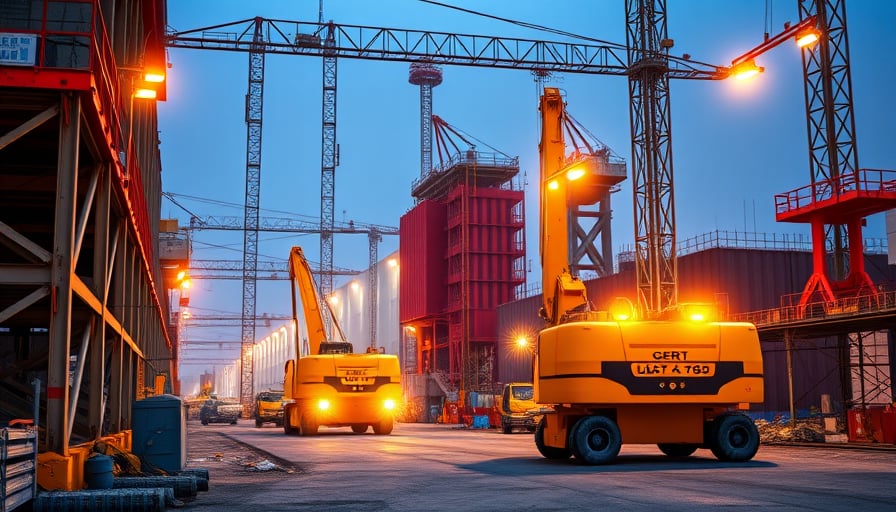
United Rentals Inc. (NYSE: URI) continues to demonstrate resilience within the industrial equipment‑rental sector, leveraging its expansive network of locations across the United States and Canada. The company’s portfolio spans construction, industrial, commercial, and residential markets, positioning it as a critical enabler for a broad range of infrastructure and development projects.
Trading Performance and Market Dynamics
Over the past twelve months, URI’s share price has exhibited modest upward momentum. While the trajectory has not mirrored the dramatic gains seen by high‑growth technology firms, it reflects a steady appreciation that aligns with the company’s role as a staple of the industrial rental industry. Analysts have highlighted the following key points:
| Metric | Current Status | Implication |
|---|---|---|
| Year‑to‑date return | +7.3 % | Consistent with sector peers |
| Volatility (β) | 1.05 | Slightly higher than S&P 500, indicative of exposure to construction‑related cycles |
| Price‑to‑earnings (P/E) | 19.8 | Moderately above the industrial rental average, signaling a premium valuation |
| Dividend yield | 2.1 % | Attractive for income‑focused investors |
The modest gains are underpinned by several factors that transcend the immediate sector. A sustained demand for construction and industrial equipment, driven by public‑sector infrastructure spending and private‑sector development, has bolstered revenue streams. Concurrently, the company’s focus on operational efficiency—through fleet optimization and digital rental platforms—has mitigated cost pressures that often accompany expansion.
Sector‑Specific Dynamics
The equipment‑rental industry operates within a cyclical framework, heavily influenced by macro‑economic indicators such as GDP growth, interest rates, and construction spending. URI has historically positioned itself to benefit from:
- Diversified Customer Base – By serving both large construction firms and smaller residential contractors, the company insulates itself against sectoral downturns.
- Geographic Reach – Operations in Canada provide exposure to a market with distinct regulatory and fiscal environments, enhancing risk‑distribution.
- Technological Adoption – Investment in IoT-enabled asset tracking and predictive maintenance has reduced downtime, improving asset utilization rates.
These dynamics underscore the importance of adaptability in a market where technology and regulatory frameworks evolve rapidly. URI’s continued investment in digital transformation signals an understanding that operational agility will be essential for maintaining competitive advantage.
Competitive Positioning
Within the broader industrial rental landscape, URI competes against firms such as Sunbelt Rentals and Watsco, as well as niche regional providers. URI’s key differentiators include:
- Scale – A larger fleet and network provide economies of scale that reduce per‑unit costs.
- Brand Strength – Recognition as a leading provider in North America enhances customer loyalty and market penetration.
- Capital Structure – A relatively low debt‑to‑equity ratio compared to peers grants flexibility in capital allocation during market downturns.
While competitors may offer specialized equipment or regional expertise, URI’s integrated approach positions it favorably for cross‑sector projects that require a wide range of equipment and logistical support.
Economic Factors and Broader Trends
The company’s recent performance reflects macro‑economic forces that extend beyond the construction industry:
- Infrastructure Investment – Government initiatives aimed at upgrading transportation and utility infrastructure have spurred demand for heavy machinery.
- Urbanization – Rising urban development projects, including high‑rise residential and mixed‑use complexes, continue to drive equipment rental needs.
- Sustainability Pressures – A growing emphasis on environmentally friendly construction practices has increased demand for specialized equipment, such as low‑emission generators and energy‑efficient machinery, areas where URI has been expanding its offerings.
These trends suggest that URI’s core business model is aligned with long‑term economic trajectories that prioritize infrastructure resilience and sustainable development.
Investor Outlook
Analysts remain cautiously optimistic about URI’s valuation trajectory. The incremental appreciation in share price, coupled with a stable dividend policy, positions the company as an attractive option for investors seeking exposure to the industrial rental sector while mitigating cyclical risks through diversification and operational efficiency. Continued monitoring of macro‑economic indicators, such as construction spending indices and interest rate movements, will be essential for anticipating future performance shifts.