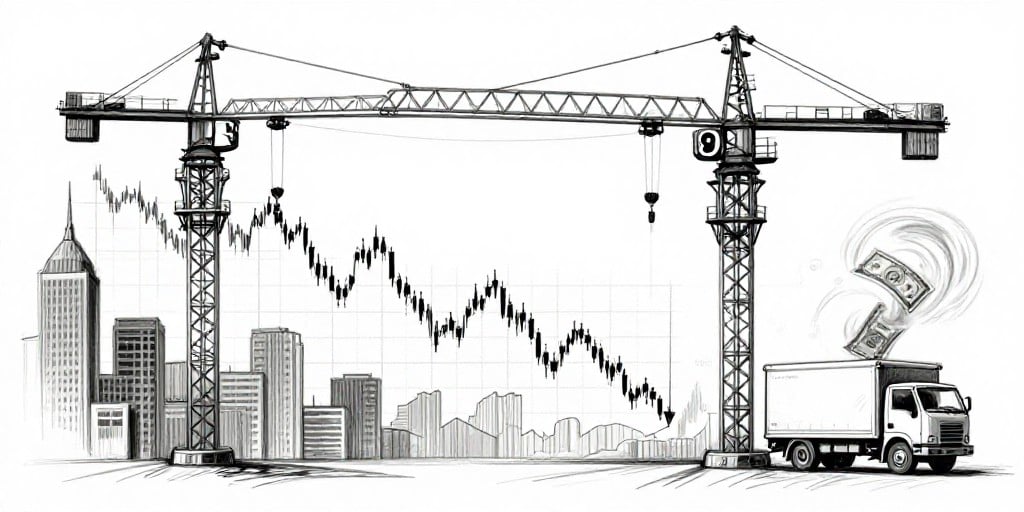
United Rentals Inc. Faces Share Price Decline Amid Broader Market Pressures
United Rentals Inc. experienced a modest decline in its share price during the most recent trading session on the New York Stock Exchange, underscoring a broader downturn in the company’s performance relative to the broader market index. The firm’s stock fell a few percent from its previous close, settling just under $1,000 per share. This drop places United Rentals among the S&P 500 constituents that have suffered the most significant percentage losses in the current day’s trading.
Historical Performance Context
Over the past year, an investment of $1,000 at the beginning of September 2025 would have yielded a modest increase in value. By the end of September 2026, the share price had risen only slightly, resulting in a total value of just over $1,000 per share and an overall gain of a little more than ten percent. This modest performance indicates a relatively flat return for long‑term holders, especially when compared with the broader market’s year‑to‑date gains, which have exceeded eleven percent for the S&P 500.
Market Capitalisation and Peer Comparison
United Rentals’ market capitalisation has hovered around $65 billion in recent trading. While the company’s valuation remains substantial, its share price momentum has lagged behind many peers in the index. The recent decline has prompted analysts to re‑examine the company’s earnings outlook and potential catalysts that might influence future price movements.
Investor Sentiment and Outlook
As of the latest snapshot, United Rentals’ shares trade at a level that suggests a cautious stance by investors. No significant dividend adjustments or corporate actions have been reported that could alter the current valuation trajectory. Analysts are closely monitoring the firm’s operational metrics, debt levels, and revenue growth from its core equipment rental business, which traditionally exhibits cyclical sensitivity to macroeconomic conditions such as construction spending and infrastructure investment.
Sectorial Implications
The rental equipment sector remains a bellwether for the broader construction and infrastructure markets. A downturn in United Rentals’ performance may signal tightening demand for equipment, potentially driven by slower project pipelines or heightened cost pressures. If the trend persists, it could reverberate across related industries—including machinery manufacturing, logistics, and project management services—highlighting the interconnected nature of capital‑intensive sectors.
Conclusion
United Rentals’ recent share price decline, when viewed in the context of its modest long‑term returns and relative market performance, underscores the importance of disciplined analysis in evaluating companies with substantial market capitalisation but muted momentum. Investors and analysts alike will need to monitor the company’s earnings trajectory, operational efficiency, and macroeconomic indicators to assess whether the current valuation reflects a temporary lag or a more enduring shift in the company’s competitive positioning.