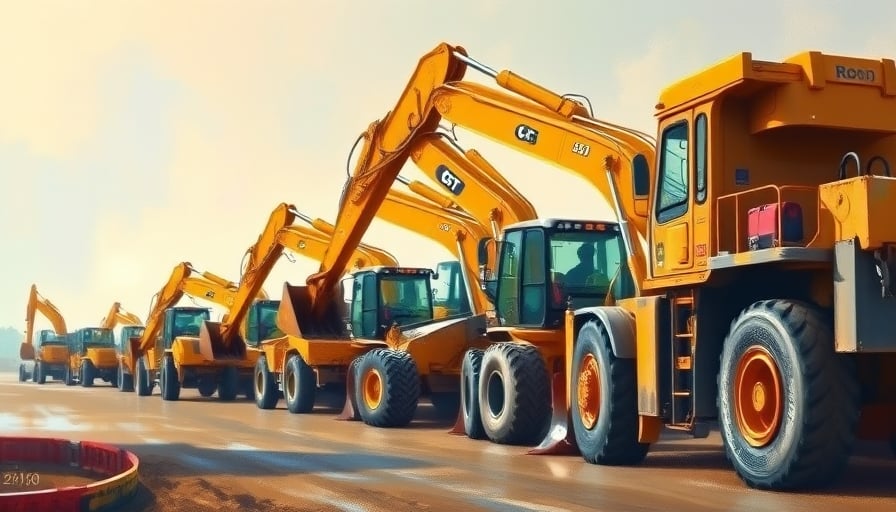
United Rentals Inc. Maintains Strong Investor Appeal Amid Construction Equipment Sector Dynamics
United Rentals Inc. continues to attract attention from institutional and retail investors, underscoring its status as a leading provider of construction equipment rentals. Recent commentary from market analysts highlights the company’s potential to remain a key player in the industry, citing a robust position that is supported by a diversified fleet and a broad customer base.
Institutional Investment Signals Confidence
A notable development in United Rentals’ shareholding structure involved ROGCO, LP, which acquired a significant block of shares. This transaction reflects sustained confidence from institutional investors, indicating a belief in United Rentals’ long‑term prospects. While the precise motivations behind the purchase have not been disclosed, it aligns with a broader trend of renewed interest in rental and equipment‑leasing businesses as construction demand stabilizes across the United States.
Resilience Amid Economic Fluctuations
Market observers point out that United Rentals has demonstrated resilience in the face of economic fluctuations. The company’s revenue streams derive from a mix of short‑term and long‑term contracts spanning various construction projects. This diversified contract base mitigates exposure to cyclical downturns and supports steady cash flows even during periods of macroeconomic uncertainty.
Strategic Focus on Operational Efficiency
United Rentals’ management has reiterated a commitment to operational efficiency and strategic asset deployment. By optimizing fleet utilization, reducing idle equipment, and leveraging data analytics for predictive maintenance, the company aims to reduce costs and improve service levels. These initiatives are expected to underpin future growth and enhance competitive positioning against both traditional equipment vendors and newer entrants in the sharing economy.
Sector‑Wide Implications
The investment activity in United Rentals reflects a broader shift among investors toward companies that can capitalize on rising construction activity and infrastructure spending. As federal and state governments allocate funds to infrastructure projects, the demand for heavy equipment rentals is projected to increase. United Rentals’ established market presence and geographic reach position it favorably to capture this upside.
Conclusion
Overall, the news signals sustained investor interest and a positive outlook for United Rentals Inc. The combination of institutional backing, a diversified revenue mix, and a strategic focus on operational excellence suggests confidence in the company’s ability to navigate an evolving construction landscape. Investors and analysts alike will likely continue to monitor United Rentals as a barometer for the health of the equipment‑leasing sector and its responsiveness to broader economic trends.