United Airlines Holdings Inc. Faces Evolving Financial Landscape in Upcoming Earnings Report
United Airlines Holdings Inc. (NASDAQ: UAL) is set to announce its latest quarterly earnings on 20 October, following the close of the quarter on 30 September. The company’s financial trajectory, while still robust, reveals a nuanced shift in profitability and revenue dynamics that merit close scrutiny.
Earnings Per Share: A Modest Decline Amid Strong Revenue Growth
Analysts anticipate earnings per share (EPS) of US$2.58 for the quarter, a 2.3 % decline from the US$2.90 recorded in the same period a year earlier. While the headline EPS is still above the consensus of US$2.50, the downward swing is indicative of tightening margins. When juxtaposed with the full‑year EPS expectation of US$7.94, down from US$10.20 a year ago, the pattern of declining profitability is unmistakable.
Underlying Drivers
- Fuel Cost Pressure – Jet fuel constitutes a large and volatile component of operating expenses. The airline industry’s exposure to crude oil price swings has intensified, as recent geopolitical tensions and supply chain disruptions have pushed fuel costs upward.
- Higher Operating Levers – Labor costs, maintenance, and ancillary fees (e.g., baggage, seat selection) have risen, partly due to industry-wide wage negotiations and inflationary pressures.
- Revenue Mix Shift – While overall revenue climbs, the composition of fare types and ancillary revenue streams may have shifted toward lower‑margin products.
Revenue Outlook: 17 % Year‑Over‑Year Increase
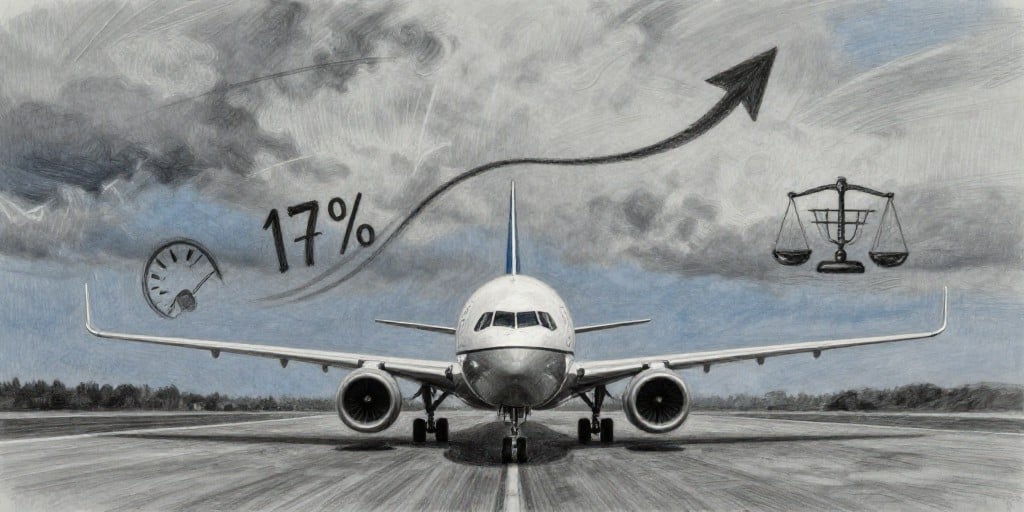
Revenue expectations for the quarter hover around US$17.9 billion, reflecting a 17 % uptick versus the prior year’s quarter. Year‑to‑date revenue is projected at US$68.5 billion, a 16 % increase over the previous fiscal year’s US$59 billion.
Market Context
- Load Factor Recovery – United’s load factor improved to 81 % from 78 % in the same quarter last year, driven by increased domestic demand and a rebound in international routes.
- Network Expansion – The airline is launching new long‑haul routes and expanding its hub capacity, which could sustain revenue growth if ancillary services and premium cabin demand remain stable.
- Competitive Landscape – Rival carriers have been aggressive in price competition, particularly on trans‑Atlantic and trans‑Pacific corridors. United’s fare pricing strategy will need to balance competitive pressure with margin preservation.
Regulatory and Geopolitical Considerations
- Environmental Regulations – The U.S. Treasury Department’s forthcoming updates to the Inflation Reduction Act and the Department of Transportation’s emissions reporting requirements could impose additional compliance costs and influence fleet renewal decisions.
- International Sanctions – Ongoing sanctions on certain airspaces and trade partners could curtail United’s route network, especially to key emerging markets, constraining revenue potential.
Risks and Opportunities
| Risk | Impact | Mitigation |
|---|---|---|
| Fuel Price Volatility | Margin squeeze | Hedging strategies; fuel‑efficiency upgrades |
| Regulatory Compliance | Additional costs | Proactive engagement; lobbying |
| Competitive Pricing | Revenue erosion | Product differentiation; loyalty programs |
| Geopolitical Disruptions | Route cancellations | Diversified route portfolio; flexible scheduling |
| Opportunity | Potential Upswing | Leverage |
|---|---|---|
| Digital Innovation | Enhanced customer experience; upsell | Invest in AI‑driven personalization |
| Low‑Cost Carrier Partnerships | Expanded market share | Code‑share agreements |
| Sustainable Aviation Fuel (SAF) | Cost parity with jet fuel | Long‑term contracts |
Financial Analysis Snapshot
- Operating Margin: Projected to fall from 27 % to 23 % YoY, reflecting higher fuel and labor expenses.
- EBITDA: Expected to increase by 4 % YoY, driven by revenue growth, though the margin contraction remains a concern.
- Debt Position: Current debt-to-equity ratio stands at 1.2, unchanged from the previous year, suggesting manageable leverage.
Conclusion
United Airlines Holdings Inc.’s upcoming earnings release will provide a deeper view into the airline’s resilience amid persistent fuel cost challenges, regulatory shifts, and competitive pricing wars. While revenue growth appears steady, the margin erosion signals an industry-wide pressure that could become more pronounced if fuel prices continue to climb or geopolitical tensions intensify. Stakeholders should monitor the company’s hedging effectiveness, route optimization strategies, and investment in sustainable fuel alternatives to gauge whether United can maintain its profitability trajectory in the evolving aviation landscape.