
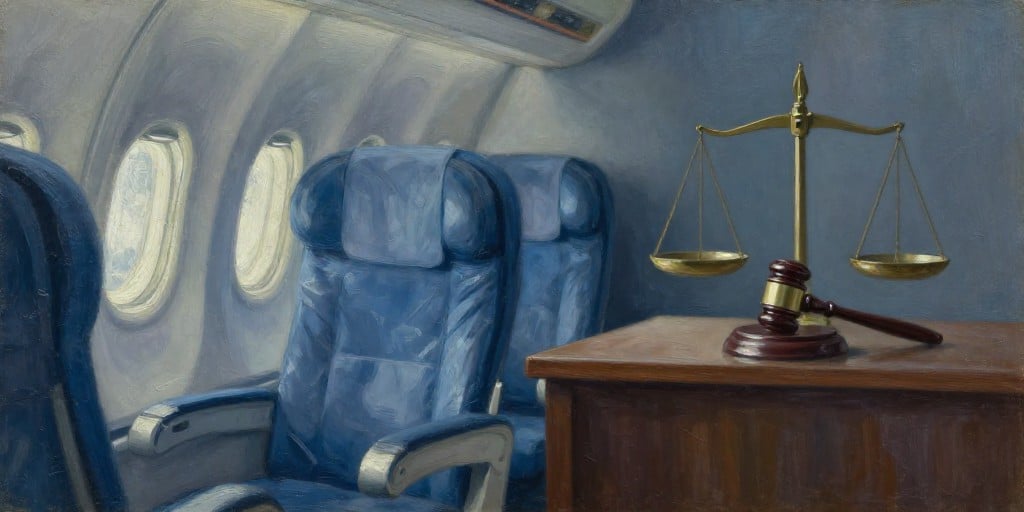
United Airlines Holdings Inc. Faces Class‑Action Litigation Over “Window Seat” Claims
United Airlines Holdings Inc. (NASDAQ: UAL) is now a focal point in a legal dispute that may reshape how major carriers present seat options to passengers. A federal judge in San Francisco rejected United’s motion to dismiss a proposed class‑action lawsuit that alleges passengers were misled when paying an additional fee for so‑called “window seats.” The lawsuit, filed in August, contends that the airline’s booking interface and ticket terms could reasonably be interpreted as guaranteeing a view of the outside.
Key Legal Points
Allegations of Misrepresentation The complaint argues that the airline’s booking screens and ticket terms explicitly indicate a window seat, yet in some cases the seat provided no outward view. Passengers claim they paid extra for a benefit they did not receive.
United’s Defense United has stated that its website was updated in 2025 to provide more detailed seat information, implying that any prior ambiguity has since been corrected. Nonetheless, the court has ruled that these updates are insufficient to dismiss the claim.
Proceeding Without Public Comment United has not issued a public statement regarding the litigation. The judge’s ruling permits the case to advance to the next procedural stage, potentially leading to discovery and settlement negotiations.
Broader Airline Context The same complaint names Delta Air Lines, which is also confronting a related lawsuit. Delta has declined to comment while its own legal proceedings continue.
Implications for the Airline Industry
Consumer Transparency The outcome may compel airlines to adopt clearer, more granular seat‑selection interfaces. The legal precedent could force carriers to disclose not only seat type but also specific view quality and proximity to aircraft features that might obstruct sight lines.
Competitive Positioning United and its competitors may revise pricing strategies for premium seats, potentially redefining revenue‑management models that rely on differential pricing for seat categories.
Regulatory and Economic Dynamics Should the court side with passengers, airlines may face increased compliance costs and a shift toward more stringent consumer‑rights regulations. This aligns with broader trends of heightened scrutiny over corporate disclosures and consumer protection across industries.
Cross‑Sector Lessons The case exemplifies a growing expectation that companies must provide precise, actionable information about product features. Similar dynamics are observable in sectors such as hospitality, ride‑share, and streaming services, where tiered offerings can lead to consumer confusion if not clearly delineated.
Outlook
While the case is still in early stages, the ruling underscores a growing judicial willingness to scrutinize corporate claims of misrepresentation, especially in the context of digital interfaces. For United Airlines, the legal process may serve as a catalyst for operational changes in its booking platform. For the wider industry, the proceedings highlight the importance of transparency and detail in product presentation to maintain consumer trust and regulatory compliance.