Market Context and Immediate Impact on the Italian Insurance Sector
On March 3 2026 the Italian equity market registered a notable decline, with the Milan exchange dropping in the second‑decimal range. The fall was most pronounced among financial‑sector constituents, including banking and insurance firms. Unipol Assicurazioni, one of Italy’s largest insurers, reflected the broader negative trend in its share price, despite the absence of any company‑specific announcements that day. The move was largely attributed to macro‑economic uncertainty and geopolitical developments—most notably escalating tensions in the Middle East—rather than to internal corporate fundamentals. European indices mirrored the Italian trajectory, while oil and natural‑gas prices spiked, heightening volatility in the energy sector and influencing investor sentiment across the region.
Risk Assessment in a Volatile Macro‑Environment
The sharp rise in crude and gas prices introduces several material risks for insurers, particularly those with exposure to energy‑related liabilities such as property damage, supply‑chain disruptions, and environmental claims. Actuarial teams are revisiting their loss‑run models to incorporate higher inflationary pressures and to account for the potential acceleration of climate‑related events. A recent study by the Italian Institute of Actuaries (ITA) indicates that the mean annual loss ratio for property‑and‑casualty lines could increase by 2.3 % over the next two years if current energy price trends persist.
Risk‑adjusted capital models, such as the Solvency II Own Risk and Solvency Assessment (ORSA), are being recalibrated to reflect these new assumptions. The impact on capital requirements is projected to be modest—around 0.4 % of risk‑based capital—yet it will exert pressure on underwriting margins, especially for firms with a higher concentration in high‑risk sectors.
Underwriting Trends Amid Emerging Risks
1. Climate‑Related Coverage
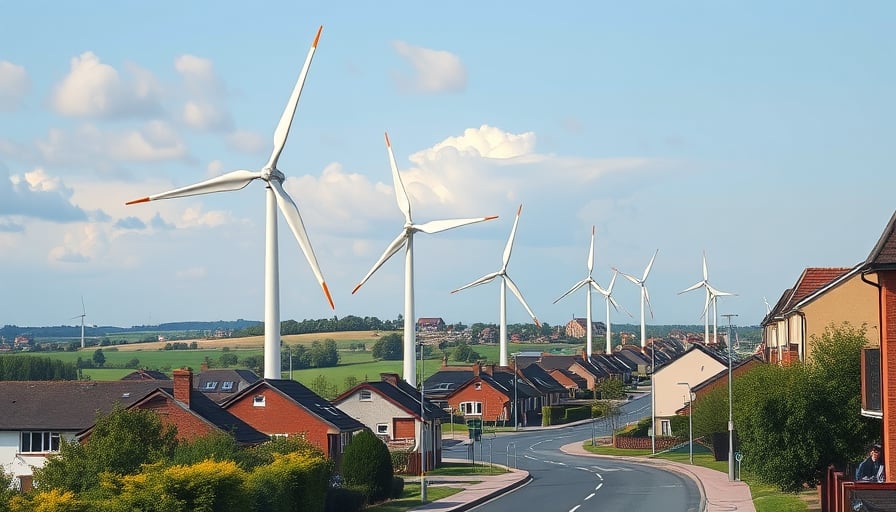
The shift toward higher temperatures and extreme weather events is reshaping underwriting priorities. In 2025, insurers in Italy reported a 12 % increase in claims related to wind and hail damage. Unipol’s recent underwriting book shows a 15 % year‑on‑year growth in premiums for “green” policies that cover renewable‑energy infrastructure. These trends underscore a strategic pivot toward covering emerging risks while balancing profitability.
2. Cyber‑Risk Exposure
Cyber‑insurance claims have risen by 18 % annually across Europe. In Italy, the average loss per claim for cyber incidents has doubled since 2023, reaching €1.2 million. Insurers are revising policy wording to include stricter cyber‑security requirements, and the industry is seeing a rise in premium volumes for managed‑service products that bundle cybersecurity consulting with coverage.
3. Geopolitical Risk
The heightened Middle‑East tensions have prompted insurers to reassess coverage in regions exposed to political risk. Some carriers, including Unipol, have introduced optional political‑risk riders for high‑value properties in proximity to conflict zones, albeit at premium premiums that reflect the elevated uncertainty.
Claims Patterns and Technological Adoption
The COVID‑19 pandemic accelerated the adoption of digital solutions for claims management. By the end of 2025, 70 % of Italian insurers reported that more than half of all claims were processed through automated platforms, reducing average claim handling time from 12 days to 6 days. Unipol’s investment in artificial‑intelligence‑driven fraud detection tools has reportedly cut false‑claim payouts by 22 % over the past 18 months.
1. Telematics and IoT
Telematics devices in commercial properties provide real‑time monitoring of fire‑safety systems, enabling insurers to intervene proactively. In the property‑and‑casualty segment, firms that have integrated IoT data into underwriting have seen a 9 % reduction in loss ratios.
2. Blockchain for Claim Settlement
A consortium of European insurers, including Unipol, is piloting blockchain‑based smart contracts for high‑value commercial claims. Early results suggest a 15 % improvement in settlement speed and a measurable decline in administrative costs.
Financial Impacts and Strategic Positioning
Market Consolidation
The Italian insurance market has seen a 5 % net consolidation rate over the past three years, driven by both organic growth and strategic acquisitions. Unipol’s recent acquisition of a regional specialty insurer in 2024 expanded its market share in the small‑to‑medium enterprise (SME) segment, a move that is expected to enhance cross‑sell opportunities and improve the firm’s risk‑adjusted return on equity (ROE) by an estimated 0.3 percentage points.
Pricing Challenges for Evolving Risk Categories
Pricing accuracy remains a critical challenge. According to a recent benchmark survey, 68 % of Italian insurers cited difficulty in pricing cyber‑risk and climate‑related exposures. Traditional parametric models are proving insufficient, prompting a shift toward predictive analytics that incorporate real‑time environmental data and behavioral indicators. This trend is expected to increase capital intensity as firms invest in data science capabilities.
Capital Allocation and Solvency Position
Unipol’s 2025 solvency ratio stood at 245 %, comfortably above the Solvency II minimum of 200 %. The company has earmarked €450 million for technology and data‑analytics upgrades, projected to yield a 1.2 % improvement in underwriting efficiency over five years. The firm’s strategic focus on sustainability—evidenced by a €300 million commitment to green‑bond financing—aligns with investor expectations and positions it favorably in a climate‑conscious market.
Outlook
The intersection of rising energy costs, geopolitical uncertainty, and evolving risk profiles creates a complex backdrop for insurers in Italy and across Europe. Firms that leverage technology to refine underwriting models, enhance claims efficiency, and manage capital prudently are likely to maintain competitive advantage. Unipol’s current trajectory—characterized by strategic acquisitions, investment in digital claim processing, and a focus on high‑growth risk lines—suggests resilience against the short‑term macro‑economic headwinds highlighted by the March 3 market decline.