Corporate Actions and Strategic Infrastructure Enhancement at Union Pacific Corp.
Union Pacific Corp. (NYSE: UNP) disclosed a series of corporate actions and ownership filings in early April 2026, providing a detailed view of the company’s equity structure and ongoing investments in freight infrastructure. The filings and operational developments illustrate the company’s dual focus on maintaining a transparent and well‑managed shareholder base while expanding capacity at key trans‑pacific nodes to support a high‑volume, fast‑moving rail network.
Ownership Filings: 4‑Form Disclosures
The railroad’s headquarters in Omaha, Nebraska, filed multiple 4‑Form reports that capture adjustments to the holdings of directors, officers, and significant shareholders. These documents, mandated by the Securities and Exchange Commission, include:
- Acquisition of Common Shares: Several board members and executive officers reported purchases of common equity, reflecting confidence in the company’s long‑term prospects.
- Phantom Shares and Phantom Stock Units: Executives and key employees exercised phantom share allocations and units, a form of deferred compensation tied to share performance that aligns management incentives with shareholder value.
- Routine Equity Adjustments: The filings confirm standard equity transactions, such as the transfer of shares between related parties and the issuance of additional phantom instruments in accordance with the company’s compensation framework.
The breadth of these filings underscores Union Pacific’s commitment to regulatory compliance and to maintaining an accurate record of ownership concentration—a critical factor for governance, market perception, and the execution of corporate strategies.
Port of Los Angeles Rail Upgrade
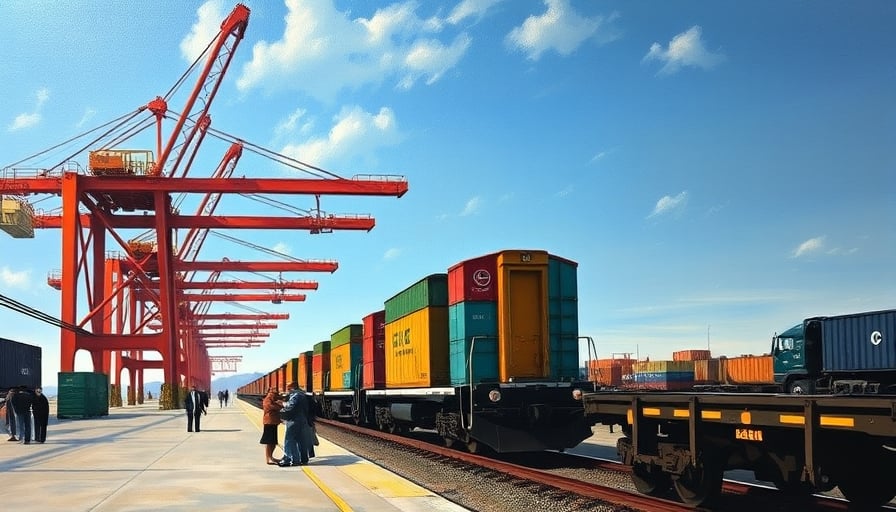
In parallel with the ownership updates, Union Pacific highlighted a significant infrastructure project at the Port of Los Angeles. A partner terminal completed a substantial rail upgrade that effectively doubled its yard capacity and increased rail movements by more than one hundred percent. The key outcomes of this expansion are:
- Enhanced Intermodal Efficiency: The upgraded yard now accommodates both major carriers, including Union Pacific, enabling quicker transfers from vessels to rail. This reduces dwell times and improves scheduling reliability across the national network.
- Scalable Freight Capacity: With doubled capacity, the terminal can handle a larger volume of containers, supporting the growing demand for fast and efficient supply chain solutions in the Asia‑Pacific trade corridor.
- Strategic Asset Allocation: The investment reflects Union Pacific’s broader strategy to strengthen critical nodes along the West Coast, thereby enhancing freight throughput and mitigating bottlenecks in the trans‑pacific supply chain.
Strategic Implications
The combination of meticulous ownership filings and proactive infrastructure investment signals a balanced corporate governance approach:
- Governance and Investor Confidence: Transparent disclosure of equity changes fosters trust among investors and regulators, positioning the company favorably for potential capital‑raising initiatives.
- Operational Resilience: By expanding capacity at a pivotal port, Union Pacific reinforces its ability to manage freight volumes during peak periods, thereby safeguarding service levels and revenue streams.
- Market Positioning: The rail upgrade not only improves operational efficiency but also strengthens competitive positioning against other intermodal carriers, solidifying Union Pacific’s role as a leading freight provider on the West Coast.
Broader Economic Context
These developments occur against a backdrop of accelerating global trade and heightened demand for efficient logistics solutions. As international shipping volumes rise, rail networks that can seamlessly transition cargo from sea to land gain strategic importance. Union Pacific’s focus on enhancing capacity and reliability aligns with industry trends toward multimodal integration and sustainability, positioning the company to capitalize on opportunities in the evolving freight landscape.
The reported corporate actions and infrastructure expansion demonstrate Union Pacific Corp.’s ongoing commitment to responsible shareholder governance while simultaneously investing in assets that underpin a resilient, high‑volume rail network.