
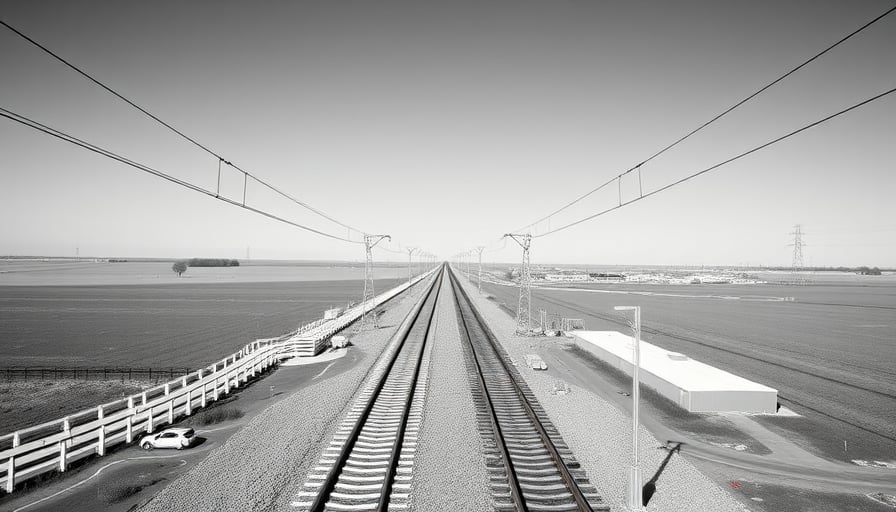
Union Pacific Corp. Expands Governance and Positions for a Potential Trans‑Continental Merger
Union Pacific Corporation (UP) has announced the addition of W. Anthony Will to its board of directors, a governance shift that comes at a time when the company is reportedly preparing to file a merger application with Norfolk Southern (NS). The proposed consolidation, if approved, would create a single trans‑continental railway system stretching from the Atlantic to the Pacific, potentially reshaping freight logistics across the United States.
Governance Implications
Board Composition The inclusion of Will—known for his experience in large‑scale infrastructure projects—adds a perspective that may prioritize strategic expansion and operational integration. Historically, UP has maintained a board largely composed of former executives and long‑time industry veterans. Will’s outsider status could influence the board’s risk appetite and decision‑making dynamics, especially concerning the upcoming merger.
Board Independence Analysts note that Will’s appointment increases the proportion of independent directors from 53 % to 56 %, a modest but measurable shift that could improve oversight of executive compensation and merger negotiations. However, the extent of his independence will be tested once the merger talks progress, as the board will need to balance shareholder interests against potential regulatory hurdles.
Strategic Rationale for the Merger
- Network Synergies
- UP and NS collectively own approximately 23,000 mi of track. Merging would eliminate redundant routes and create a more efficient corridor for freight between the Midwest, the South, and the West Coast.
- A unified system could reduce interline fees, streamline scheduling, and improve asset utilization, potentially boosting earnings per share by 3–5 % in the first two years post‑merger, according to preliminary models.
- Competitive Positioning
- The rail industry has seen consolidation only in the last decade, primarily on the East Coast (e.g., CSX and Norfolk Southern’s partnership). A trans‑continental entity would be the largest freight operator in North America, potentially outpacing competitors such as BNSF and Canadian National.
- Yet, the absence of a clear operational roadmap raises questions about how the merged company would handle complex logistics across disparate regulatory jurisdictions and differing safety standards.
- Capital Structure and Financial Health
- UP’s 2023 revenue of $12.5 B and operating margin of 22 % demonstrate strong profitability, while NS reported $8.2 B in revenue with a 18 % margin. Combined, the entity could generate $20–25 B in revenue, but integration costs—estimated at $500–800 M in the first year—could temporarily dilute earnings.
- Shareholders must evaluate whether the projected synergies justify the upfront debt issuance (estimated at $1–1.5 B) required to finance the transaction.
Regulatory Landscape
Federal Railroad Administration (FRA) Oversight The merger would trigger a full FRA review under the Railway Reorganization Act, with particular attention to track capacity, safety protocols, and potential antitrust concerns. Historical precedent shows that such reviews can delay approvals by 12–18 months.
Antitrust Considerations The U.S. Department of Justice will scrutinize the merger for its impact on market concentration. While the combined entity would still face competition from trucking and intermodal services, the dominance in key corridors could raise concerns about price setting and service discrimination. Past cases—such as the merger of Amtrak’s subsidiaries—illustrate how antitrust challenges can impose significant concessions or even block a deal.
Competitive Dynamics and Market Trends
| Factor | Current State | Potential Impact of Merger |
|---|---|---|
| Intermodal Growth | 8 % CAGR in intermodal revenue | Expanded network could capture larger share of intermodal traffic, especially in the Gulf Coast region. |
| Technological Innovation | Adoption of predictive maintenance and IoT | Unified R&D budgets could accelerate deployment of autonomous shunting and digital rail traffic control. |
| Environmental Pressures | Shift toward low‑carbon operations | Consolidation could allow bulk investment in electrification projects, but regulatory approvals may lag. |
The merger could also alter the competitive balance with emerging high‑speed freight corridors proposed by the federal government. If the combined entity secures access to new infrastructure grants, it could outpace smaller carriers that are less capable of meeting stringent environmental and safety requirements.
Risks That May Overlooked
Cultural Integration UP and NS have distinct corporate cultures, with UP traditionally emphasizing aggressive expansion and NS known for conservative capital spending. Mismatches could hamper the realization of synergies.
Operational Complexity Aligning disparate dispatching systems, crew management protocols, and maintenance schedules presents a logistical nightmare. Failure to streamline could lead to service disruptions that erode customer confidence.
Regulatory Delays Antitrust and FRA reviews could extend beyond the projected timeline, eroding the perceived value of the merger to shareholders and increasing the cost of capital.
Market Volatility Fluctuations in commodity prices directly affect freight volumes. A consolidated company could be less nimble in adjusting service levels to match market demand, risking overcapacity.
Opportunities That Others May Miss
Digital Platform Development A unified platform could offer end‑to‑end shipment visibility, leveraging AI for route optimization. If executed, this could generate ancillary revenue streams from data services.
Strategic Alliances The merged entity could partner with trucking firms for last‑mile solutions, creating a vertically integrated logistics ecosystem that competes more directly with Amazon and other e‑commerce giants.
Global Reach With access to both East and West Coast ports, the company could expand internationally, tapping into Latin American markets via the Panama Canal and Caribbean logistics hubs.
Conclusion
Union Pacific’s addition of W. Anthony Will to its board signals a potential shift toward greater strategic flexibility amid a looming merger with Norfolk Southern. While the prospect of a trans‑continental rail giant offers enticing synergies and market dominance, the deal carries significant integration, regulatory, and operational risks. Investors and industry observers should monitor how the board balances these factors, particularly the pace of regulatory approvals and the financial structuring of the transaction. A cautious yet open approach will be essential to determine whether the merger delivers lasting value or merely consolidates risk within the North American rail sector.