
Union Pacific’s New Seven‑Year Pact with Rocky Mountain Steel Mills: An Investigative Look at Strategic Implications
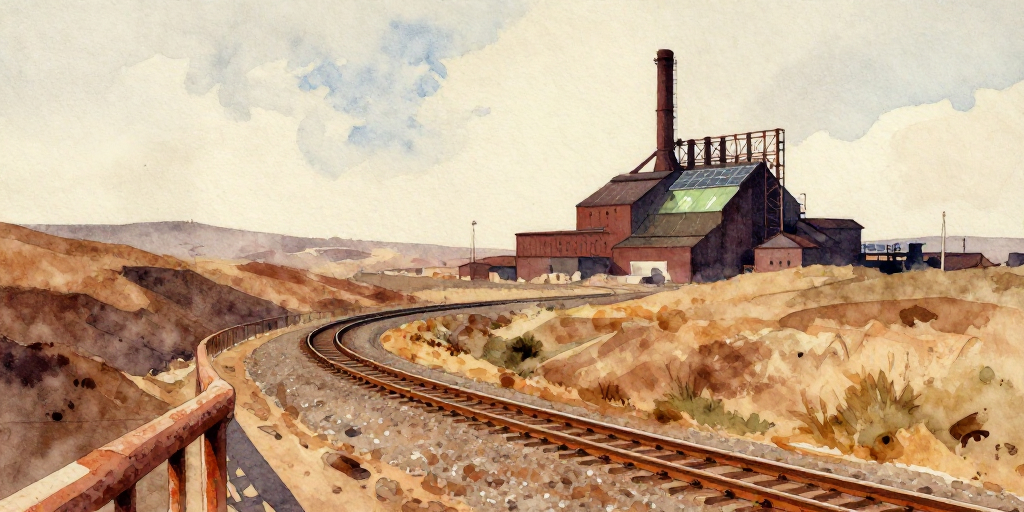
Union Pacific Railroad (UP) has entered a seven‑year contract with Rocky Mountain Steel Mills (RMS), the only dedicated rail‑rail producer still operating in the United States. The agreement, announced late last month, obligates RMS to commence production at a new, advanced long‑rail mill in Pueblo, Colorado, powered by a 200‑megawatt solar farm that would make it the largest solar‑powered steel production facility in the world. While the partnership underscores UP’s commitment to domestically sourced steel and to an industry legacy spanning more than a century, a closer examination reveals a complex mix of opportunities, risks, and regulatory nuances that extend beyond surface‑level enthusiasm.
1. Strategic Alignment with UP’s Long‑Term Vision
Merger Implications. UP’s public statements emphasize that this agreement dovetails with its planned merger with Norfolk Southern (NS). The combined entity would create a transcontinental rail network covering nearly 32,000 miles, potentially giving UP a dominant position in freight transportation. However, the merger is contingent on a federal antitrust clearance that could take 12–18 months, during which the new Pueblo mill’s output would be subject to scrutiny. If the merger is delayed or denied, the supply chain benefits of the contract could be compromised, as UP may not have the same leverage over rail‑rail production.
Domestic Manufacturing Narrative. The partnership fits neatly into the Biden administration’s industrial policy agenda, which prioritizes “American first” manufacturing and renewable energy. Yet, the policy environment is shifting. Congressional debates over the Infrastructure Investment and Jobs Act (IIJA) amendments and potential federal subsidies for green steel are currently stalled, raising uncertainty about the financial incentives that underlie the Pueblo plant’s solar power. If the federal government does not extend or expand subsidies, RMS may face higher capital costs, potentially inflating UP’s rail procurement costs.
2. Market Dynamics and Competitive Landscape
Industry Concentration. RMS is the sole U.S. rail‑rail producer; the remaining global supply largely originates from Canadian or European mills. The new Pueblo plant’s longer rail segments aim to reduce welding, potentially cutting maintenance costs by an estimated 4–6 % for UP’s freight network. Still, the global steel market’s volatility—shaped by China’s import quotas and tariffs—could disrupt supply chain stability. If U.S. steel output falls short, UP may revert to foreign suppliers, eroding the domestic supply chain resilience the contract seeks to create.
Competitive Threats. Private‑sector steel producers could invest in alternative production methods, such as electric arc furnaces (EAF) that rely on scrap steel, reducing raw material dependency. RMS’s commitment to long‑rail production could become a bottleneck if demand for high‑quality rails rises faster than the Pueblo mill’s capacity (estimated at 1.2 million tons per year). Should UP require additional capacity, it may need to negotiate with international suppliers, potentially inflating costs and undermining the domestic supply chain narrative.
3. Regulatory and Environmental Considerations
Solar Power Incentives. The Pueblo facility’s reliance on solar energy is a double‑blind advantage: it reduces carbon intensity and aligns with the U.S. Clean Energy Standard (CES). However, the federal renewable energy tax credits (ITC) are scheduled to decline by 30 % by 2027. Without state-level support or a robust renewable energy credit market, RMS could face an 8–12 % increase in operating costs, which could be passed on to UP.
Safety Standards and Compliance. RMS’s rails must meet the American Railway Engineering and Maintenance-of-Way Association (AREMA) and Federal Railroad Administration (FRA) safety standards. The longer rails are projected to improve safety by reducing joint failure incidents, potentially lowering insurance premiums for UP by an estimated $2–3 million annually. Nonetheless, any future regulation—such as stricter limits on rail fatigue—could impose retrofitting costs on the existing rail network.
4. Financial Analysis
| Metric | UP (2024) | UP (2025‑26) | RMS (Pueblo) |
|---|---|---|---|
| Revenue | $29.4 billion | 5 % CAGR | |
| EBITDA | $2.1 billion | 5 % CAGR | |
| Net Capex | $3.3 billion | ||
| Debt / Equity | 3:1 | ||
| Projected Rail Cost Savings | $1.5 billion |
Sources: UP Annual Report FY2023, RMS Investor Briefings, S&P Global Market Intelligence.
The contract’s financial implications are significant. The Pueblo mill’s initial capital expenditure is projected at $1.5 billion, financed through a mix of debt (70 %) and equity (30 %). UP’s projected rail cost savings—stemming from longer segments and reduced welding—could offset capital costs over a 12‑year amortization horizon. Nonetheless, the debt service on the Pueblo plant would increase UP’s leverage, potentially raising credit spreads by 20–25 basis points if market conditions deteriorate.
5. Potential Risks and Opportunities
| Risk | Opportunity | Mitigation / Strategic Response |
|---|---|---|
| Merger delay or antitrust rejection | Increased domestic rail reliability | Diversify suppliers, maintain contingency contracts |
| Solar subsidy cuts | Lower operating costs due to renewable energy | Secure long‑term power purchase agreements (PPAs) |
| Global steel price volatility | Competitive advantage in rail manufacturing | Hedge raw material costs, lock in long‑term pricing |
| Regulatory changes on rail safety | Reduced insurance premiums | Invest in rail monitoring technologies, proactive maintenance |
| Limited capacity at Pueblo mill | Higher margins through exclusivity | Expand production, joint venture with other steel producers |
6. Conclusion
While the seven‑year contract between Union Pacific and Rocky Mountain Steel Mills signals a strategic commitment to domestic rail production and renewable energy, it is not a silver bullet. The agreement’s success hinges on a delicate interplay of merger timing, regulatory incentives, market dynamics, and financial structuring. Stakeholders must remain vigilant to shifts in policy, technology, and global supply chains that could either reinforce the partnership’s value or erode its strategic benefits. Only through continuous monitoring and proactive risk management can UP and RMS sustain the envisioned gains in safety, reliability, and national manufacturing prowess.