Union Pacific Corp. at the Center of a Potential $72 B Rail Merger: A Multi‑Sector Perspective
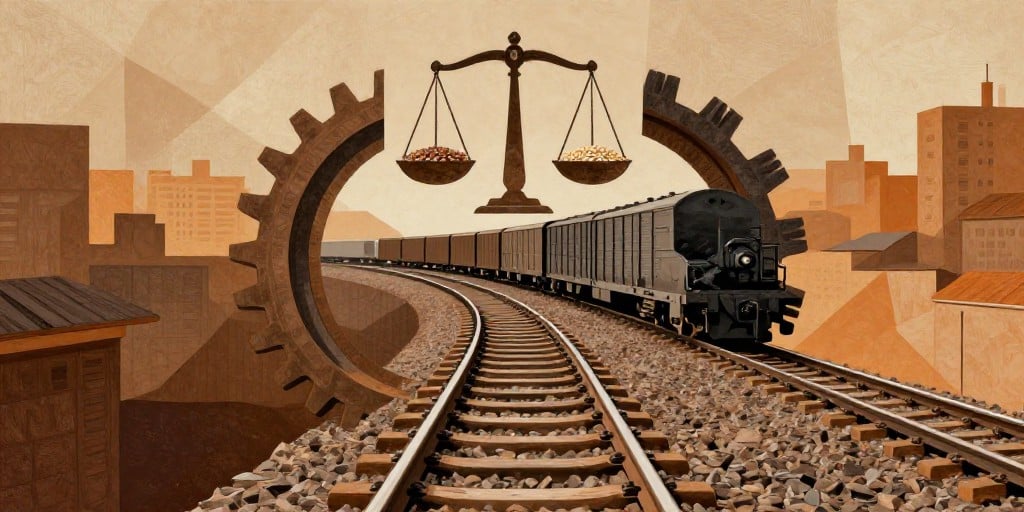
Union Pacific Corporation (UP) has become the focal point of recent market discussions after the announcement of a proposed merger with Norfolk Southern Corporation (NSC). Valued at roughly $72 billion, the transaction has drawn scrutiny from a broad spectrum of stakeholders, including shippers, labor unions, state attorneys general, and federal regulators. The debate centers on whether the consolidation will enhance operational efficiency and benefit shippers or whether it will amplify pricing power and increase transportation costs across the economy.
Regulatory Landscape
The United States Surface Transportation Board (STB) is the primary regulatory authority tasked with evaluating the public‑interest merits of the proposed merger. While the STB has denied an immediate block of the transaction, it has set a decision for early spring, leaving industry participants in a state of uncertainty. The board’s deliberations are expected to weigh a variety of factors—cost savings, service improvements, competitive dynamics, and broader economic impacts—before reaching a conclusion.
Political dynamics also exert influence on the process. The current administration’s record is marked by a mix of corporate tax reductions, regulatory relaxations, and calls for greater equity participation from private firms. Although no definitive evidence indicates direct executive intervention in the STB’s review, the administration’s stance on large‑scale corporate consolidation remains ambiguous, adding a layer of uncertainty to the regulatory environment.
Operational Metrics and Competitive Positioning
Within the freight rail sector, Union Pacific’s operating ratio—a key indicator of cost efficiency—has been consistently competitive with its primary peer, BNSF Railway. This suggests that UP has maintained a disciplined focus on cost control and service enhancement, even as it navigates the complexities of a potential merger. The company’s leadership argues that the combination would streamline operations, reduce redundant interchanges, and improve service reliability, thereby delivering benefits to shippers and, ultimately, consumers.
Conversely, shippers, labor unions, and several state attorneys general contend that the merger would consolidate pricing power and elevate transportation costs, potentially exerting downward pressure on consumer prices in related sectors. The economic stakes are significant, as freight rail costs have ripple effects across industries that rely on efficient logistics for production and distribution.
Market Context and Investor Sentiment
Union Pacific’s share performance has reflected the broader market’s apprehension regarding industry consolidation. The company’s stock has experienced a modest decline, mirroring concerns that the merger could alter competitive dynamics and impact profitability. Within the S&P 500, UP’s shares are among those monitored for their potential influence on the index’s valuation, alongside other major rail and transportation stocks.
Investor sentiment will likely be shaped by the outcome of the STB review. A favorable decision could signal a green light for efficiency gains and potential upside, whereas a denial or significant regulatory hurdles could reinforce concerns about reduced competition and increased costs.
Cross‑Sector Implications
The freight rail sector does not operate in isolation; its performance is intertwined with broader economic trends. For instance, a more efficient rail network could lower logistics costs for the manufacturing, retail, and agriculture sectors, potentially dampening inflationary pressures. Conversely, consolidation that limits competition may lead to higher freight rates, impacting downstream industries that depend on reliable and cost‑effective transportation.
Moreover, the regulatory scrutiny faced by UP and NSC parallels challenges in other sectors, such as telecommunications and energy, where large mergers are increasingly subject to rigorous antitrust analysis. Lessons drawn from these industries—particularly regarding the balance between efficiency gains and market concentration—may inform the STB’s evaluation and future regulatory frameworks.
Conclusion
The proposed Union Pacific–Norfolk Southern merger represents a pivotal moment for the U.S. freight rail industry, with implications that reverberate across the economy. A thorough, objective analysis that considers operational metrics, competitive positioning, regulatory dynamics, and cross‑sector effects will be essential for stakeholders seeking to understand the potential outcomes. The forthcoming STB decision will be a critical indicator of how the U.S. balances the pursuit of efficiency with the preservation of competitive markets in a rapidly evolving transportation landscape.