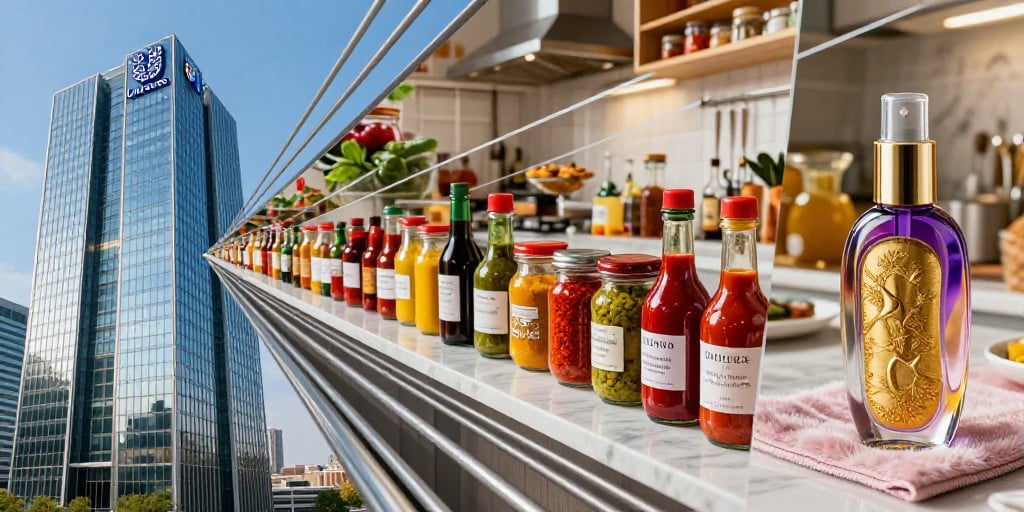
Unilever PLC and McCormick & Company: A Strategic Transaction Amid Regulatory Scrutiny
Unilever PLC has attracted considerable attention after announcing that McCormick & Company will acquire its global food business in a transaction valued at approximately $45 billion. The deal, the largest in the histories of both firms, is poised to reshape each company’s competitive posture and to reposition Unilever as a preeminent player in beauty, personal‑care, and home‑care, while granting McCormick a substantive presence in packaged foods.
Strategic Rationale and Market Positioning
From a strategic standpoint, the transaction aligns with long‑term trends in consumer goods. Unilever’s management has long pursued a shift toward higher‑margin, high‑growth categories, notably personal‑care and home‑care. The divestiture of its food business—already accompanied by the sale of brands such as Colman’s mustard—reduces exposure to the highly price‑sensitive packaged‑food sector and frees capital that can be redeployed into faster‑growing segments. McCormick, conversely, acquires a diversified portfolio of global brands that will extend its reach beyond its traditional core of spices and flavorings. The combined entity is expected to achieve complementary cost synergies, expanded geographic coverage, and an enhanced product mix that can leverage cross‑segment marketing.
Regulatory Dynamics in the United Kingdom
The United Kingdom’s Competition and Markets Authority (CMA) has expressed serious concerns over the potential competitive impact of the merger. The regulator’s analysis highlights that the combined company would dominate the dry ingredient mixes and sauces markets, creating a barrier to entry for rivals. Market dynamics—such as limited retail shelf space and the entrenched positions of incumbent players—further reinforce this concern. The CMA has granted the firms until 18 November to propose remedies designed to preserve competition. Failure to comply will trigger a more comprehensive phase‑two investigation, which could result in conditional approval, partial divestiture, or, in the most extreme scenario, a request to abandon the deal.
This regulatory backdrop illustrates a broader industry pattern: cross‑border acquisitions in consumer goods often face heightened scrutiny when they consolidate market share in key categories. The CMA’s approach underscores the importance of maintaining competitive diversity in sectors where consumer choices are already constrained by distribution channels.
Market Reaction and Shareholder Outlook
In the immediate aftermath of the announcement, Unilever’s share price displayed modest volatility. The initial dip reflected uncertainty surrounding the regulatory outcome, but the market subsequently stabilised, indicating that investors view the transaction as a net positive for the company’s long‑term value proposition. The firm’s listing on the London Stock Exchange and its continued adherence to disclosure obligations—including a recent 6‑K filing detailing the sale of American Depositary Receipts—provide transparency that helps maintain investor confidence.
The transaction’s timing, aligned with Unilever’s broader divestiture strategy, suggests a deliberate move toward a leaner, more focused portfolio. By offloading non‑core assets, Unilever is better positioned to accelerate growth in sectors where it holds a competitive advantage and where consumer trends favour premiumisation and wellness.
Cross‑Sector Implications and Broader Economic Trends
The Unilever–McCormick transaction exemplifies a trend toward strategic consolidation within the consumer‑goods industry, driven by the need to secure scale, diversify product offerings, and improve operational efficiency. Similar patterns are observable across other sectors: technology firms are acquiring complementary platforms, while automotive manufacturers are consolidating component suppliers to reduce costs and enhance innovation. These moves are often catalysed by macroeconomic factors such as tightening supply chains, volatile commodity prices, and shifting consumer preferences toward health‑conscious and convenience products.
Moreover, the regulatory challenges faced by Unilever and McCormick highlight a growing emphasis on antitrust enforcement in the post‑digital‑economy era. Regulators increasingly scrutinise mergers that could reduce competition, particularly when the combined entity controls critical supply chains or distribution networks. Companies operating in global markets must therefore embed robust compliance frameworks and engage proactively with authorities to navigate these complexities.
Conclusion
The proposed $45 billion acquisition represents a pivotal strategic realignment for Unilever, allowing the firm to concentrate on high‑growth beauty, personal‑care, and home‑care markets while relinquishing a sizable share of its packaged‑food operations. McCormick stands to gain a diversified portfolio that strengthens its market presence globally. However, the transaction’s progress hinges on regulatory approval, particularly from the UK CMA, whose concerns about market dominance in sauces and dry ingredient mixes must be addressed through effective remedies. The deal underscores the necessity for companies to balance growth ambitions with regulatory prudence and to remain agile in adapting to evolving market dynamics across multiple industries.