
UniCredit’s Extended Offer Period for Commerzbank Concludes Amid Bullish Market Conditions
On 3 July 2026, market participants observed the completion of UniCredit’s extended offer period for the exchange‑based acquisition of a stake in Commerzbank. The Italian lender, which already held a substantial position in the German bank, is scheduled to disclose the precise proportion of its holdings in the coming week. This development unfolds against a backdrop of a robust market environment: the DAX is trading near record highs, and energy‑sector equities are buoyed by easing interest‑rate expectations.
Regulatory Disclosure and Voting Influence
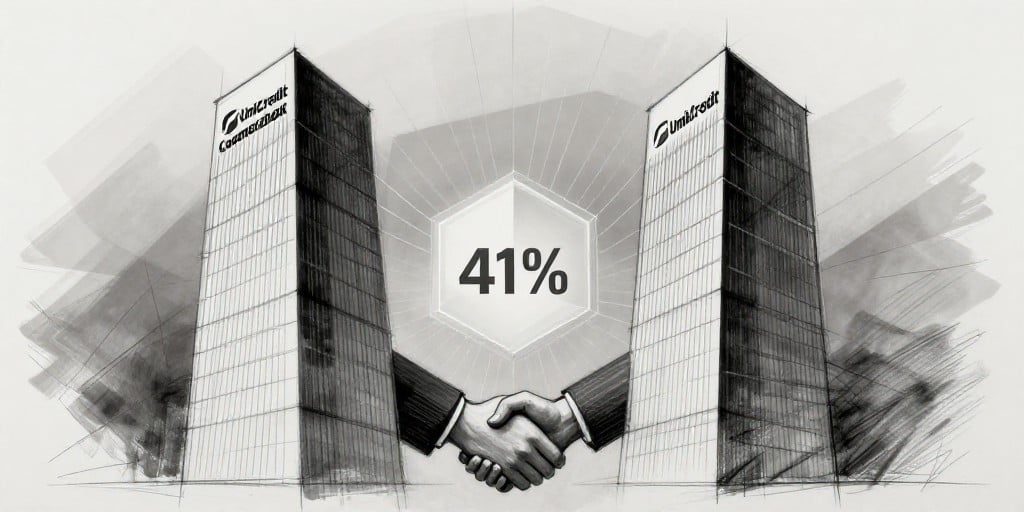
A filing released through EQS News—filed under Article 40 of the German Securities Trading Act—revealed that UniCredit’s direct voting‑rights holding in Commerzbank rose to just over forty per cent. An additional portion is held via derivative instruments, elevating UniCredit’s total voting influence to approximately forty‑one per cent. The disclosure provides a comprehensive breakdown of direct shares and various swap instruments. No alterations to Commerzbank’s governance framework were reported at this stage.
Operational and Strategic Outlook
The filings did not indicate any material changes to Commerzbank’s operations, earnings trajectory, or strategic direction. Analysts view the pending disclosure of the final stake level as the day’s pivotal event, as it will clarify the extent of UniCredit’s influence over the German bank’s future governance decisions.
Market Context and Institutional Implications
Market Environment
- Equity Market Strength: The DAX’s proximity to new peak levels signals continued investor confidence in the German equity market, despite lingering macro‑economic uncertainties.
- Sectoral Momentum: Energy‑sector stocks benefit from declining borrowing costs, providing a tailwind for companies in this space.
Competitive Dynamics
- Cross‑Border Consolidation: UniCredit’s move reflects a broader trend of European banks pursuing cross‑border consolidation to enhance scale, diversify risk, and access new customer bases.
- Regulatory Landscape: The German Securities Trading Act’s Article 40 filing requirements underscore heightened regulatory scrutiny of significant shareholdings, ensuring transparency for market participants.
Emerging Opportunities
- Financial Services Innovation: A consolidated UniCredit‑Commerzbank entity could accelerate investment in digital banking, fintech partnerships, and sustainable finance initiatives, positioning it to capture growth in these high‑margin segments.
- Cost Synergies: Operational efficiencies arising from overlapping branches, technology platforms, and capital markets functions could generate incremental earnings, benefiting shareholders.
Strategic Investment Considerations
- Valuation Impact: Investors should monitor the forthcoming stake disclosure for signals about potential control premiums or dilution effects, which may influence valuation multiples.
- Governance Influence: UniCredit’s enhanced voting power could steer strategic decisions on capital allocation, risk appetite, and product development—factors that may reshape the bank’s long‑term risk‑return profile.
- Macro‑Risk Assessment: The current low‑interest‑rate environment supports borrowing and investment, yet persistent inflationary pressures and geopolitical tensions remain watchful variables.
Long‑Term Implications for Financial Markets
- European Banking Integration: Successful consolidation could set a precedent, encouraging other European banks to pursue similar cross‑border transactions, thereby reshaping the competitive landscape.
- Capital Markets Dynamics: Increased capital base and diversified asset portfolios may enhance liquidity and stability in German capital markets, potentially attracting additional foreign investment.
- Regulatory Evolution: The transparency requirements illustrated by the EQS filing may prompt tighter disclosure norms across the European banking sector, improving market efficiency and risk management.
Bottom Line: The conclusion of UniCredit’s extended offer period and the anticipated disclosure of its precise stake in Commerzbank represent a critical juncture for both institutions and the broader German financial market. The event offers institutional investors a nuanced view of governance shifts, market sentiment, and future strategic positioning—factors that should inform both short‑term trading strategies and long‑term portfolio allocation.