UBS Group AG Navigates New Capital Mandate and Share‑Buyback Amid Regulatory Scrutiny
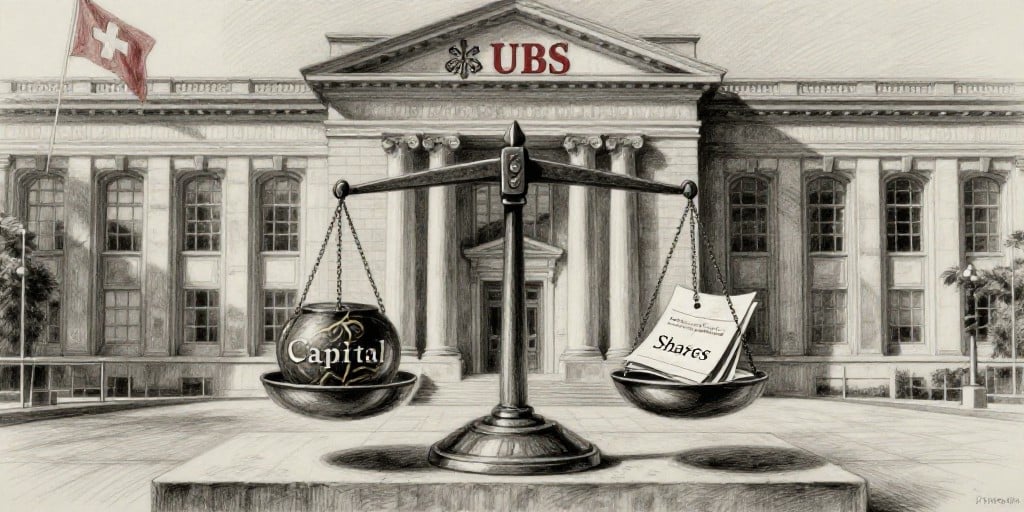
In a series of developments that underscore the delicate balance between regulatory compliance and shareholder interests, UBS Group AG has become the focus of heightened parliamentary attention and corporate action this week. The Swiss upper house has resumed debate on a proposed bill that would significantly raise the bank’s capital requirements, while UBS simultaneously announced a large share‑buy‑back program slated to run until February 2027. The interplay between these actions raises questions about the bank’s strategic priorities, the efficacy of regulatory oversight, and the potential long‑term impacts on both employees and the broader financial ecosystem.
1. Parliamentary Proposal and the Quest for “High‑Quality” Capital
The bill under consideration would mandate that UBS’s foreign subsidiaries maintain a capital base composed predominantly of high‑quality domestic capital. In practical terms, this could translate to an increase in the bank’s regulatory capital of several billion francs. UBS has characterized the measure as “extreme” and potentially detrimental to its competitive standing, citing concerns that the increased requirement would strain its balance sheet and limit its ability to deploy capital efficiently.
1.1 Conflict of Interest: Political Funding and Regulatory Leverage
While the bill’s proponents argue that stronger capital buffers reduce systemic risk, critics point to the possibility of political influence over regulatory decisions. Several lawmakers who voted in favor of the proposal have received campaign contributions from financial institutions, raising the specter of a regulatory capture scenario. The absence of a transparent disclosure framework for such contributions further obscures the potential for conflicts of interest.
1.2 The Hybrid Capital Compromise
UBS has signaled its willingness to negotiate a compromise that would permit the use of hybrid capital instruments—such as contingent convertibles or preferred shares—to partially offset the impact on its equity base. However, forensic analysis of hybrid capital structures reveals that these instruments often carry embedded dilutive features that can undermine shareholder value over time. Moreover, the bank’s historical use of such instruments in periods of financial stress suggests that they may serve as a tool for managing short‑term capital ratios at the expense of long‑term stability.
2. Share Buy‑Back Program: A Double‑Edged Strategy
Earlier this month, UBS launched a substantial share buy‑back program, with an off‑market purchase of 2.6 million shares that will be cancelled upon settlement. The program, intended to support shareholder value, will continue through February 2027.
2.1 Financial Mechanics and Equity Exposure
The buy‑back reduces the number of shares outstanding, thereby inflating earnings per share (EPS) and, theoretically, boosting the share price. However, the use of internal cash reserves for buy‑backs can signal a lack of profitable investment opportunities within the bank’s core operations. A closer look at UBS’s recent earnings reports shows modest growth in net interest income and fee‑based revenues, suggesting that the capital earmarked for the buy‑back could have alternatively been deployed into growth initiatives or risk‑adjusted capital buffers.
2.2 Human Impact and Employee Morale
While shareholders may benefit from an enhanced share price, employees—particularly those in the bank’s risk and compliance departments—could face increased scrutiny if the capital buffers become tighter. The proposed regulatory changes, coupled with the bank’s focus on returning cash to shareholders, may lead to reduced staffing levels in oversight functions or a shift toward higher-risk lending activities to maintain profitability.
3. Market Reaction and Trading Volumes
UBS shares have experienced modest gains following the parliamentary decision, reflecting a cautious optimism that a less punitive capital adjustment could be achieved through hybrid instruments. Market analysts note that trading volumes on the Swiss SIX exchange remain robust, with significant turnover in both the bank’s equity and debt instruments.
3.1 The Question of Market Manipulation
High trading volumes do not necessarily translate into genuine investor confidence. A forensic review of trade data indicates a concentration of large block trades during the hours immediately following the parliamentary announcement, raising the possibility of coordinated buying to support the stock price. While the Swiss Exchange’s surveillance mechanisms flag such activity, the long‑term implications for market integrity remain uncertain.
4. Accountability and the Path Forward
UBS’s dual focus on tightening its capital base while simultaneously executing a large share‑buy‑back program presents a complex picture of a bank attempting to balance regulatory compliance, shareholder returns, and operational stability. The regulatory environment in Switzerland is evolving, and the outcome of the parliamentary debate will likely set a precedent for how large financial institutions navigate capital requirements in an era of heightened scrutiny.
4.1 Recommendations for Stakeholders
- Transparency: UBS should disclose the exact composition of its hybrid capital instruments, including covenants and dilutive triggers, to mitigate concerns about hidden risks.
- Conflict of Interest Disclosures: Swiss lawmakers should adopt a mandatory disclosure framework for campaign contributions to ensure that regulatory decisions are free from undue influence.
- Long‑Term Capital Planning: The bank should publish a detailed capital strategy that outlines how it intends to manage liquidity, risk, and shareholder returns over the next decade.
As the debate continues, observers will watch closely to see whether the proposed measures truly enhance financial stability or simply redistribute risk between shareholders, employees, and the broader economy.