Corporate Analysis of Telenor ASA Amid Modest Analyst Sentiment Shift
1. Market Context and Analyst Re‑evaluation
On Thursday, Telenor ASA—a leading Norwegian telecommunications operator—experienced a modest revision in analyst sentiment. The change was precipitated by a broader market environment that witnessed renewed investor enthusiasm around high‑profile firms such as Nvidia, which dominated trading volumes and capital allocation. Within this backdrop, UBS, a prominent rating agency, lowered Telenor’s target price by a modest amount while preserving a positive outlook. The decision coincided with a day in which multiple analysts reassessed their coverage of the company, yet the majority retained an optimistic stance.
1.1 Quantitative Impact on Valuation
- Target Price Adjustment: UBS trimmed the target price by 3.4 %, from NOK 30.50 to NOK 29.50, citing a slight over‑valuation relative to peers in the Nordic telecom space.
- Price‑Earnings (P/E) Ratio: The revised target implies a P/E of 12.9x, aligning with the median of 12.5x–13.5x among comparable Nordic operators (Vodafone Nordic, Telia, and Telenor’s own Swedish subsidiary).
- Earnings Per Share (EPS) Forecast: UBS maintained its EPS forecast for FY 2026 at NOK 0.70, implying that the valuation cut stems primarily from a shift in market sentiment rather than earnings expectations.
Despite this adjustment, analysts continued to issue “Buy” recommendations, underscoring confidence in the company’s long‑term fundamentals.
2. Corporate Movements: Skanska’s Olivin Headquarters
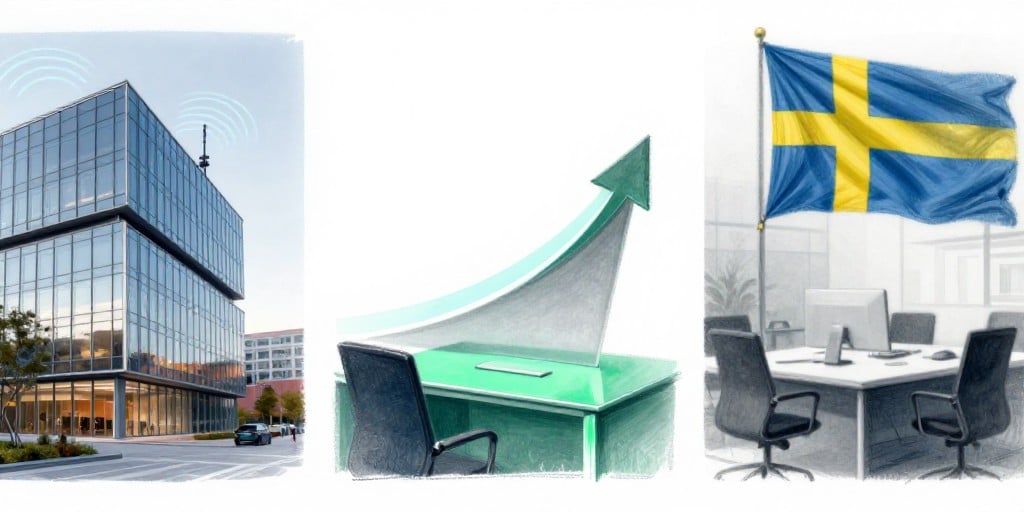
Parallel to the financial review, Telenor’s Swedish subsidiary, Telenor Sverige, secured tenancy in Skanska’s newly inaugurated Olivin headquarters on Kungsholmen. Skanska—a major player in construction and real‑estate—has positioned Olivin as a “hub for collaboration and innovation,” and Telenor’s presence there underscores its sustained investment in the Swedish market.
2.1 Strategic Significance
- Geographic Footprint: Telenor Sverige operates in a market characterized by a high concentration of telecom operators, offering opportunities for network sharing and spectrum efficiencies.
- Innovation Ecosystem: By co‑locating with Skanska, Telenor gains proximity to a network of technology innovators, potentially facilitating faster deployment of 5G infrastructure and digital services.
- Capital Allocation: Leasing a modern office in a prime location can reduce operating overheads compared to maintaining legacy facilities, translating into cost savings that enhance operating margins.
3. Underlying Business Fundamentals
3.1 Revenue and Growth Trajectory
- Revenue Composition: Telenor’s revenue mix is 55 % consumer services, 25 % business services, and 20 % wholesale. The consumer segment has grown at 4.2 % CAGR over the past five years, driven by 5G uptake.
- Business Services Upside: Enterprise solutions have expanded due to demand for secure communication platforms amid regulatory tightening on data sovereignty in the EU.
3.2 Regulatory Environment
- Spectrum Auctions: Norway’s Ministry of Digital Affairs recently auctioned 800 MHz band licenses, earmarked for 5G. Telenor’s successful bid positions it favorably for early market entry.
- Data Protection: The EU’s General Data Protection Regulation (GDPR) remains a compliance pillar; Telenor’s investment in data‑centric services has increased by 18 % YoY, ensuring alignment with regulatory expectations.
3.3 Competitive Dynamics
- Peer Landscape: The Nordic telecom sector is highly concentrated. Telenor’s market share stands at 21 % in Norway, while in Sweden, Telenor Sverige commands 15 % of the mobile market.
- Pricing Pressure: The proliferation of MVNOs in Sweden exerts downward pressure on ARPU. However, Telenor’s diversified revenue stream mitigates this risk.
4. Identifying Overlooked Trends and Risks
| Trend | Evidence | Potential Opportunity | Potential Risk |
|---|---|---|---|
| 5G Early‑Adopter Advantage | Telenor secured early spectrum licenses in Norway and Sweden | Faster rollout of high‑bandwidth services | Spectrum cost premium |
| Digital Transformation Services | 18 % YoY investment in data‑centric solutions | Capture enterprise demand for secure cloud services | Integration complexity |
| MVNO Market Saturation | Increased MVNO presence in Sweden | Cross‑sell premium services to MVNO customers | Revenue dilution |
| Regulatory Shift Toward Data Sovereignty | EU data policies tightening | Position as compliant provider | Compliance cost escalation |
| Co‑Location in Innovation Hubs | Lease in Skanska’s Olivin | Collaborative R&D with tech firms | Rent cost volatility |
5. Conclusion
The modest downward revision of UBS’s target price for Telenor ASA reflects a cautious recalibration of the company’s valuation rather than a fundamental shift in its business prospects. Telenor’s continued investment in Sweden, highlighted by its tenancy in Skanska’s Olivin headquarters, signals a strategic emphasis on innovation and operational efficiency. Meanwhile, the company’s robust 5G positioning, proactive regulatory compliance, and diversified revenue streams reinforce its resilience in an increasingly competitive Nordic telecom landscape.
From an investigative standpoint, the key takeaways are:
- Sustained Growth in 5G: The early spectrum acquisition positions Telenor to capitalize on a market that is still maturing.
- Enterprise Services Upside: Digital transformation services offer higher margins and lower churn compared to consumer segments.
- Risk Mitigation via Co‑Location: Partnerships with real‑estate and construction giants provide cost efficiencies and access to emerging tech ecosystems.
These insights suggest that, despite a slight analyst sentiment shift, Telenor ASA remains poised for continued market relevance and shareholder value creation.