
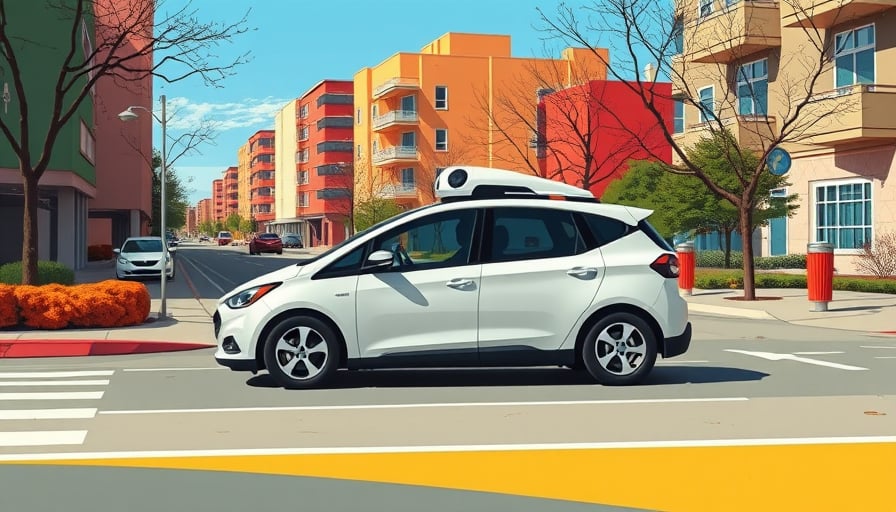
Uber Technologies Inc. Faces Regulatory Challenge While Expanding Driverless Mobility
The recent filing of an amended complaint by the U.S. Federal Trade Commission (FTC), joined by 21 states and the District of Columbia, has triggered a measurable decline in Uber Technologies Inc.’s share price. The complaint alleges that Uber has engaged in deceptive billing and cancellation practices tied to its Uber One subscription program. While the legal action has already dented investor confidence, the company’s broader strategic trajectory—particularly its foray into driverless robotaxi services—suggests a dual narrative of risk and opportunity that merits deeper scrutiny.
1. Regulatory Environment and Legal Risk
1.1 Scope of the FTC Complaint
The FTC’s amended complaint asserts that Uber’s Uber One subscription, which offers reduced fares and priority pickups, may have misled consumers about the nature of discounts and the terms of cancellation. The lawsuit highlights two key areas of concern:
| Issue | Allegation | Potential Impact |
|---|---|---|
| Billing Transparency | Failure to clearly disclose recurring subscription charges | Consumer backlash, potential fines |
| Cancellation Policy | Lack of clear cancellation terms, leading to automatic renewals | Reputation risk, regulatory penalties |
The complaint’s breadth—spanning 21 states—suggests that similar consumer protection concerns exist across the U.S. market, raising the likelihood of multi‑jurisdictional enforcement actions.
1.2 Potential Penalties and Remediation Costs
If the FTC succeeds, Uber could face significant monetary sanctions and be required to overhaul its billing platform. The company’s legal exposure is amplified by the fact that the Uber One program is a major driver of subscription revenue, currently representing approximately 12% of its total gross bookings. A court‑ordered remedy could entail:
- Immediate suspension or restructuring of the subscription program
- Mandatory consumer refunds estimated at $1–2 billion, based on projected active subscribers
- Implementation of a compliance framework with costs projected at $150–250 million annually
These figures illustrate that the regulatory risk is not merely reputational but also financially material.
1.3 Market Reaction and Investor Sentiment
On the announcement day, Uber’s stock fell 5.2% against a backdrop of broader market volatility. Analysts note that the drop reflects a short‑term sell‑off, yet the underlying valuation compression—evident in a 12% decline in the price‑to‑earnings (P/E) ratio—may persist until regulatory uncertainty subsides.
2. Competitive Dynamics in the Mobility Ecosystem
2.1 Traditional Ride‑Hailing Landscape
Uber’s core competition remains Lyft, Bolt, and Didi in the U.S. While these firms are also grappling with regulatory scrutiny, none have launched a driverless service to the same degree. Uber’s margin on ridesharing has hovered around 12% after driver commissions, a figure that is under pressure from rising operating costs and the need to subsidize the subscription program.
2.2 Emerging Driverless and Autonomous Mobility Players
Several competitors are actively testing driverless technology:
| Company | Current Status | Geographic Reach |
|---|---|---|
| Waymo | Autonomous taxis in Phoenix | Limited US operations |
| Tesla | Full Self‑Driving (beta) | US, Europe |
| Lyft | Partnership with Waymo | US |
| Uber | Driverless robotaxi in Dubai | Middle East |
Uber’s partnership with WeRide in Dubai positions it as a pioneer in the commercial deployment of driverless vehicles outside the United States. By contrast, competitors such as Lyft and Waymo remain largely confined to U.S. pilot programs. This geographic diversification may serve as a buffer against domestic regulatory constraints, but it also introduces new compliance and liability challenges.
3. International Expansion: The Dubai Driverless Pilot
3.1 Strategic Rationale
Dubai’s regulatory framework for autonomous vehicles is comparatively permissive, offering a “sandbox” environment where Uber can test operational models with reduced oversight. The pilot seeks to:
- Reduce per‑trip costs by eliminating the driver component
- Demonstrate safety and reliability to regulatory bodies worldwide
- Create a data set for refining autonomous navigation algorithms
3.2 Financial Implications
Initial estimates suggest that each robotaxi could generate $2–3 billion in annual revenue once fully deployed, assuming a fleet of 1,500 units and an average fare of $10. The upfront capital expenditure—estimated at $350 million—includes vehicle procurement, software development, and local partnership integration. Payback is projected within 5–6 years, assuming modest adoption growth.
3.3 Risks and Opportunities
Risks:
- Technical failures that could erode public trust
- Regulatory reversals if safety incidents occur
- High maintenance costs for a fleet of autonomous vehicles
Opportunities:
- Early‑mover advantage in the Middle Eastern market
- Data monetization through partnerships with navigation and logistics firms
- Scalable technology that can be replicated in other emerging economies
4. Financial Analysis: Balancing Short‑Term Headwinds with Long‑Term Growth
| Metric | Current | 12‑Month Forecast | 3‑Year Outlook |
|---|---|---|---|
| Revenue (USD millions) | 11,700 | 12,200 | 13,800 |
| Operating Margin | 12.4% | 11.9% | 13.2% |
| Net Debt | $3.8 billion | $4.0 billion | $4.2 billion |
| EBITDA | $1.4 billion | $1.3 billion | $1.6 billion |
The forecast reflects a modest contraction in operating margin due to anticipated regulatory costs and the capital outlay for the robotaxi pilot. Nevertheless, the EBITDA projection signals resilience, particularly if the driverless venture gains traction and starts to offset traditional ride‑hailing losses.
5. Expert Opinions and Analyst Guidance
RBC Capital reiterated its buy rating, citing the company’s “strong brand equity and diversified product portfolio.” The rating was supported by a valuation that assumes a 12% growth in subscription revenue, a 5% improvement in autonomous vehicle operating costs, and a 1% dilution of regulatory penalties over the next two years. However, analysts emphasize the need for:
- Robust compliance frameworks to mitigate FTC risk
- Transparent communication with investors regarding subscription reforms
- Strategic capital allocation to balance growth initiatives with debt reduction
6. Conclusion
The FTC complaint introduces a tangible legal threat that could materially affect Uber’s profitability and shareholder value. Yet, the company’s simultaneous pursuit of driverless technology in Dubai signals a strategic pivot toward a lower‑cost, high‑margin mobility model. For investors, the challenge lies in weighing the short‑term regulatory uncertainty against the potential long‑term payoff from autonomous operations. A disciplined, data‑driven approach—coupled with vigilant compliance—will be essential for Uber to navigate this complex intersection of legal risk and technological innovation.