
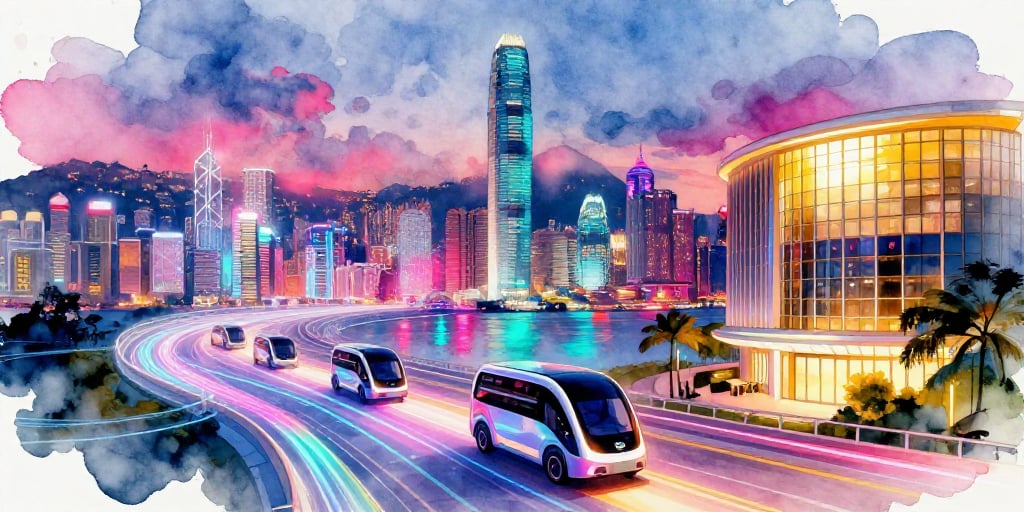
Uber Technologies Inc. Expands Global Footprint and Advances Autonomous Fleet Operations
Uber Technologies Inc. has accelerated its multi‑front expansion strategy, combining geographic growth in Hong Kong, a strategic partnership with Hertz’s logistics subsidiary, and a diversification of services beyond ridesharing. The company’s moves are aimed at reinforcing its position as a platform‑centric mobility provider while leveraging autonomous vehicle (AV) technology and ancillary travel services to create new revenue streams.
Hong Kong Acquisition of FlyTaxi
In an effort to strengthen its presence in a highly competitive Asian market, Uber announced the acquisition of Hong Kong‑based ride‑hailing operator FlyTaxi. The deal is expected to provide Uber with an established customer base, regulatory foothold, and localized operational expertise. By integrating FlyTaxi’s existing fleet and driver network, Uber can accelerate market penetration without the time lag typically associated with organic growth.
Industry Dynamics
The Hong Kong mobility sector is characterized by a high density of ride‑hailing providers, stringent regulatory scrutiny, and significant consumer preference for integrated payment solutions. Uber’s acquisition aligns with a broader trend of consolidation in the Southeast Asian and Greater Bay Area markets, where incumbents seek to acquire niche players to quickly scale and diversify service offerings.
Autonomous Vehicle Partnership with Hertz’s Oro Mobility
Uber has entered a partnership with Hertz’s newly launched logistics arm, Oro Mobility, to oversee the charging, maintenance, and cleaning of Uber’s autonomous fleet. The collaboration will deploy Lucid vehicles equipped with self‑driving technology in the San Francisco Bay Area this year, with plans for further expansion by 2027.
Strategic Rationale
The partnership reflects Uber’s shift toward a vehicle‑agnostic model, emphasizing platform control over demand rather than ownership of physical assets. By outsourcing AV operations to Oro Mobility, Uber can focus on scaling its service platform, data analytics, and rider engagement while leveraging Hertz’s established infrastructure for fleet servicing. This aligns with industry best practices where mobility operators partner with specialized logistics firms to manage the complex operational demands of autonomous fleets.
Market Drivers
The autonomous mobility sector is experiencing rapid technological maturation and regulatory evolution. Key drivers include:
- Cost Reduction – Autonomous vehicles promise lower per‑mile operating costs by eliminating driver wages.
- Safety and Efficiency – Advanced sensing and AI algorithms can reduce accidents and improve traffic flow.
- Scalability – Platform‑based coordination of autonomous fleets enables flexible deployment across urban environments.
By aligning with Hertz, Uber positions itself to capitalize on these drivers while mitigating the high capital expenditure required to build its own maintenance network.
Diversification into Travel Services
Beyond transportation, Uber has broadened its service portfolio by:
- Partnering with Expedia to launch hotel booking capabilities within its app.
- Introducing an AI‑driven voice interface for travel reservations, enabling users to request trips, hotel stays, and ancillary services via natural language commands.
This diversification echoes a broader shift among mobility platforms toward becoming comprehensive travel ecosystems. The integration of hotel booking allows Uber to monetize its user base beyond ridesharing, tapping into the lucrative accommodation market that is projected to grow at a compound annual growth rate of 6‑7 % through 2028.
Execution Concerns
While the partnership with Expedia signals strategic alignment with a global travel giant, investor sentiment remains cautious. The transition from a rideshare-centric product to a full travel service requires sophisticated data integration, customer support scaling, and regulatory compliance across multiple jurisdictions. These operational challenges have tempered enthusiasm in the market, reflected in modest gains in Uber’s share price following the announcement.
Financial Implications and Investor Sentiment
- Share Performance – Uber’s shares experienced modest gains in the wake of the Hertz partnership announcement, suggesting market confidence in the autonomous vehicle strategy.
- Risk Perception – Investor apprehension regarding the execution of the travel-services expansion has moderated overall enthusiasm.
- Revenue Diversification – The new services are expected to contribute incremental revenue streams, potentially offsetting the high fixed costs associated with AV deployment.
Conclusion
Uber Technologies Inc.’s recent strategic initiatives illustrate its commitment to a platform‑centric model that emphasizes control over rider demand, rather than ownership of vehicles or assets. By acquiring FlyTaxi, partnering with Oro Mobility to manage autonomous fleet operations, and expanding into hotel booking and AI‑driven travel services, Uber is diversifying its revenue base while reinforcing its global footprint. These moves position the company to navigate the evolving dynamics of mobility, autonomous technology, and travel services, all while maintaining a flexible and scalable business architecture that can adapt to cross‑industry economic trends.