
Corporate News – Detailed Analysis
Contextual Overview
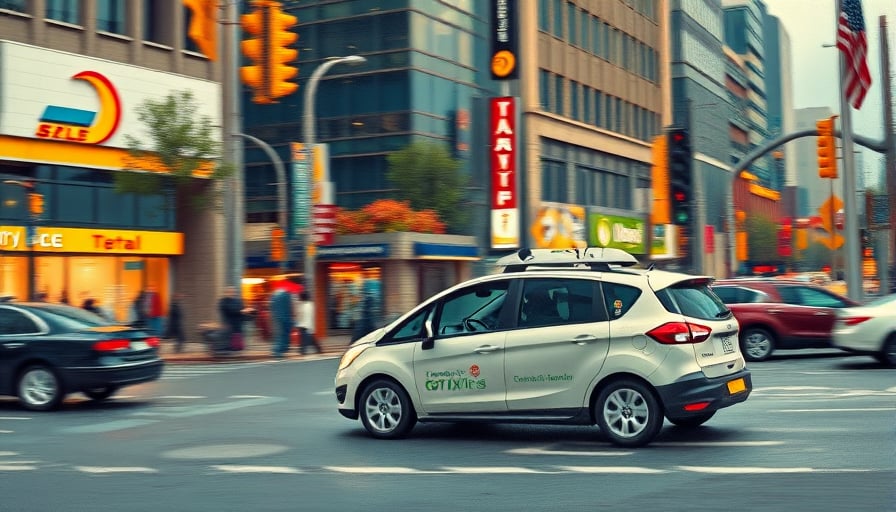
In a strategic move that underscores the accelerating convergence of mobility services and autonomous technology, Uber Technologies Inc. announced a partnership with Chinese technology conglomerate Baidu, alongside rideshare peer Lyft, to launch driverless taxi trials in the United Kingdom. The pilot is slated to commence in London during the first half of 2026, positioning the city as a pivotal test bed for commercial robotaxis.
Strategic Rationale
Market Entry and Competitive Positioning The collaboration leverages Baidu’s advanced autonomous driving stack, which has proven operational readiness in several Chinese markets, thereby mitigating development risk and accelerating time to market for Uber and Lyft. By sharing the burden of regulatory approval and infrastructure deployment with a local partner, both U.S. firms reduce capital expenditure and operational exposure. The decision to focus on London aligns with regulatory support for autonomous trials and the city’s dense, tech‑savvy consumer base, offering a high‑visibility platform to showcase capability and generate data for iterative improvement.
Capital Allocation and Investor Perception Investor reaction—reflected in concurrent share price appreciation for both Uber and Lyft—suggests a market consensus that autonomous mobility represents a high‑growth, potentially high‑margin segment. The share price spike indicates confidence that the partnership could unlock new revenue streams, diversify Uber’s service portfolio beyond ridesharing, and strengthen its competitive moat against emerging robotaxi entrants such as Waymo, Cruise, and local incumbents like Grab and Didi.
Operational and Regulatory Considerations
Regulatory Landscape London’s Metropolitan Police and the UK’s Department for Transport have demonstrated a willingness to pilot autonomous vehicles under stringent conditions. However, the regulatory pathway remains complex, involving safety validation, data protection compliance, and public acceptance. The partnership must navigate these hurdles while ensuring robust cybersecurity and fail‑safe protocols.
Data and Technology Integration Baidu’s autonomous stack incorporates lidar, radar, and camera fusion, coupled with real‑time mapping and predictive analytics. Integrating this with Uber’s existing ride‑hailing platform will require sophisticated APIs, data harmonization, and rigorous testing. The partnership must also address data sovereignty concerns, given the cross‑border nature of data flow.
Economic Drivers and Cross‑Sector Implications
Labor Market Dynamics The advent of robotaxis has implications for gig economy labor markets. Uber’s reliance on a vast network of independent drivers could face displacement pressure, prompting a strategic pivot toward a mixed model that balances human and autonomous services. This shift mirrors trends in other sectors, such as logistics, where autonomous trucks are gradually being introduced, and in retail, where robot‑powered checkout systems are expanding.
Infrastructure and Urban Mobility Successful deployment in London may catalyze infrastructure upgrades—smart traffic management, dedicated lanes, and charging networks—that benefit a range of mobility services. This creates a virtuous cycle wherein investments in autonomous infrastructure spur broader innovation across public transit, freight, and personal mobility.
Financial Performance Outlook While autonomous operations are in early pilot stages, they offer potential for higher operating margins once scale is achieved, due to reduced variable costs (driver wages, fuel). However, upfront capital expenditure, regulatory compliance costs, and potential safety incidents may initially depress profitability. Investors will monitor key metrics such as cost per vehicle mile, incident rates, and regulatory milestones to assess trajectory.
Peripheral Market Activity
A separate incident involving a surge in Uber fares during a local sporting event, though unrelated to the autonomous initiative, highlights the company’s dynamic pricing model. While the event‑driven fare increase is a routine operational response to demand spikes, it underscores Uber’s broader strategy to manage supply and demand through price elasticity. Nonetheless, it has negligible impact on the company’s core strategic trajectory toward autonomous mobility.
Conclusion
Uber’s partnership with Baidu to trial driverless taxis in London represents a calculated foray into a technology‑driven, high‑potential market. By aligning with a leading autonomous technology provider and focusing on a strategically significant city, Uber positions itself to capture early mover advantage while mitigating development risks. Investor optimism, reflected in share price gains, signals confidence in the long‑term viability of the robotaxi model. However, the partnership must navigate regulatory complexities, data integration challenges, and potential labor market implications. Success in London could serve as a bellwether for similar initiatives across global markets, potentially reshaping the competitive landscape of mobility services and reinforcing the economic imperative to innovate at the intersection of technology and transportation.