
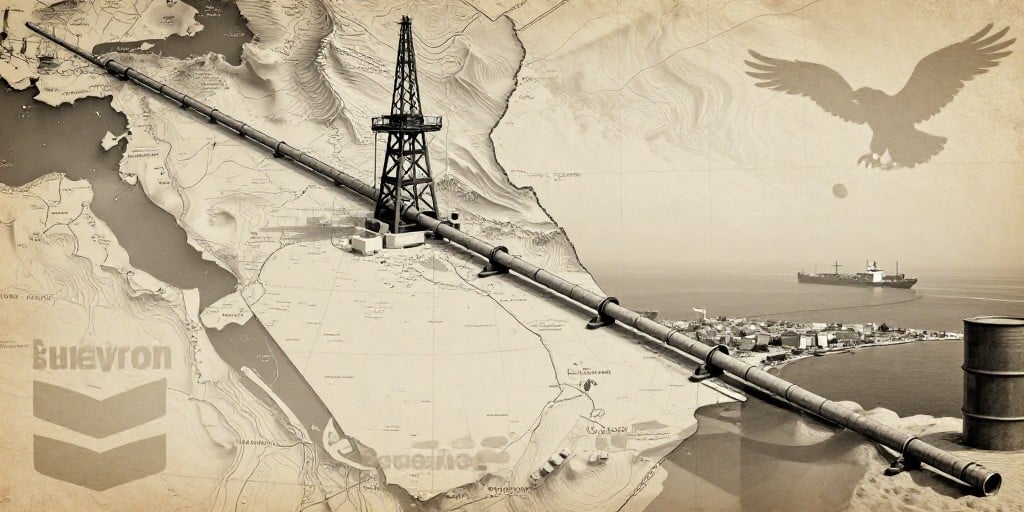
U.S. Diplomatic Engagement in the Re‑activation of the Kirkuk‑to‑Baniyas Pipeline
U.S. diplomatic efforts in the Middle East have recently turned toward the rehabilitation of a long‑shut oil pipeline that would link Iraq to Syria, offering a potential alternative route to the Strait of Hormuz. The initiative, which seeks to diversify regional energy corridors and counter Iranian influence, has involved the U.S. special envoy for Iraq and Syria, the governments of both countries, and a cohort of international oil companies, including Chevron Corp.
Strategic Context and Industry Implications
The proposed pipeline—connecting Kirkuk in Iraq to Baniyas on the Syrian coast—would enable the United Arab Emirates, Saudi Arabia, and other Gulf states to transport crude through Syria rather than through the strategically vulnerable Strait of Hormuz. This aligns with Washington’s broader strategy of reducing dependence on a single maritime chokepoint. From a corporate perspective, the project presents a mix of logistical, security, and regulatory challenges that require careful assessment of regional instability, infrastructure degradation, and contractual risk.
Chevron has a significant presence in Iraq, having explored opportunities in the Nasiriya and West Qurna‑2 fields. The company’s potential involvement in the pipeline project would need to reconcile its existing operational commitments with the additional security and logistical burdens of a line passing through contested insurgent territories. While the U.S. government endorses the project, Chevron has declined to comment publicly on its prospective role, signaling a cautious approach to the political and operational complexities involved.
Market Reaction to Geopolitical Tensions
The energy sector has reacted positively to rising oil prices, a trend partly driven by escalating U.S.–Iran tensions. Shares of major oil producers, including Chevron, have appreciated in line with the broader uptick in commodity prices. Investors have expressed confidence in the resilience of oil revenues amid geopolitical volatility, underscoring the role of macro‑economic factors in shaping equity performance.
Analysts attribute Chevron’s sustained investor appeal to its status as a major crude producer and its long‑standing commitment to dividend payments. Even as market sentiment fluctuated due to regional conflict, the company’s robust cash flow generation and dividend policy helped maintain steady demand for its shares. This stability highlights the interplay between commodity price movements and corporate financial fundamentals in the energy sector.
Cross‑Sector Connections and Economic Trends
The pipeline initiative illustrates how energy infrastructure projects can serve as catalysts for broader economic diversification. By reducing reliance on a single shipping route, the project could enhance regional trade resilience, potentially benefiting adjacent industries such as logistics, telecommunications, and security services. Moreover, the heightened demand for oil resulting from geopolitical tensions can create a virtuous cycle, boosting revenues for upstream producers and, in turn, supporting downstream activities across the oil and gas value chain.
In the wider economic landscape, the focus on alternative energy routes reflects a trend toward supply‑chain diversification that extends beyond the energy sector. Industries ranging from automotive manufacturing to high‑tech electronics are increasingly attentive to geopolitical risk when planning logistics and sourcing strategies. Chevron’s involvement—whether as a participant, financier, or service provider—demonstrates the company’s capacity to adapt its strategic positioning in response to shifting geopolitical realities.
Conclusion
Chevron’s engagement in discussions surrounding the Kirkuk‑to‑Baniyas pipeline and the favorable market response to rising oil prices exemplify the company’s dual focus on strategic infrastructure development and market‑driven dynamics. By navigating the logistical and security challenges inherent in a politically complex corridor, and by capitalizing on broader economic trends, Chevron maintains its position as a resilient player in the global energy landscape.