
Detailed Corporate News Analysis
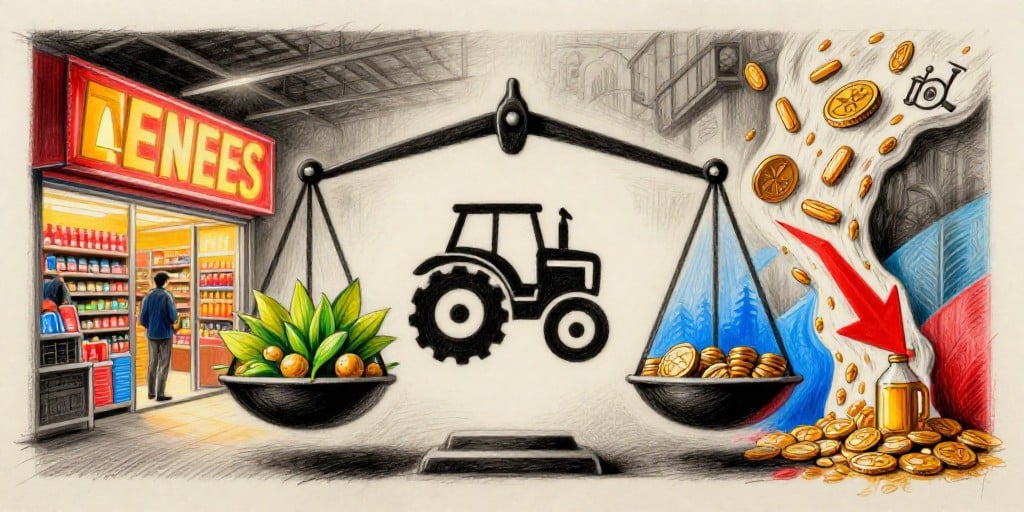
The U.S. retailer Tractor Supply Company has experienced a pronounced decline in its share value over the past twelve months, falling from the year‑ago level to a closing price near the mid‑thirty‑dollar range. Investors who entered the market at that earlier price would see their holdings eroded by roughly forty‑five percent, excluding any consideration of dividend payments or corporate actions such as stock splits. The company’s market capitalisation remains in the billions, yet the downward trajectory has prompted analysts to reassess its valuation.
Sector‑Specific Dynamics
Tractor Supply operates within the specialty retail sector, providing equipment, supplies, and services for agriculture, maintenance, and home improvement. Its performance is highly sensitive to the cyclical nature of the agricultural commodity market, interest‑rate environments, and regional economic growth. The recent drop in share price may reflect a combination of:
- Commodity price volatility – lower grain prices and reduced farm income can dampen demand for equipment and supplies.
- Rising interest rates – higher financing costs for both consumers and producers constrain capital spending.
- Competitive pressure – large discount retailers and online marketplaces are encroaching on traditional specialty retail margins.
While Tractor Supply’s revenue growth has remained steady, margin compression and inventory write‑downs have weighed on profitability metrics. Analysts are therefore revisiting key valuation multiples such as the price‑to‑earnings ratio and discounted cash‑flow models, which now suggest a lower fair value.
Comparative Market Context
In the broader U.S. market, the S&P 500 has posted a modest yield of around one percent, whereas the UK’s FTSE 100 offers a slightly higher return, currently around three percent. Inflationary pressures and the prospect of higher interest rates may temper the appeal of large‑cap dividend stocks in the near term. Some analysts suggest that firms with stronger dividend coverage and robust earnings growth—particularly those in consumer‑focused sectors—could still present attractive long‑term income potential, especially if inflation subsides and monetary policy eases.
Within the FTSE 100, several stocks have shown recent gains following upgrades from major research houses. Computacenter benefited from an upward revision of its price target by UBS, while Vodafone attracted attention after Goldman Sachs shifted its rating from “sell” to “buy,” citing improved return on invested capital and cost‑cutting initiatives. Other names such as Kingfisher, Melrose Industries, and M&G also recorded positive movement, whereas Prudential faced a modest decline despite a supportive stance from JPMorgan highlighting cash conversion and buy‑back prospects.
Cross‑Sector Connections and Economic Trends
The divergence between Tractor Supply’s performance and the broader market narrative underscores the volatility that can affect single‑sector stocks, even as larger market themes emphasize potential for dividend growth and capital appreciation among large‑cap firms. Investors are likely to weigh short‑term earnings pressure against medium‑to‑long‑term structural advantages when assessing the company’s prospects.
Key economic factors that transcend industry boundaries—such as:
- Monetary policy tightening – elevating borrowing costs across all sectors.
- Supply‑chain constraints – affecting inventory valuation and sales cycles.
- Consumer confidence – influencing discretionary spending in both retail and infrastructure.
These drivers play a role in shaping the competitive positioning of Tractor Supply relative to its peers. Should interest rates stabilize and inflationary pressures ease, the retailer could benefit from renewed consumer spending and lower financing costs, potentially restoring investor confidence.
Conclusion
The recent decline in Tractor Supply’s share price highlights the need for analytical rigor when approaching unfamiliar industries. By thoroughly researching sector‑specific dynamics, key players, and market drivers, analysts can maintain objectivity while rapidly developing subject‑matter expertise. Drawing connections between different sectors and broader economic trends allows for a more comprehensive understanding of how companies like Tractor Supply navigate current challenges and position themselves for future growth.