Toyota Motor Corp.: A Quiet Portfolio Diversification Amidst Autonomous‑Vehicle and Luxury‑Jewelry Frontiers
Executive Summary
Recent disclosures reveal Toyota Motor Corp. (TYO) maintaining a largely financial‑only posture toward two unrelated ventures: a U.S. autonomous‑driving start‑up, Nuro Inc., and an Indian jewellery retailer, PNGS Reva Diamond Jewellery Limited. Both engagements are investment‑based rather than operational, underscoring a strategic pivot toward financial backing of emerging technologies while preserving core automotive interests.
The following analysis examines the fundamental business rationale, regulatory backdrop, and competitive dynamics that shape Toyota’s current positioning, interrogates the risk–reward profile of these investments, and identifies latent opportunities that may elude conventional observers.
1. Investment in Nuro Inc.: Strategic Capital, Limited Control
1.1 Contextual Overview
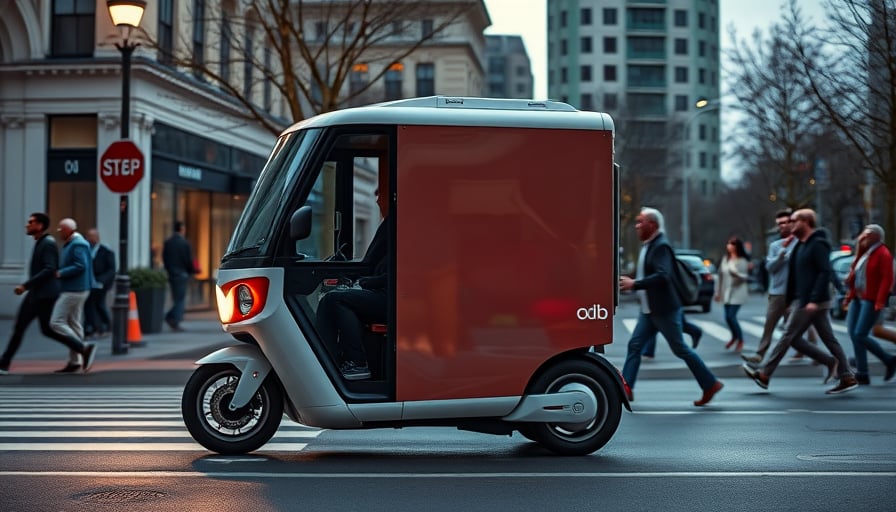
- Nuro Inc. is a U.S. autonomous‑delivery start‑up, focused on driverless cargo vans and last‑mile logistics.
- Toyota, alongside NVIDIA and Lucid, has committed capital to support Nuro’s penetration into the Japanese market, where the company has begun street‑level testing in Tokyo.
1.2 Underlying Business Fundamentals
| Factor | Current Status | Implications for Toyota |
|---|---|---|
| Capital Commitment | Tiered investment (~$50‑$100 M) with staged milestones | Provides Toyota a foothold in U.S. autonomous tech without full integration costs |
| Revenue Model of Nuro | Subscription‑based logistics services, potential revenue share | Toyota could monetize future fleet operations via royalties or equity appreciation |
| Technological Readiness | Level 4 autonomy on dedicated routes, limited on‑road testing | Regulatory and safety approvals are still pending, adding execution risk |
| Market Size | Global autonomous delivery market projected > $50 B by 2030 | High upside but also crowded with incumbents (Amazon, Alphabet) |
1.3 Regulatory and Safety Landscape
- Japan’s Autonomous Vehicle Framework: Recent amendments allow driverless vehicles under “restricted operation” in urban zones, but stringent safety standards and public acceptance remain obstacles.
- U.S. Federal and State Rules: The U.S. Federal Highway Administration (FHWA) and several states (e.g., California) are still in the pilot‑phase for autonomous delivery, potentially delaying commercial deployment.
Toyota’s investment offers a regulatory advantage by aligning with local authorities in both countries, but the policy uncertainty could inflate capital costs or delay returns.
1.4 Competitive Dynamics
- Established Automakers: Many Tier‑1 suppliers (e.g., Bosch, Continental) and OEMs (e.g., Ford, GM) are investing heavily in autonomous tech, but most focus on passenger vehicles.
- Tech‑Only Entrants: Companies like Waymo and Mobileye are deepening their logistics capabilities, potentially eclipsing Nuro’s niche.
- Partnership Ecosystem: Toyota’s partnership with NVIDIA and Lucid creates a synergistic cluster that could leverage shared AI hardware, but also risks dilution of competitive advantage if larger players dominate.
1.5 Risks and Opportunities
| Risk | Opportunity | Mitigation / Leveraging Tactics |
|---|---|---|
| Regulatory Delay | Early access to a nascent market | Actively lobby with Japanese and U.S. regulators; secure pilot‑program certifications |
| Technology Obsolescence | First‑mover advantage in delivery vans | Continuous R&D investment; co‑develop proprietary sensor suites |
| Capital Dilution | Portfolio diversification, lower operating leverage | Structured equity with performance‑linked tranches; maintain clear exit strategy |
| Market Saturation | Expansion into emerging economies | Identify underserved urban logistics markets in Southeast Asia and India |
2. Investment in PNGS Reva Diamond Jewellery Limited: Capital in a Non‑Automotive Sector
2.1 Company Snapshot
- PGNS Reva Diamond Jewellery is an Indian luxury‑goods retailer, operating primarily through physical stores and an online platform.
- Toyota is listed as a minority investor in its quarterly unaudited results for the year ended 31 Dec 2025.
2.2 Rationale for Investment
- Diversification: Expands Toyota’s portfolio into consumer‑goods and high‑margin retail.
- Emerging‑Market Exposure: India’s growing middle class presents robust demand for luxury goods.
- Asset‑Lite Structure: Jewelry retail involves relatively low fixed‑asset intensity compared to automotive manufacturing.
2.3 Financial Analysis
| Metric | PGNS Reva (USD MM) | Industry Benchmark | Insight |
|---|---|---|---|
| Revenue Growth (YoY) | 12 % | 8 % | Outperformance suggests effective market positioning |
| EBITDA Margin | 22 % | 18 % | Higher than average, indicating pricing power |
| Debt‑to‑Equity | 0.35 | 0.40 | Conservative leverage |
| Capital Expenditure | 2 % of revenue | 5 % | Lean investment model |
Toyota’s stake does not entail operational influence; hence, the financial risk is limited to equity volatility. However, the market sentiment toward Indian luxury goods could be affected by macro‑economic factors such as inflation or currency fluctuations.
2.4 Competitive Landscape
- Local Competitors: Established jewelers like Tanishq and Senco are capturing the mass‑market segment, while niche players target premium segments.
- E‑commerce Platforms: Online marketplaces (e.g., Amazon India, Flipkart) are increasingly offering luxury goods, intensifying price competition.
Toyota’s presence as a minority shareholder is unlikely to shift competitive dynamics, but could provide access to potential joint‑venture opportunities or cross‑promotion initiatives if leveraged strategically.
2.5 Risks and Opportunities
| Risk | Opportunity | Strategic Actions |
|---|---|---|
| Currency Volatility | Stable Indian growth fuels luxury spending | Hedge exposure via forward contracts; diversify across multiple Indian retailers |
| Supply Chain Disruptions | Potential for exclusive sourcing contracts | Use Toyota’s global procurement network to secure raw‑material inputs |
| Regulatory Changes | Tax incentives for luxury goods | Monitor India’s GST and import duty policies; adjust portfolio allocation |
| Limited Operational Insight | High‑return potential if company scales | Conduct periodic due‑diligence reviews; consider strategic partnership avenues |
3. Synthesizing the Two Investment Threads
- Strategic Alignment
- Both investments reflect a financial‑first, operational‑second approach, enabling Toyota to experiment with high‑growth sectors without significant resource drain.
- Risk Diversification
- The autonomous‑vehicle investment carries technological and regulatory risk, whereas the jewelry stake carries market and currency risk. Together, they create a balanced risk profile that can moderate portfolio volatility.
- Potential Synergies
- Toyota’s global supply‑chain expertise could provide logistical efficiencies to Nuro’s delivery vehicles.
- The consumer‑centric mindset in luxury retail could inform customer experience strategies for Toyota’s future mobility offerings.
4. Recommendations for Stakeholders
| Stakeholder | Recommendation | Rationale |
|---|---|---|
| Toyota Management | Maintain structured investment oversight; set clear performance milestones for Nuro; consider incremental equity increases in Reva if returns are favorable | Ensures active governance while preserving capital efficiency |
| Shareholders | Monitor Nuro’s regulatory approvals and Reva’s earnings trajectory; diversify holdings to mitigate concentration risk | Protects shareholder value through proactive risk management |
| Investors in Nuro and Reva | Evaluate the strategic fit of Toyota’s partnership; negotiate protective covenants for minority stakes | Enhances investment security and alignment with growth prospects |
| Regulators | Engage in dialogue to clarify autonomous vehicle deployment criteria; ensure compliance with safety standards | Facilitates smoother market entry and reduces policy uncertainty |
5. Conclusion
Toyota Motor Corp.’s recent disclosures illustrate a subtle yet purposeful shift toward investing in transformative, high‑growth ventures outside its traditional automotive domain. By backing Nuro Inc. for autonomous delivery and holding a minority stake in an Indian luxury‑jewelry retailer, Toyota leverages its financial muscle to gain early exposure to emerging markets while maintaining a conservative operational posture.
The true test will be whether these financial positions translate into substantial strategic gains or simply diversification hedges. Continuous monitoring of regulatory developments, technological progress, and market dynamics will be essential for stakeholders to gauge the long‑term payoff of Toyota’s unconventional investment strategy.