
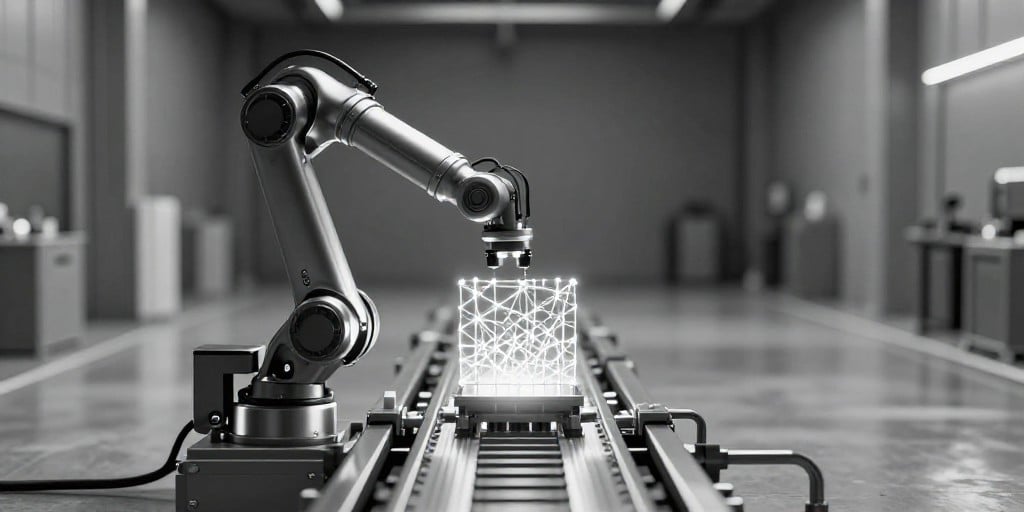
Deployment of a Photonic Quantum Computer by Toyota Tsusho Corporation
Toyota Tsusho Corporation has announced the rapid deployment of a photonic quantum computer supplied by ORCA Computing to a Japanese enterprise customer. The system, part of ORCA’s PT Series, was installed and brought online in less than a week within a live production environment. This partnership marks a significant milestone: it is the first time a private‑sector enterprise has operated an ORCA quantum system.
Technical Overview
The installed quantum computer will be incorporated into Toyota Tsusho’s cloud services and integrated directly into its production infrastructure. This integration enables hybrid quantum–AI workflows that run alongside existing high‑performance computing (HPC) applications. The photonic architecture—based on light‑based qubits—offers low‑temperature operation and a scalable platform that is well‑suited for industrial workloads.
Anticipated Impact on Manufacturing and Beyond
The deployment is expected to enhance advanced science and engineering, logistics, manufacturing, optimisation and generative AI workloads across the manufacturing sector. By embedding quantum capabilities into production pipelines, Toyota Tsusho can accelerate simulation, optimisation and machine‑learning tasks that traditionally strain classical resources.
In a future upgrade later in the year, the platform will be transitioned to the next‑generation PT‑3 model. The newer model promises greater processing capability and tighter integration with classical computing environments, further reducing latency and improving reliability in mixed‑mode workloads.
Strategic Significance
Toyota Tsusho’s manager of Digital Infrastructure, Mr. Norihito Ohigashi, highlighted the company’s commitment to advanced technologies that shape future manufacturing and intelligent infrastructure. The collaboration underscores how quickly quantum computing can transition from concept to operational use in real‑world industrial settings. It also demonstrates the growing convergence between quantum and classical systems, where hybrid solutions are becoming essential for tackling complex optimisation and AI problems.
Industry Context
Quantum computing is increasingly viewed as a disruptive technology across multiple sectors. In manufacturing, the ability to solve large‑scale combinatorial optimisation problems—such as supply‑chain routing or production scheduling—offers a competitive edge. The successful deployment by a major industrial player illustrates that quantum hardware can be made resilient, scalable and cost‑effective enough to meet the stringent reliability requirements of production environments.
Other industries—finance, pharmaceuticals, energy—are similarly exploring hybrid quantum–AI frameworks to accelerate drug discovery, portfolio optimisation and grid management. Toyota Tsusho’s initiative may serve as a model, demonstrating how private‑sector firms can partner with specialised quantum vendors to accelerate adoption without the need for extensive in‑house quantum expertise.
Broader Economic Implications
The rapid integration of quantum computing into manufacturing signals a broader trend toward “quantum‑enabled” industrial ecosystems. As more companies adopt hybrid solutions, we can expect to see:
- Capital reallocation – firms will invest more in quantum‑friendly infrastructure and talent, reshaping IT budgets.
- Supply chain acceleration – optimisation algorithms that run on quantum cores could reduce lead times and inventory costs.
- Innovation spill‑over – breakthroughs in quantum software and hardware will feed back into other high‑tech sectors, potentially catalysing new market entrants.
Given the pace of development and the increasing convergence of quantum and classical platforms, the next few years may witness a shift from experimental deployments to mainstream commercial applications.
Conclusion
Toyota Tsusho’s deployment of an ORCA photonic quantum computer represents a pivotal step in bringing quantum technology from laboratory prototypes into the heart of industrial operations. By integrating quantum computing directly into production workflows and planning a rapid upgrade to the PT‑3 model, the company is positioning itself at the forefront of a new wave of quantum‑enabled manufacturing. This move exemplifies the practical viability of hybrid quantum–AI systems and highlights the accelerating momentum across industries to harness quantum capabilities for competitive advantage.