
Corporate Developments and Market Implications
TotalEnergies SE Expands Renewable Power Contracts with Airbus
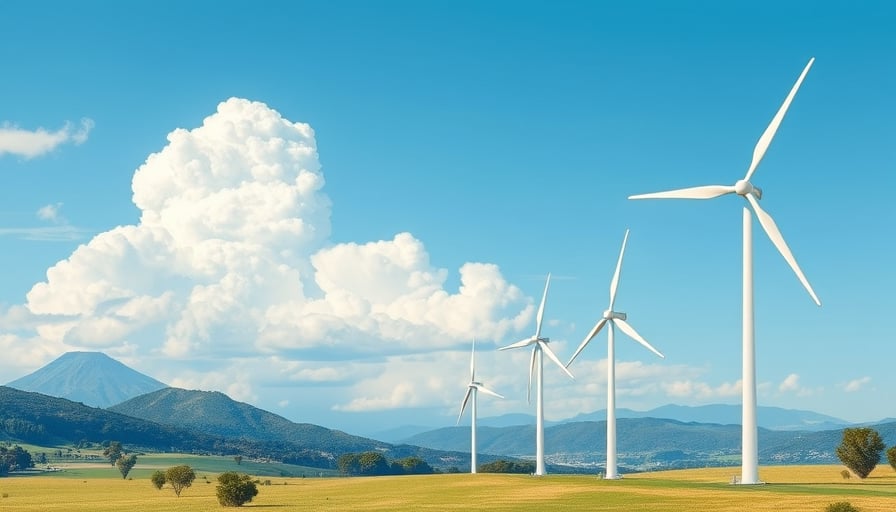
TotalEnergies SE has announced a series of renewable electricity agreements with Airbus, covering major aircraft manufacturing sites in Germany and the United Kingdom. The contracts, scheduled to commence in 2027, will deliver a substantial volume of clean power sourced from new renewable installations with an aggregate capacity of roughly 200 MW. This move is intended to supply a significant portion of the energy needs of Airbus facilities and represents a continuation of TotalEnergies’ broader strategy to expand its renewable power portfolio.
From a supply‑demand perspective, the introduction of 200 MW of renewable capacity at key industrial sites will shift the local electricity supply curve upward, reducing the marginal cost of electricity for Airbus and potentially lowering its operating expenses. In Germany, the Renewable Energy Sources Act (EEG) currently provides feed‑in tariffs and market premiums that make such projects financially viable; the same applies in the UK through the Contracts for Difference scheme. By securing a long‑term supply agreement, TotalEnergies not only guarantees a stable revenue stream for its renewable assets but also mitigates the short‑term price volatility that can arise from spot market fluctuations.
TotalEnergies Marketing Nigeria Plc Issues Regulatory Caution at International Summit
In addition to the power deals, TotalEnergies Marketing Nigeria Plc issued a cautionary statement at the 2026 Nigeria International Energy Summit. The company emphasized that the success of Nigeria’s downstream petroleum market depends more on robust regulatory oversight, consistent policy frameworks, and stringent safety standards than on the availability of capital. This view reflects concerns that without such foundations, multinational operators may withdraw from the sector.
Regulatory uncertainty in Nigeria has historically contributed to higher risk premiums on upstream and downstream projects. Recent data show that the cost of capital for Nigerian oil and gas projects remains 3–5 % higher than in comparable African jurisdictions, primarily due to perceived political and operational risks. By foregrounding governance and safety, TotalEnergies is positioning itself to manage non‑financial risks that could erode projected cash flows, especially in a sector where global commodity prices are already volatile.
Energy Market Context: Supply‑Demand Fundamentals
Commodity price analysis for crude oil and natural gas continues to be shaped by a combination of geopolitical events and production dynamics. As of Q4 2025, Brent crude averaged $87 /BBL, while WTI settled near $82 /BBL. Natural gas prices on the European market have stabilized at around €80 /MWh, following a sharp spike in 2023 triggered by supply constraints in the North Sea and reduced liquefied natural gas (LNG) shipments to Europe.
On the supply side, global oil production is projected to plateau at roughly 97 million barrels per day (bbl/d) by 2030, with incremental increases driven by unconventional plays in the United States and Canada. Natural gas production, meanwhile, is expected to rise by approximately 5 % annually through 2035, buoyed by shale gas extraction in the United States and enhanced gas recovery projects in the Middle East.
These fundamentals have direct implications for the renewable sector. Lower commodity prices reduce the opportunity cost of investing in low‑carbon alternatives, while stable natural gas markets provide a reliable backup for peaking power demands, allowing renewables to operate with greater confidence.
Technological Innovations in Energy Production and Storage
TotalEnergies’ commitment to renewable power is accompanied by investments in emerging technologies that enhance grid integration. The company is exploring high‑efficiency solar photovoltaic (PV) modules with integrated micro‑inverters, coupled with 500 kWh battery storage arrays at each Airbus site. This configuration enables the capture of excess generation during low‑load periods and supplies critical load during peak manufacturing hours.
In addition, TotalEnergies is evaluating floating offshore wind (FOW) platforms in the North Sea. FOW projects can achieve capacity factors exceeding 45 %, surpassing traditional onshore wind installations. By integrating wind, solar, and storage, the company can deliver a more flexible and resilient power mix to industrial customers.
Regulatory Impacts on Traditional and Renewable Energy Sectors
Regulatory frameworks remain a decisive factor in shaping market dynamics. The European Union’s Fit for 55 package, which aims to reduce net greenhouse‑gas emissions by 55 % by 2030, introduces stricter CO₂ pricing and renewable portfolio standards. These measures are expected to increase the cost of fossil‑fuel‑based power generation by approximately €20–€30 /tonne CO₂, thereby improving the levelized cost of electricity (LCOE) for renewables relative to conventional sources.
In contrast, the United Kingdom’s Carbon Budget Mechanism, coupled with the Carbon Price Floor, imposes a minimum price on carbon emissions, further incentivizing renewable investments. Meanwhile, in Nigeria, the Petroleum Industry Bill (PIB) has been stalled, limiting the regulatory clarity needed for downstream operations. TotalEnergies’ emphasis on policy consistency underscores the importance of a predictable regulatory environment for long‑term investment planning.
Balancing Short‑Term Trading with Long‑Term Transition Trends
Short‑term trading in electricity markets often focuses on arbitrage opportunities between spot and futures contracts. For instance, European day‑ahead markets can see price swings of up to €30 / MWh within a 24‑hour period, driven by weather patterns and transmission constraints. However, the long‑term transition toward decarbonisation is reshaping these dynamics.
Investment flows into renewable generation and storage are increasing at a compound annual growth rate (CAGR) of 18 % through 2030, according to the International Energy Agency. This surge is driven not only by technological cost reductions—solar PV modules have fallen by 80 % over the past decade—but also by policy incentives and corporate sustainability mandates.
TotalEnergies’ dual strategy—providing renewable power to a major industrial customer while highlighting regulatory safeguards in Nigeria—reflects an integrated approach to risk management. By securing long‑term power contracts, the company locks in stable revenue streams that counterbalance short‑term commodity price volatility. Simultaneously, its focus on governance in emerging markets protects against political and operational risks that could otherwise undermine long‑term investment returns.
Conclusion
TotalEnergies’ recent contracts with Airbus and its regulatory cautionary stance in Nigeria exemplify the broader strategic shift among major oil and gas firms toward sustainable, diversified energy portfolios. By integrating renewable generation, energy storage, and stringent regulatory oversight, the company is positioning itself to navigate both the immediate fluctuations of commodity markets and the evolving long‑term trajectory of global energy transition.