
Corporate Developments and Market Implications
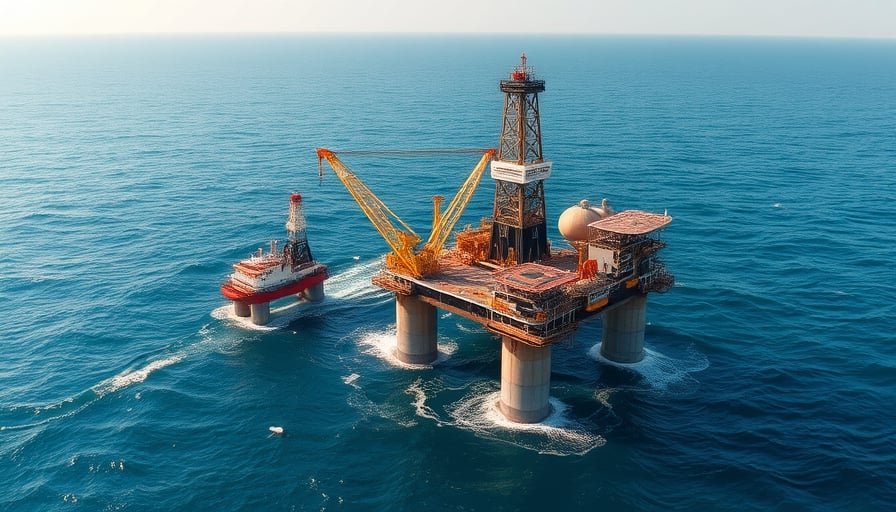
TotalEnergies SE (TTE) has reinforced its offshore footprint with a strategic partnership with Portuguese operator Galp Energia in the Mopane field off Namibia. The agreement, announced on 10 December, designates TotalEnergies as the operator of both the Mopane and an adjacent discovery, thereby securing control over the two largest on‑shore discoveries in the country. The transaction is positioned as part of a wider strategy to secure new production assets in resource‑rich but geopolitically stable regions.
In parallel, the company completed a block sale of a 1.5 % stake in Adani Green Energy Ltd. (AGE) in India. The sale, brokered by Jefferies, was contingent on market conditions and reflects TotalEnergies’ effort to adjust its portfolio and free capital for upcoming development projects. While the stake was modest, the transaction underscores the group’s willingness to divest from renewable assets that do not fit its immediate growth profile.
Supply‑Demand Fundamentals
The Mopane partnership occurs against a backdrop of a robust supply curve in the African offshore sector. Global oil production has remained relatively flat since the COVID‑19 downturn, with a 3 % decline in 2023 that has yet to be fully replaced by new fields. TotalEnergies’ move into Namibia aligns with the industry’s need to diversify supply sources in order to mitigate geopolitical risks such as supply disruptions from Russia or the Middle East.
On the demand side, Brent crude futures have traded around $85 per barrel in late 2023, reflecting a sustained upward trajectory driven by post‑pandemic rebound, OPEC+ production cuts, and limited new supply growth. TotalEnergies’ acquisition of Mopane’s production rights is expected to add approximately 50,000 barrels per day (b/d) to its portfolio once the field reaches commercial production. This addition will help stabilize the company’s output profile in a market where demand is still growing but inflationary pressures are eroding margins.
Technological Innovations and Storage
The Mopane field is anticipated to employ advanced subsea drilling technologies, including high‑temperature, high‑pressure (HTHP) completions that increase recoverable reserves and reduce well costs. TotalEnergies is expected to leverage its experience in deepwater projects, such as the Block 12 field in the North Sea, to optimise production rates.
In the renewable domain, TotalEnergies’ divestment from AGE signals a short‑term reallocation of resources, but the company continues to invest in battery storage and carbon capture initiatives across its global operations. The partnership with Galp could provide a platform for integrating green hydrogen production as a downstream process, given the growing interest in converting excess offshore wind energy into electrolysis.
Regulatory Impacts
The partnership with Galp occurs in a regulatory environment that is increasingly supportive of energy diversification. Namibia’s Energy Policy 2035 encourages foreign investment and mandates joint ventures with local partners. TotalEnergies’ alignment with Galp ensures compliance with local ownership rules while enabling access to a large workforce of experienced operators.
Conversely, the sale of the stake in AGE has implications for India’s renewable energy regulatory landscape. The Indian government’s target of 450 GW of renewable capacity by 2030 has led to an influx of foreign capital, but also increased scrutiny over ownership structures. TotalEnergies’ exit from AGE, while small, signals a cautious stance toward the regulatory uncertainties that accompany renewable projects in emerging markets.
Infrastructure Developments and Financing
Several South African banks have expressed interest in financing the expected infrastructure for the Mopane field, reflecting the perceived stability of the project’s cash flows. TotalEnergies’ historical experience in securing multi‑bank syndicates for offshore development positions it favourably in negotiations. The company’s ability to mobilise financing at favourable rates will be critical, given the capital intensity of offshore projects and the prevailing interest‑rate environment.
In India, the transaction’s brokered nature by Jefferies highlights the importance of market conditions. The sale was contingent upon achieving a target price that aligned with the company’s valuation models, underscoring the delicate balance between shareholder expectations and market realities.
Market Dynamics: Short‑Term vs Long‑Term Trends
Short‑term trading factors such as Brent crude volatility, interest‑rate movements, and geopolitical developments continue to influence TotalEnergies’ market valuation. The company’s active portfolio management, including the Mopane acquisition and the AGE stake sale, positions it to capitalize on these dynamics. However, long‑term energy transition trends—particularly the decarbonisation imperative and the shift towards renewable portfolios—will shape the company’s strategic trajectory.
While the Mopane field reinforces the oil & gas core of TotalEnergies, the company’s ongoing investments in green hydrogen, battery storage, and carbon capture will likely offset the shortfall in emissions growth. The strategic combination of upstream growth in Africa and selective divestments in renewable assets demonstrates a balanced approach that aligns with both investor expectations and the broader energy transition agenda.
Overall, TotalEnergies’ recent corporate moves illustrate its intent to maintain a robust, diversified portfolio while navigating the complex interplay of supply‑demand fundamentals, technological innovation, regulatory frameworks, and financing structures in the global energy market.