
TotalEnergies SE Expands Upstream Footprint and Secures Financing Commitments
TotalEnergies SE, the French integrated oil and gas group listed on both the NYSE and Euronext Paris, has announced a series of strategic moves that underscore its commitment to expanding upstream operations in Africa and reinforcing its financial positioning for large‑scale projects.
1. Acquisition of a Majority Stake in the Mopane Oil Field
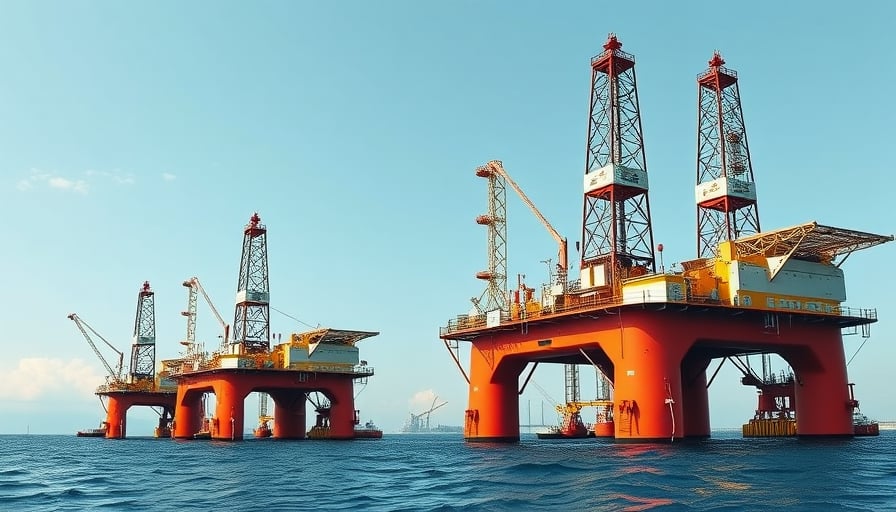
In late November, TotalEnergies emerged as the preferred bidder for a substantial equity stake in the Mopane oil field, a discovery located off the coast of Namibia. The field, identified by Portugal’s Galp, is regarded as one of the largest finds in the region and is situated in the economically significant Orange Basin. By securing a controlling interest, TotalEnergies will solidify its presence in a basin that is attracting increasing interest from major international players seeking to diversify their African portfolios.
- Sector‑Specific Dynamics: Namibia’s offshore oil and gas sector has benefited from a stable regulatory framework and a government that actively promotes foreign investment. The Mopane field, with its high‑grade reserves, aligns with TotalEnergies’ strategy to target low‑to‑medium‑cost assets that can generate robust cash flows.
- Competitive Positioning: The acquisition positions TotalEnergies ahead of rivals such as ExxonMobil and Equinor, who are also pursuing opportunities in Southern Africa. By entering the Orange Basin, the group gains access to a region that is expected to produce several hundred thousand barrels of oil per day over the next decade.
- Economic Drivers: Global energy demand continues to rise, and African offshore projects are viewed as critical to meeting that demand. The Mopane development also benefits from technological advances in subsea drilling, which lower development costs and improve recovery rates.
2. Mozambique LNG Project: Clarifying Financing Structure
TotalEnergies has engaged in a series of partnership discussions concerning its Mozambique LNG project, a flagship development aimed at tapping the country’s abundant natural gas resources. The company has addressed inquiries from UK and Dutch export finance authorities by reiterating that its partners will absorb any residual cash shortfall following the withdrawal of British and Dutch stakeholders.
- Financial Resilience: The clarification demonstrates TotalEnergies’ ability to structure financing arrangements that accommodate changes in partner composition without compromising project viability. This is particularly relevant in the LNG sector, where project economics are sensitive to currency fluctuations, gas price volatility, and capital expenditure overruns.
- Global Supply Chain Context: LNG projects in Africa are increasingly attractive to European buyers, especially amid shifting geopolitical dynamics that favor diversification away from traditional Russian gas supplies. By securing financing commitments, TotalEnergies ensures that the Mozambique LNG project remains on schedule to supply the European market in the mid‑2020s.
- Risk Management: The withdrawal of stakeholders could have exposed the project to significant funding gaps. TotalEnergies’ proactive communication and restructuring plan mitigate these risks, preserving stakeholder confidence and maintaining the project’s trajectory.
3. Leadership Transition in the Spanish Arm
On the corporate side, TotalEnergies’ Spanish subsidiary, TotalEnergies Electricidad y Gas, will experience a leadership change in early 2024. José Ignacio Sanz, who has served as the group’s CEO in Spain since September, will transition to the role of President, succeeding Javier Sáenz de Jubera.
- Strategic Continuity: The promotion of an internally experienced executive is designed to sustain operational stability while enabling the subsidiary to pursue its growth agenda. Sanz’s tenure as CEO has already seen increased investment in renewable energy assets, aligning with the parent company’s broader decarbonisation commitments.
- Cross‑Sector Synergies: Spain’s energy market is a pivotal hub for both traditional utilities and emerging renewable technologies. By placing a seasoned leader at the helm, TotalEnergies can leverage synergies between its upstream activities in Africa and downstream operations in Europe, particularly in areas such as gas trading and distribution.
- Organisational Dynamics: Leadership transitions within multinational conglomerates often signal shifts in strategic focus. The move to a presidential role for Sanz suggests a potential realignment of the subsidiary’s priorities toward integrated energy solutions, reflecting the parent company’s emphasis on a balanced energy mix.
4. Broader Economic Implications
TotalEnergies’ series of initiatives illustrates a broader trend within the global energy industry: a simultaneous pursuit of upstream growth, rigorous financial structuring, and internal leadership alignment. These moves respond to:
- Energy Transition Pressures: While the group is expanding its conventional upstream portfolio, it remains cognizant of the need to balance hydrocarbons with renewable investments, especially in key markets such as Spain.
- Geopolitical Shifts: The company’s focus on African projects aligns with a strategic diversification away from more politically volatile regions. This positions TotalEnergies to benefit from stable, long‑term resource contracts.
- Capital Market Conditions: By securing financing commitments and clearly outlining risk‑sharing mechanisms, the group demonstrates resilience in an environment marked by higher interest rates and fluctuating commodity prices.
In summary, TotalEnergies SE’s recent actions reinforce its upstream dominance in Africa, secure financing pathways for major LNG ventures, and ensure leadership continuity within its European subsidiaries. These developments collectively strengthen the group’s capacity to navigate the evolving landscape of the global energy market, while maintaining a balanced approach to growth and risk management.