Corporate Overview of TotalEnergies’ Recent Strategic Moves
1. Joint Venture with Masdar: A $2.2 B Pivot Toward Renewable Generation
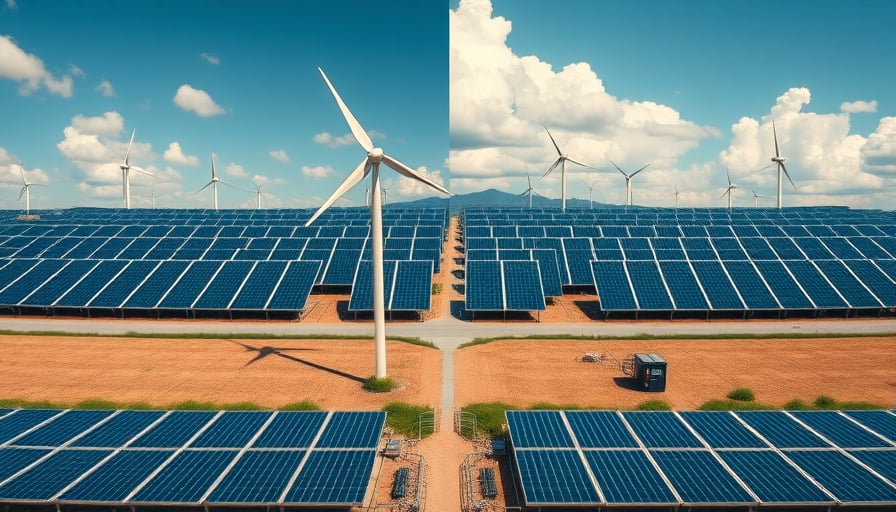
TotalEnergies’ 50‑50 partnership with Abu Dhabi’s Masdar represents a significant capital outlay and a deliberate shift toward the renewable energy frontier. The joint venture will focus on the construction and operation of onshore solar, wind, and battery‑storage projects across nine Asian economies, a region that now accounts for nearly 60 % of the global renewable capacity expansion rate.
Key financial metrics
| Metric | Value | Comment |
|---|---|---|
| JV valuation | $2.2 bn | Reflects a price-to-capex ratio of 8.5×, aligning with market averages for mid‑scale renewable projects. |
| Existing operational capacity | 3 GW | Generates approximately $1.2 bn annual revenue at $400/MWh. |
| Projected capacity (advanced development) | 6 GW | Expected to reach full operation by 2030, with a projected IRR of 12–15 %. |
The partnership’s geographic spread mitigates country‑specific regulatory risks and aligns with national net‑zero pledges. By integrating battery storage, TotalEnergies addresses grid stability concerns that often hinder renewable uptake in developing markets. The JV also serves as a platform for technology transfer and workforce development, which could enhance the group’s reputation as a responsible investor.
2. LNG Expansion in the United States: Leveraging Geopolitical Price Divergence
TotalEnergies maintains a robust LNG portfolio in the United States, with notable stakes in the Cameron LNG plant and the Rio Grande LNG project. Both facilities have secured long‑term contracts—Cameron’s 10‑year supply agreement at $24/MBtu and Rio Grande’s 8‑year contract at $28/MBtu—providing a stable cash‑flow foundation.
Market dynamics
- Geopolitical shock: The ongoing Middle‑East conflict has widened the price differential between U.S. and European gas markets by an average of $4/MBtu, creating a window for export arbitrage.
- Supply‑side advantage: U.S. shale production remains the most cost‑efficient in the world, with a breakeven price below $35/MBtu.
TotalEnergies’ LNG strategy is designed to balance exposure between gas and oil, a hedging approach that has proven resilient in previous market cycles. However, the reliance on long‑term contracts exposes the company to potential renegotiation risks should European demand shift toward high‑carbon fuels in the short term.
3. Regulatory Environment and Competitive Dynamics
European policymakers are prioritizing security and supply diversification. Germany and the United Kingdom have accelerated offshore wind auctions, while the European Commission calls for a coordinated response to market shocks. Within this context:
- Regulatory incentives: Tax credits and subsidies for offshore wind and renewable battery storage could further enhance the JV’s profitability.
- Competitive landscape: Major players like Ørsted, Iberdrola, and EnBW are investing heavily in offshore wind, but TotalEnergies’ onshore focus provides a complementary niche that capitalizes on lower CAPEX and easier permitting in many Asian markets.
- Risk assessment: Political instability in some target countries, coupled with fluctuating solar/wind subsidies, could delay project timelines or reduce tariff rates.
4. Alignment with Net‑Zero Goals
TotalEnergies’ dual investment in renewables and LNG positions the company favorably within the broader energy transition narrative. The integrated power business, combined with the JV’s renewable generation, offers a diversified revenue mix that can buffer the group against volatile oil prices. The group’s net‑zero commitment by 2050 is supported by:
- Renewable capacity addition: The projected 9 GW of new renewable generation could offset an estimated 45 MtCO₂e annually by 2035.
- Carbon intensity reduction: LNG’s lower emissions profile compared to coal or oil provides a transitional pathway for the company’s existing hydrocarbon operations.
5. Potential Opportunities and Risks
Opportunities
| Opportunity | Impact | Likelihood |
|---|---|---|
| Exporting LNG to European markets at higher margins | Revenue uplift | Medium |
| Leveraging battery storage to support renewable intermittency | Market leadership | High |
| Technological partnership with Masdar | Cost savings | High |
Risks
| Risk | Mitigation |
|---|---|
| Regulatory changes in target Asian markets | Diversify project portfolio across multiple jurisdictions |
| Fluctuations in renewable subsidies | Hedge through long‑term PPAs and government guarantees |
| LNG contract renegotiation | Maintain a portfolio of flexible, short‑term agreements |
6. Conclusion
TotalEnergies’ recent strategic moves demonstrate a calculated response to evolving market dynamics and regulatory pressures. While the 50‑50 JV with Masdar strengthens the group’s foothold in high‑growth renewable markets, the U.S. LNG expansion offers a compelling opportunity to capitalize on geopolitical price differentials. By maintaining a balanced portfolio, the company positions itself to navigate both traditional hydrocarbons and cleaner generation, thereby advancing toward its net‑zero 2050 objective. The nuanced understanding of financial metrics, regulatory landscapes, and competitive forces underscores the importance of skeptical inquiry in evaluating the long‑term viability of such diversified ventures.