
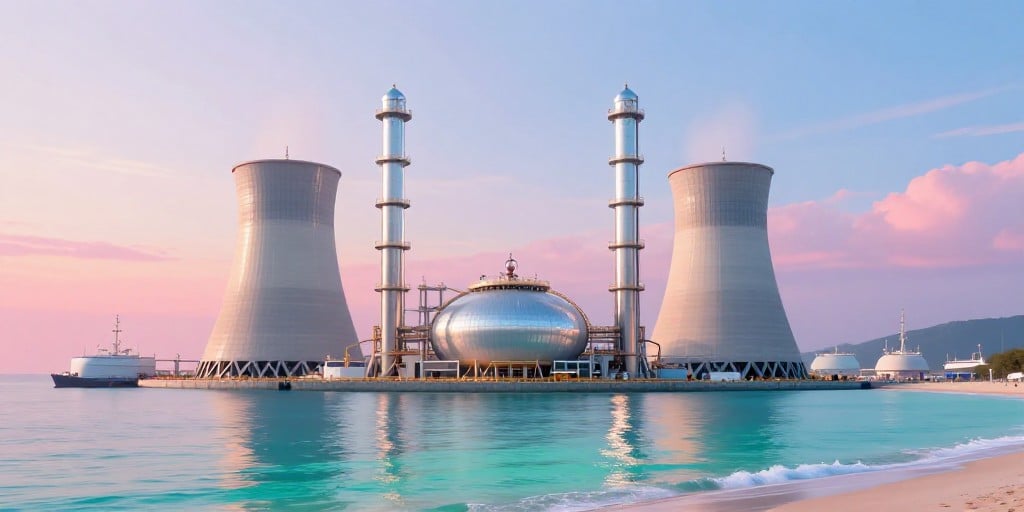
Corporate Developments in Southeast Asia: A Strategic Expansion of LNG Infrastructure
Tokyo Gas Co. Ltd. has announced a joint development agreement with Gas Malaysia Bhd and VTTI B.V. to construct a liquefied natural gas (LNG) regasification terminal at Yan, Kedah. This collaboration represents a significant expansion of LNG infrastructure in the region and serves to reinforce the participating companies’ capabilities in gas supply and distribution. Tokyo Gas’s engagement demonstrates its strategic focus on partnerships that broaden its influence across Southeast Asia, aligning with global trends toward integrated energy solutions and the regional development of natural‑gas facilities.
Technical Context: LNG Infrastructure and Grid Stability
The proposed Yan terminal will receive LNG shipments via the existing intercontinental LNG transport corridors and subsequently regasify the feedstock before delivering it to the local gas network. From an engineering perspective, the regasification process involves:
- Heat Integration – Utilizing seawater or steam to raise the LNG temperature from −162 °C to ambient levels.
- Compression & Pressure Regulation – Maintaining pipeline pressures above 5 bar to ensure efficient distribution to end users.
- Safety Systems – Implementing inert gas blankets and rapid shutdown mechanisms to mitigate flare risks.
The integration of a new regasification point directly influences the stability of the regional power grid in several ways:
- Load Balancing – A stable natural‑gas supply reduces reliance on peaking power plants, particularly those powered by coal or oil. The availability of gas enables more predictable thermal generation profiles.
- Renewable Curtailment Reduction – Natural gas plants can act as flexible backup for wind and solar farms, absorbing excess generation during peak renewable output periods and compensating during low‑generation intervals.
- Grid Frequency Support – The high ramp‑rate capability of gas turbines enhances frequency response, an essential feature as renewable penetration increases.
Renewable Energy Integration Challenges
While the Yan terminal will bolster gas supply, Southeast Asia is witnessing a rapid rise in renewable deployment. The juxtaposition of intermittent renewable sources with a traditionally dispatchable gas fleet presents several engineering challenges:
- Curtailment Risks – Unpredictable wind and solar outputs can lead to temporary reductions in gas plant output, potentially destabilizing the grid if not managed correctly.
- Dynamic Inertia – Large, synchronous gas generators contribute inertia, stabilizing frequency. However, as renewable penetration climbs, the aggregate inertial response diminishes, necessitating alternative solutions such as synthetic inertia from inverter‑based resources.
- System Congestion – The integration of new gas infrastructure can create bottlenecks in high‑voltage transmission corridors, demanding upgrades to sub‑station switching and line capacity.
The Yan terminal’s role, therefore, is dual: it supplies a reliable fuel source while providing a controllable asset capable of smoothing renewable fluctuations. Strategic operation of regasified gas into power plants—especially those with fast‑start capabilities—can mitigate curtailment and enhance overall grid reliability.
Infrastructure Investment Requirements
The projected cost envelope for the Yan terminal encompasses several critical components:
| Component | Estimated Cost | Impact on Grid |
|---|---|---|
| LNG receiving berth and regasification units | $1.2 billion | Enables high‑volume feedstock handling |
| Pipeline network expansion (150 km) | $350 million | Connects terminal to existing distribution nodes |
| Grid interconnection (500 kV substation upgrade) | $200 million | Supports increased power import/export |
| Digital control systems (SCADA + AI) | $75 million | Enhances real‑time dispatch and fault detection |
Investment in digitalization is particularly salient, as advanced monitoring allows for predictive maintenance and dynamic reconfiguration of the gas-to-power interface. Furthermore, the construction of robust transmission infrastructure—particularly hardening high‑voltage lines against climate‑induced stresses—will be essential to protect the reliability of the broader regional network.
Regulatory Frameworks and Rate Structures
Southeast Asian power markets are characterized by a mix of liberalized and regulated segments. Key regulatory considerations for the Yan project include:
- LNG Import Licensing – Must comply with the Malaysian Maritime Enforcement Agency (MMEA) and the Energy Commission’s safety and environmental guidelines.
- Transmission Tariffs – The Malaysian Electricity Regulatory Commission (MERC) sets tariffs for high‑voltage transmission, which will influence the cost passed on to end‑users.
- Renewable Incentives – Feed‑in tariffs and net metering policies could indirectly affect the demand for gas‑powered generation, impacting the terminal’s utilization.
From a rate‑setting perspective, the integration of a new regasification terminal may alter the cost structure for utility customers. While natural gas prices are subject to international market fluctuations, the domestic supply secured through the Yan terminal can introduce price stability, potentially lowering the wholesale electricity cost for consumers. However, the capital recovery of the terminal’s construction costs may be reflected in higher fixed charges or demand charges on the tariff schedule, especially if the terminal is operated in a regulated utility model.
Economic Impacts of Utility Modernization
The modernization of gas infrastructure carries significant economic implications:
- Job Creation – Construction, operation, and maintenance phases generate employment across engineering, logistics, and regulatory compliance sectors.
- Energy Security – A diversified fuel mix reduces vulnerability to geopolitical shocks, ensuring a steadier electricity supply that supports economic growth.
- Consumer Costs – While improved reliability can curb the frequency and duration of blackouts (saving businesses costly downtime), the initial investment in the terminal may lead to incremental tariff increases. Long‑term, the price elasticity of demand for electricity and natural gas will dictate how much of the investment cost is passed on to consumers.
A nuanced analysis of the cost‑benefit trade‑off reveals that, in a high‑renewable context, the ability of the Yan terminal to provide flexible gas generation will be invaluable. This flexibility can lower the need for expensive peaking plants, reduce the grid’s carbon footprint, and ultimately deliver cost savings that offset the initial capital outlay.
Engineering Insights on Power System Dynamics
The integration of LNG regasification with the regional power system underscores several complex dynamics:
- Thermal Cycling of Turbines – Rapid start‑up and shut‑down cycles, necessitated by renewable intermittency, can accelerate turbine wear. Advanced materials and lubrication systems mitigate degradation.
- Power Factor Management – The coupling of gas turbines with renewable inverters requires careful power factor correction to avoid voltage instability.
- Protection Coordination – The introduction of additional generation sources demands recalibration of protection schemes (over‑current, distance, and differential relays) to maintain fault isolation times within permissible limits.
These engineering considerations emphasize that merely adding a new fuel source is insufficient; comprehensive system studies, including dynamic simulations and contingency analysis, must precede implementation to ensure harmonious operation.
Conclusion
Tokyo Gas’s joint venture to build an LNG regasification terminal in Yan, Kedah, represents more than an expansion of supply capacity. It is a strategic investment that enhances grid stability, supports renewable integration, and reflects evolving regulatory and economic frameworks in Southeast Asia. By leveraging advanced engineering practices and thoughtful infrastructure planning, the project positions the region to navigate the complexities of the energy transition while balancing the imperatives of reliability, sustainability, and cost-effectiveness.