
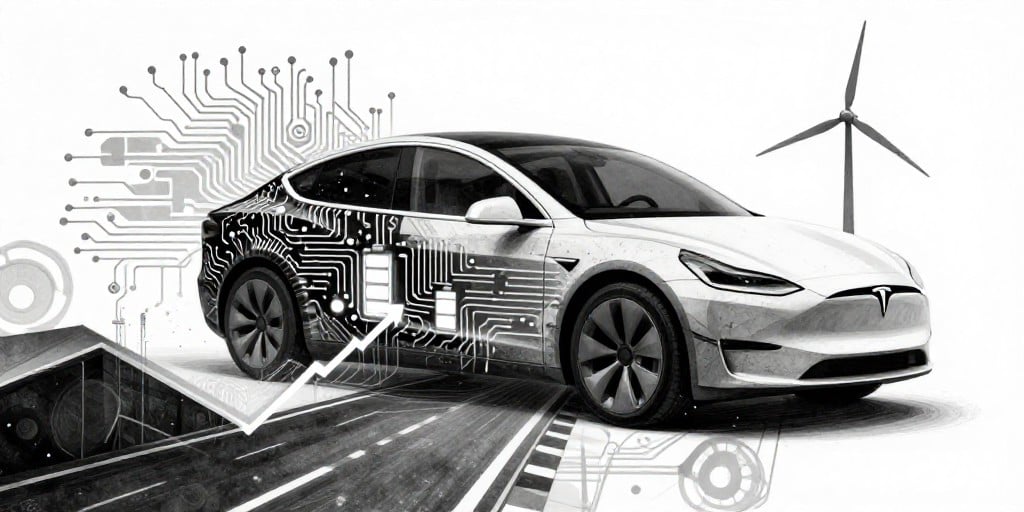
Tesla Inc. Adds to Technology‑Sector Momentum Amid Broad Market Rally
Tesla Inc.’s share price posted a modest uptick following a surge in the broader equity market, reinforcing the narrative of resilience among large‑cap technology names. The automaker’s performance dovetails with gains in the technology and semiconductor groups, which have benefited from a favourable macroeconomic backdrop and supportive investor sentiment.
Market Context
The S&P 500 advanced to a new high during the trading session, buoyed by strong earnings reports from high‑growth technology firms and an overall improvement in risk appetite among investors. In this environment, Tesla’s shares rose slightly, mirroring the broader rally that lifted the technology sector’s index components. The rally underscored the continued attractiveness of high‑growth, innovation‑driven companies, even as the market navigated uncertainty in geopolitical tensions and supply‑chain constraints.
Tesla’s Position within the Technology Landscape
Tesla’s inclusion among the technology‑sector leaders reflects the firm’s rapid transformation from a niche electric‑vehicle manufacturer to a diversified technology conglomerate. Key drivers of this shift include:
| Driver | Impact on Tesla | Sector Implication |
|---|---|---|
| Electrification & Autonomous Tech | Core product offering and R&D pipeline | Elevates Tesla as a semiconductor‑heavy company |
| Software and Data Analytics | Revenue diversification through vehicle software updates, Full‑Self‑Driving (FSD) subscription | Aligns Tesla with software‑centric tech peers |
| Energy Storage & Solar | Expands product portfolio beyond vehicles | Positions Tesla alongside renewable‑energy technology firms |
These factors reinforce Tesla’s alignment with the technology sector’s performance, especially in periods of heightened investor interest in innovation and sustainability.
Competitive Dynamics and Regulatory Landscape
Tesla’s continued ascent is tempered by an increasingly competitive automotive environment, with traditional automakers accelerating electrification plans and new entrants building dedicated EV platforms. Additionally, regulatory scrutiny—particularly regarding data privacy, autonomous vehicle testing, and battery recycling—poses potential risks. However, Tesla’s scale and integrated supply chain afford it a competitive advantage that mitigates short‑term regulatory pressures.
Economic Factors Transcending Industry Boundaries
Several macroeconomic trends are influencing Tesla and the technology sector broadly:
- Monetary Policy: Central banks’ gradual tightening of monetary policy has led to a broader shift in risk sentiment, yet high‑growth technology firms have maintained investor appeal due to their projected long‑term earnings potential.
- Supply Chain Dynamics: Ongoing semiconductor shortages continue to affect production across sectors, but Tesla’s vertical integration strategy has helped it navigate constraints more effectively than many peers.
- Consumer Behaviour: The rise in remote working and digital consumption fuels demand for connected devices, data services, and sustainable transportation solutions—sectors where Tesla operates.
These elements illustrate how the firm’s performance is intertwined with wider economic forces that affect multiple industries beyond automotive.
Conclusion
Tesla’s modest share‑price increase, aligned with a broader technology‑sector rally, reflects the company’s evolving role as a technology powerhouse. By blending automotive expertise with software and energy solutions, Tesla remains well‑positioned to capitalize on prevailing market dynamics while navigating an increasingly competitive and regulated environment. The company’s trajectory offers a case study in how firms can transcend traditional industry boundaries through innovation and strategic diversification.