
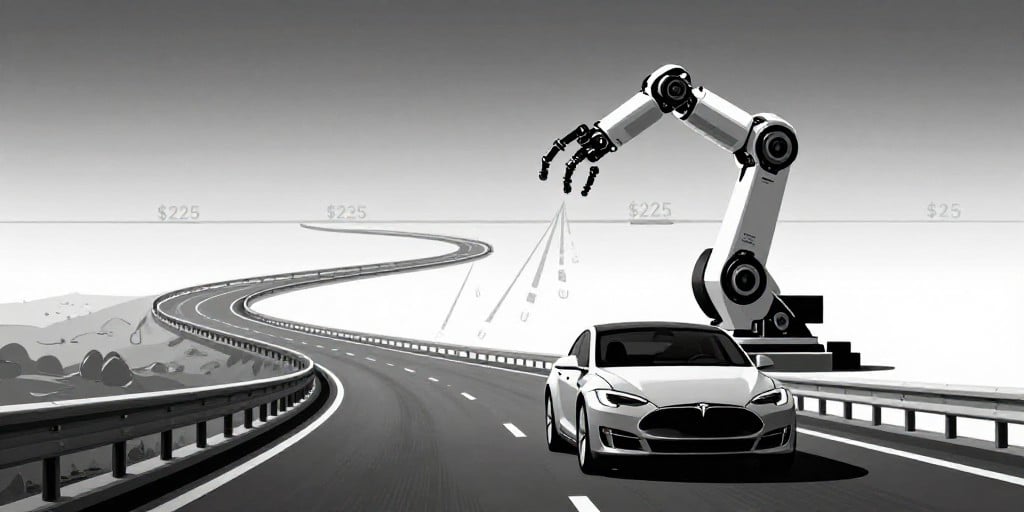
Tesla Inc. Faces a Profitability Crisis Amid Record Deliveries
Tesla Inc. reported a record quarter of vehicle deliveries, with approximately 480,000 units shipped and revenue that exceeded consensus estimates. However, the earnings release revealed a sharp deterioration in operating profitability: gross and operating margins slipped markedly, and free cash flow turned negative for the first time in two years. The discrepancy between headline growth and underlying cash dynamics has prompted a steep sell‑off in the stock, with the share price falling nearly 15 % in a single day and approaching a critical round‑number support level that has drawn widespread attention from market participants.
Margin Compression and Cash‑Flow Challenges
Operating Margins: The quarter’s operating margin contracted from 12.3 % in the prior year to 7.9 %, a decline that reflects both higher per‑vehicle manufacturing costs and an intensified pricing strategy. While the company’s gross margin improved marginally—from 27.5 % to 28.1 %—the reduction in volume‑based economies of scale and the shift toward more expensive high‑margin models has eroded profitability.
Free Cash Flow: Tesla’s free cash flow fell from $1.2 billion in the same period last year to a negative $0.8 billion. The swing is largely attributable to increased capital expenditures on research and development (R&D) for artificial‑intelligence (AI) projects and a new humanoid robot initiative, which have expanded the company’s cash outlays by an estimated $1.4 billion over the quarter.
Discounting, Financing, and Regulatory Credit Dynamics
Aggressive Discounting: Analysts note that Tesla’s marketing strategy has leaned heavily on aggressive discounting and financing offers to accelerate inventory turnover. The average vehicle price dropped by 4.5 % year‑over‑year, with finance‑enabled sales accounting for 31 % of the total volume—up from 24 % in the prior year. These tactics, while effective in stimulating demand, have compressed the margin profile and increased the company’s exposure to credit risk.
Regulatory Credit Income: Tesla had long relied on federal and state clean‑energy incentive credits, which were valued at $1.2 billion in the last quarter. The latest earnings report indicates a 48 % drop in regulatory credit income, largely due to tighter credit issuance limits and a shift in policy that favors corporate rather than consumer incentives. This reduction removed a significant cushion from operating profits and left the company more vulnerable to downstream cost pressures.
AI and Robot Development as a Strategic Bet
Tesla’s management framed the increased cash burn as a necessary investment in a multi‑year AI transition. The company’s AI platform, which powers the Autopilot and Full Self‑Driving (FSD) features, has seen a 32 % year‑over‑year increase in R&D expenditures, totaling $850 million. Moreover, the new humanoid robot initiative—targeted for a 2028 launch—has already drawn an additional $600 million in capital outlay, encompassing hardware development, software integration, and regulatory compliance costs.
While proponents argue that AI and robotics will unlock new revenue streams and improve vehicle efficiency, skeptics highlight the significant upfront costs and the uncertainty of regulatory approvals. A recent Gartner survey indicates that only 18 % of automotive firms in the U.S. have fully integrated AI into their supply chain, suggesting a steep learning curve and potential over‑investment risk.
Investor Sentiment and Market Implications
Analyst Perspectives: Post‑earnings, the consensus among equity analysts remains divided. Roughly 38 % maintain a cautious “buy” rating, citing long‑term growth prospects tied to the AI platform and anticipated margin recovery as the technology matures. Conversely, 29 % downgraded their targets, citing concerns about the sustainability of current capital outlays and the risk of a prolonged profitability gap. The remaining analysts are “neutral,” highlighting the need for clearer guidance on the timing of AI monetization.
Technical Analysis: The stock’s rapid decline has brought it near a key round‑number support level at $225. Technical analysts note that a breach below this level could trigger a broader sell‑off across the technology sector, as investors reassess the risk premium associated with AI‑heavy firms.
Competitive Dynamics and Regulatory Context
Tesla’s challenges are set against a backdrop of intensifying competition. Rivals such as General Motors and Ford have accelerated their EV roadmaps, leveraging traditional manufacturing synergies to keep margins higher. Meanwhile, new entrants like Rivian and Lucid Motors are capitalizing on niche segments, thereby fragmenting market share and diluting Tesla’s dominance.
From a regulatory standpoint, the U.S. Department of Energy has signaled potential policy adjustments that could affect the subsidy landscape. European regulators are also scrutinizing EV tax incentives, potentially curtailing the revenue streams that Tesla previously relied upon. The evolving regulatory environment adds another layer of complexity to the company’s financial trajectory.
Forward‑Looking Statements and Risk Assessment
In its earnings call, Tesla’s CFO emphasized the importance of “sustaining our AI investments” while maintaining “tight operational discipline.” However, the company’s guidance for the next quarter remains cautious, citing uncertainties in supply chain recovery, component shortages, and the global economic environment.
The primary risks identified by analysts include:
- Capital Allocation Risk: Continued AI and robot investments may extend the period before cash flow turns positive.
- Margin Sustainability: Persistent discounting and financing could erode vehicle margins further.
- Regulatory Uncertainty: Changes in incentive programs may diminish a critical revenue stream.
- Competitive Pressure: Rivals’ accelerated EV programs could erode Tesla’s market share and pricing power.
Conversely, potential opportunities arise from the maturation of Tesla’s AI platform, which could yield high‑margin software licensing and subscription models. Additionally, a successful humanoid robot launch could open a new consumer electronics market, diversifying revenue sources beyond automotive sales.
Conclusion
Tesla’s record vehicle deliveries and revenue growth are offset by significant margin compression, negative free cash flow, and an aggressive investment strategy that strains short‑term liquidity. While the company’s long‑term AI and robotics initiatives could position it as a future tech leader, the current financial trajectory raises legitimate concerns about sustainability and risk exposure. The market’s reaction to this earnings release serves as a bellwether for the broader technology sector, where firms with high capital intensity and regulatory exposure may face similar scrutiny as the AI spending boom continues to unfold.