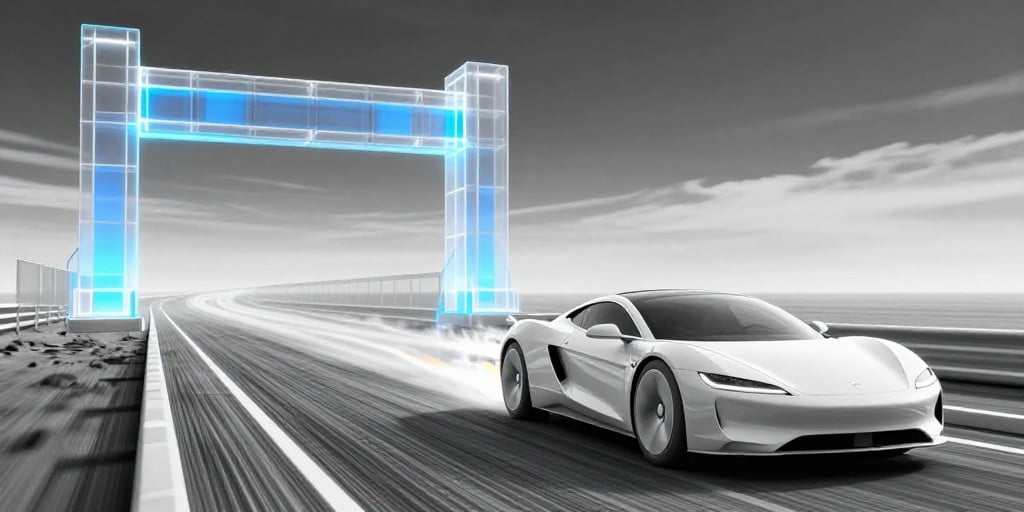
Tesla’s Second‑Generation Roadster: A High‑Profile Innovation or a Strategic Marketing Tool?
Tesla Inc. announced on 15 October the launch of its second‑generation Roadster, a vehicle that promises to push the boundaries of automotive propulsion by integrating high‑pressure air‑driven thrusters capable of lifting, flipping, and briefly gliding the car. While the demonstration captured public imagination, a deeper examination of the Roadster’s business fundamentals, regulatory environment, and competitive dynamics reveals a more nuanced picture that may shape investor perception and Tesla’s long‑term strategy.
Production Timing and Cost Implications
Tesla has stated that production will commence in 2028, a full decade after the original 2017 Roadster was first announced. The repeated schedule revisions are symptomatic of the company’s tendency to over‑promise and under‑deliver on ambitious timelines. From a financial standpoint, a delayed production window inflates the cost of capital and postpones the realization of potential revenue streams that could offset the ongoing research and development expenses. With no pricing disclosed, analysts estimate that the Performance variant will likely command a premium between USD 200,000 and USD 250,000, while the Thrust and Rocket models could exceed USD 400,000, assuming comparable features to existing high‑end sports cars.
Tesla’s deposit structure—USD 5,000 for the Performance model and a larger deposit for the Thrust variant—provides an early cash‑in stream but also signals a risk‑averse approach to customer financing. The invitation‑only Rocket model further limits market penetration, potentially creating a perception of exclusivity that may alienate price‑sensitive segments.
Regulatory and Safety Considerations
The Roadster’s flight‑capable technology places it in a gray area between automotive and aviation regulation. The Federal Aviation Administration (FAA) has not yet established a regulatory framework for consumer vehicles with propulsion systems that can lift off the ground. Tesla would need to secure certifications akin to those required for unmanned aerial vehicles (UAVs) or light aircraft, which could involve costly and time‑consuming testing cycles. The absence of clear regulatory guidelines raises questions about liability, insurance, and public safety, all of which could delay production and increase operating costs.
In China, where Tesla’s reservations are also accepted, the Civil Aviation Administration of China (CAAC) would impose similar certification hurdles. Regulatory uncertainty in both markets could deter potential buyers and create a significant compliance risk that is currently under‑quantified in Tesla’s financial disclosures.
Competitive Landscape and Market Positioning
The sports‑car segment is dominated by well‑established brands such as Porsche (Taycan), Ferrari (SF90), and Aston Martin (DBX). These manufacturers have decades of experience in high‑performance automotive engineering and a clear roadmap for integrating advanced propulsion. Tesla’s Roadster, while technologically impressive, faces stiff competition on several fronts:
| Feature | Tesla Roadster (Projected) | Competitor (Established) |
|---|---|---|
| Powertrain | Electric + air‑thrusters | Pure electric (Porsche Taycan) |
| Top Speed | >400 mph (claim) | 200–250 mph |
| Price | $200–$400k+ | $250–$600k |
| Brand Heritage | New entrant | 50+ years |
The high price point and the lack of a proven safety record could limit consumer adoption, especially given the competitive pricing of electric high‑performance vehicles that do not require regulatory re‑certification.
Cross‑Company Synergies and Strategic Implications
Tesla’s integration of SpaceX technologies—specifically the use of high‑pressure air‑driven thrusters—underscores Elon Musk’s vision of a unified technology ecosystem. From a strategic standpoint, the Roadster serves as a flagship demonstration of engineering prowess, reinforcing Tesla’s image as an industry disruptor. However, the practical application of flight features in a consumer vehicle remains speculative. If the thrusters do not translate into tangible performance or safety benefits, the investment may be perceived as a marketing ploy rather than a value‑add.
Moreover, Tesla’s recent focus on autonomous driving and robotics could benefit from the data and technological advancements generated by the Roadster’s advanced propulsion system. Nonetheless, the time lag between development, regulatory approval, and production limits the immediate impact on Tesla’s core revenue streams, which continue to be driven by its Model 3, Model Y, and the upcoming Cybertruck.
Investor Sentiment and Financial Outlook
Tesla’s stock has experienced modest declines following a series of product updates, reflecting investor concerns about execution risk and capital allocation. The Roadster announcement could potentially buoy sentiment by showcasing cutting‑edge innovation, but the lack of concrete pricing, delayed production, and regulatory uncertainty may temper enthusiasm. Analysts suggest that unless the Roadster introduces a new, scalable revenue stream or catalyzes breakthroughs in autonomous flight technology, its influence on Tesla’s market valuation will remain limited.
In conclusion, while Tesla’s second‑generation Roadster represents an audacious leap in automotive engineering, the convergence of delayed production timelines, regulatory ambiguity, and competitive pricing challenges the narrative that the vehicle will serve as a major revenue driver. Investors and market observers should remain skeptical of conventional wisdom that equates flagship launches with financial gains, and should monitor how Tesla navigates the regulatory labyrinth and capitalizes on potential cross‑company synergies in the coming years.