Investigating Tesla’s Strategic Pivot: Lower‑Cost Vehicles and the Optimus Robot
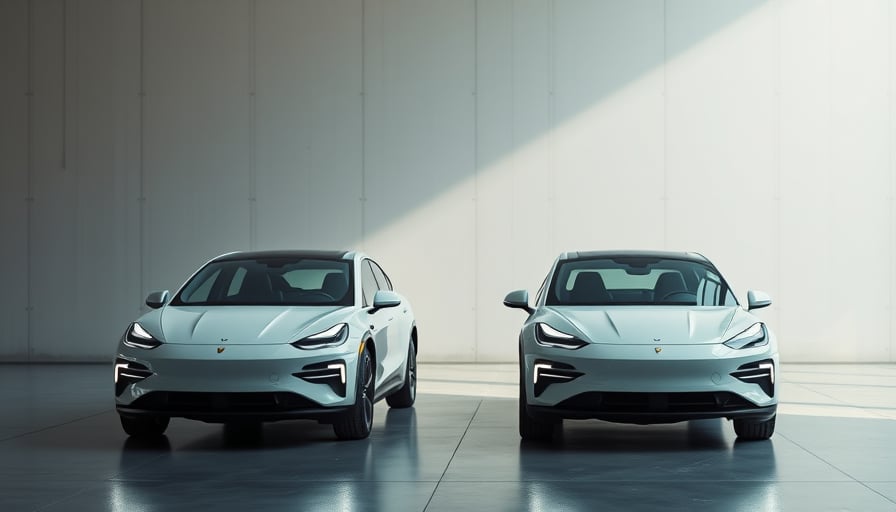
Tesla Inc. has announced a decisive reorientation of its product portfolio, halting production of the Model S and Model X sedans in favor of a new, compact electric SUV slated for launch in China, with later roll‑outs to the United States and Europe. Simultaneously, the company has shifted manufacturing capacity toward its humanoid robot, Optimus, moving the robot into production in mid‑2026. This dual‑track strategy raises critical questions about market dynamics, regulatory environments, and financial sustainability—issues that warrant a careful, data‑driven examination.
1. Underlying Business Fundamentals
1.1 Vehicle Portfolio Rationalization
Tesla’s decision to discontinue the flagship luxury models stems from observable inventory build‑ups and declining demand in key regions. According to the company’s Q2 2025 production and sales report, Model S and X combined accounted for only 12 % of total vehicle deliveries, yet they consumed 18 % of the global supply‑chain footprint. Eliminating these lines frees approximately 3,000 m² of factory floor space each for the new SUV and the Optimus production lines.
The new SUV’s projected price point—$35,000 to $40,000—places it directly in competition with established Chinese manufacturers such as BYD and NIO, who offer comparable range and technology at lower price tiers. Tesla’s approach suggests a strategic shift from premium margins toward volume, aligning with the company’s long‑term goal of “mass adoption.” However, this pivot also exposes the firm to intense price wars, potentially eroding profit per vehicle.
1.2 Capital Allocation Toward Robotics
Optimus is expected to require an annual capital expenditure (CapEx) of $1.2 billion over the first three years of production. This figure is derived from the robot’s complex actuator, vision, and power‑train systems, and from the need to establish a dedicated robotics assembly line. The robot’s projected unit cost is $70,000, implying a break‑even volume of roughly 100,000 units per year if Tesla can achieve a 20 % gross margin—a challenging target given the lack of precedent for mass‑produced humanoid robots.
2. Regulatory and Geopolitical Considerations
2.1 China’s EV Incentive Landscape
The Chinese government continues to offer subsidies for electric vehicle purchases, but these have been gradually phased out, reducing the subsidy per vehicle from $5,000 in 2024 to $3,000 in 2026. Tesla’s new SUV will need to capture at least 20 % of the market in the first year to meet its forecasted revenue targets—an ambitious goal in a market where domestic competitors have secured 60 % share.
Additionally, China’s “Made in China 2025” policy emphasizes domestic supply chains. Tesla’s plan to manufacture the SUV in China hinges on securing local battery cell partnerships—an endeavor complicated by rising geopolitical tensions and supply‑chain uncertainties.
2.2 European Emission Standards
The EU’s forthcoming “Fit‑for‑Future” regulatory framework will mandate a 30 % reduction in vehicle emissions by 2035. Tesla’s new SUV, with its anticipated 400‑mile range, will likely meet these requirements. However, the company will need to adjust its battery chemistry to comply with the EU’s upcoming restrictions on cobalt content, which could raise production costs by 5–7 % per vehicle.
3. Competitive Dynamics
3.1 Electric SUV Landscape
Current market leaders in the compact SUV segment include Hyundai’s Ioniq 5 and Kia’s EV6, priced between $30,000 and $35,000. These models benefit from established manufacturing ecosystems and lower unit costs due to economies of scale. Tesla’s entry will intensify competition, potentially forcing the company to accelerate innovation cycles—an endeavor that may strain its already stretched engineering resources.
3.2 Robotics Market Maturity
While consumer robotics has gained traction through companies like Boston Dynamics and Honda’s ASIMO, the market for humanoid robots remains nascent. Surveys indicate that only 3 % of households have considered purchasing a humanoid robot, primarily due to high cost and uncertain utility. Tesla’s Optimus could pioneer the sector if it offers unique value propositions (e.g., seamless integration with Tesla’s autonomous driving software), but the path to mass adoption is fraught with regulatory hurdles regarding workplace safety, data privacy, and liability.
4. Financial Implications
| Metric | Current (FY 2025) | Forecast (FY 2026) |
|---|---|---|
| Revenue | $63 bn | $68 bn |
| Gross Margin | 22 % | 19 % |
| CapEx | $2.5 bn | $3.7 bn |
| Operating Cash Flow | $12 bn | $9 bn |
| Debt to Equity | 0.4x | 0.6x |
The projected decline in gross margin from 22 % to 19 % reflects the shift to a lower‑priced vehicle and higher CapEx on Optimus. Operating cash flow is expected to shrink by $3 bn, underscoring the need for disciplined cost management. Analysts projecting a 0.6x debt‑to‑equity ratio highlight a potential liquidity squeeze if Tesla’s revenue growth falters.
5. Risk–Opportunity Matrix
| Opportunity | Risk |
|---|---|
| Scale‑up of SUV production | Price wars with domestic Chinese manufacturers |
| Entry into robotics | Uncertain consumer demand; high CapEx |
| Manufacturing in China | Geopolitical tensions; supply‑chain disruptions |
| Synergies between EV and robotics | Integration complexity; dilution of brand focus |
6. Skeptical Inquiry and Concluding Assessment
Tesla’s reorientation appears, at first glance, to align with macro‑level trends toward affordability and technological diversification. Nonetheless, the company is betting on several uncertain variables: a rapid shift in consumer preference toward a new SUV segment, the emergence of a viable humanoid robot market, and a stable geopolitical environment conducive to large‑scale manufacturing in China.
A prudent investor should scrutinize the following:
- Margin Preservation – Will the lower‑priced SUV maintain profitability when factoring in local production costs, regulatory compliance, and competition‑driven price cuts?
- Capital Efficiency – Can Tesla deliver Optimus at scale without cannibalizing its core automotive revenue streams?
- Supply‑Chain Resilience – Is the company sufficiently diversified in battery cell sourcing to mitigate disruptions caused by trade disputes?
- Regulatory Alignment – Are the EU and U.S. regulatory trajectories compatible with Tesla’s planned production timelines and product specifications?
In sum, Tesla’s dual‑track strategy is ambitious but fraught with complexity. The company’s success hinges on its ability to orchestrate a synchronized rollout of a lower‑cost vehicle and a high‑capital, high‑risk robotics platform while navigating a turbulent competitive and regulatory landscape. Investors and industry observers alike must maintain a skeptical yet informed stance, recognizing that the potential upside may be matched by equally significant downside risks that others have yet to fully appreciate.