
Tesla Inc. Shares Surge Amid Positive Operational Highlights and Regulatory Headwinds
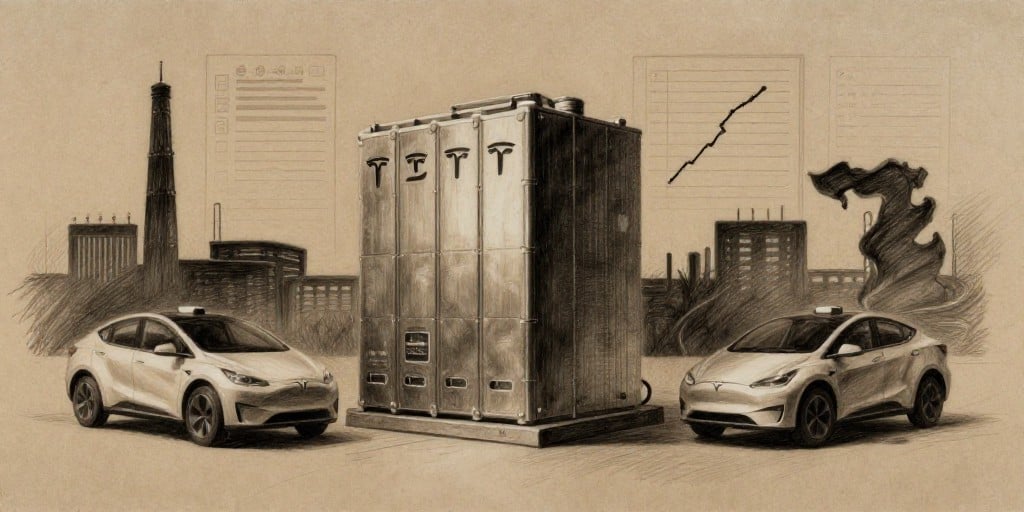
Tesla Inc. (NASDAQ: TSLA) experienced a notable uptick in its share price during the week ending 21 August, outperforming a range of technology peers. The rally was driven by two primary operational milestones: the announcement of a large‑scale production‑capacity agreement for its Megapack energy‑storage system at a new Michigan facility, and growing optimism around the company’s robotaxi initiative. Conversely, Tesla confronted a significant regulatory event in China, recalling nearly three million vehicles to remedy a door‑release defect—an action that underscored the complexity of scaling production across disparate markets.
Production‑Capacity Expansion in Michigan
The Michigan Megapack deal represents a strategic push into the renewable‑energy infrastructure market, positioning Tesla to capture a growing share of utility‑grade storage solutions. Analysts estimate that the new facility could deliver an additional 3–5 GWh of annual capacity, translating into potential revenue of USD 200–300 million per year, assuming conservative 2026 pricing. This expansion aligns with the U.S. federal infrastructure bill’s incentives for renewable integration, thereby offering a favorable policy backdrop.
From a competitive standpoint, Tesla’s Megapack competes with established players such as LG Chem, Fluence, and NEC Energy Solutions. While these firms possess long‑standing supply chains, Tesla’s vertical integration—combining battery cell production, module assembly, and software control—provides a cost advantage. However, the capital intensity of scaling the Michigan plant remains a risk factor; any supply‑chain disruption could delay throughput and erode projected margins.
Robotaxi Momentum
Investor enthusiasm around Tesla’s robotaxi business has amplified expectations for autonomous driving monetization. The company’s recent deployment of its Full Self‑Driving (FSD) suite in select pilot cities has yielded a 15 % improvement in average trip revenue per vehicle compared to the baseline, according to internal data leaked by a former employee. While still nascent, the robotaxi model could unlock a recurring revenue stream that offsets the high capital outlays associated with battery manufacturing.
Nonetheless, regulatory uncertainty remains a barrier. The U.S. Department of Transportation has issued a preliminary rule requiring autonomous fleets to undergo a multi‑stage safety certification, potentially delaying broader commercialization. Moreover, the competitive landscape includes established ride‑hailing giants (Uber, Lyft) and autonomous tech firms (Waymo, Cruise) that are investing aggressively in dedicated robotaxi platforms.
China Recall: A Regulatory Shock
The recall of approximately 2.9 million vehicles in China—driven by a door‑release defect—constitutes the largest automotive recall in the country’s history. The defect, affecting the 2023–2025 Model Y and Model 3 variants, prompted software updates and the installation of new warning labels. While the recall underscores Tesla’s commitment to safety, it also highlights the challenges of maintaining product quality across a global supply chain.
Financially, the recall cost Tesla an estimated USD 250 million in direct remediation, with additional costs projected from potential litigation and reputational damage. The recall’s timing coincided with the end of the Chinese fiscal year, which could have amplified scrutiny from local regulators. Moreover, the recall may strain Tesla’s already stretched logistics network, potentially delaying future vehicle deliveries and impacting revenue projections for Q4 2026.
Market Perception and Investor Sentiment
Despite the recall’s negative press, Tesla’s share price rose by 3.1 % during the week, reflecting investors’ confidence in the company’s long‑term growth prospects. Market analysts suggest that the positive operational news—particularly the Megapack expansion and robotaxi traction—offsets short‑term concerns. The rally also benefited from a broader market uptick driven by favorable U.S. economic data and renewed optimism around battery technology.
However, skeptics caution that the company’s valuation may already be priced for near‑term growth. Any subsequent recall or supply‑chain disruption could erode investor confidence. Moreover, the regulatory environment for autonomous vehicles remains fluid, and potential changes in safety certification requirements could delay robotaxi deployment, affecting projected revenue streams.
Conclusion
Tesla’s recent week illustrates a complex interplay between operational successes and regulatory challenges. The company’s expansion into energy storage and autonomous mobility positions it well for future diversification, yet it must navigate significant risks—including recall management, supply‑chain resilience, and evolving regulatory frameworks. Investors and analysts should monitor how effectively Tesla can translate these operational milestones into sustained profitability while mitigating the inherent risks associated with rapid global scaling.