
Tesla Inc. Faces Share‑Price Decline Amid Broader U.S. Technology Sell‑Off
On June 8, 2026, Tesla Inc. experienced a measurable drop in its share price, a decline that mirrored a broader retreat in United States technology equities. The fall came in the same trading session that saw other high‑profile technology firms—including Nvidia, Alphabet, and Microsoft—concurrently sell off, suggesting a sector‑wide shift in investor sentiment. Analysts attribute the downturn to a general cooling of enthusiasm for the technology space following recent volatility in AI‑driven semiconductor and robotics markets.
Market Context and Sector Dynamics
The technology sector has long been characterized by rapid cycles of innovation and heightened volatility. In recent months, the convergence of artificial intelligence (AI), semiconductor development, and robotics has attracted significant capital, but it has also amplified risk. The current sell‑off reflects a reassessment of valuation multiples and a rebalancing toward more established, cash‑generating companies. Investors are increasingly scrutinizing the scalability of nascent AI applications and the supply‑chain robustness required to support mass production in the robotics domain.
Tesla’s Forward‑Looking Announcements
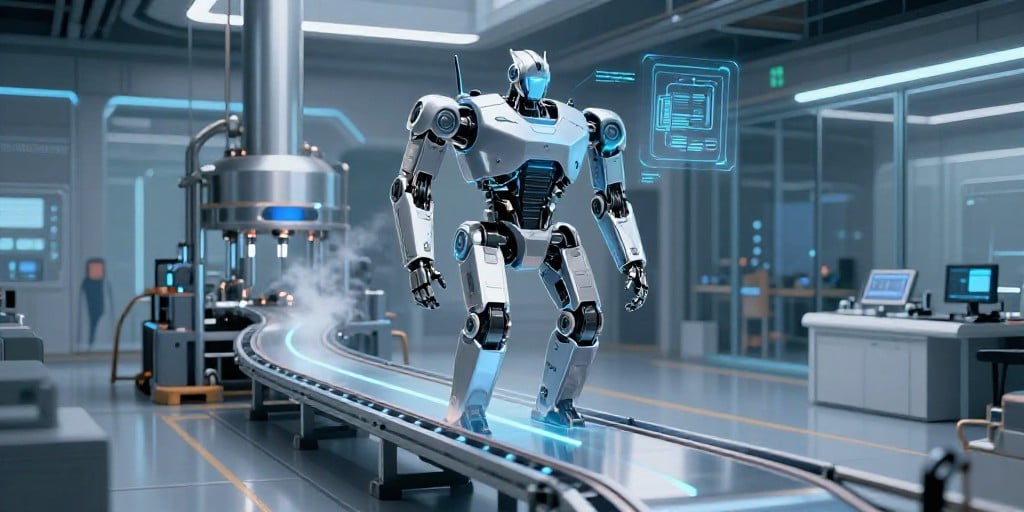
Despite the share‑price decline, Tesla’s forward‑looking initiatives—particularly the accelerated rollout of its robotic arm, Optimus—continue to generate investor interest. Tesla’s production plan for Optimus now targets the Fremont plant’s line to be operational by late July, with an ambitious first‑generation capacity of one million units annually. This timeline reflects a broader shift within the robotics industry from speculative narratives to concrete manufacturing schedules. Investors are paying closer attention to supply‑chain readiness and the pace at which mass production can be achieved, metrics that are now deemed critical for evaluating long‑term value creation.
Implications for the Robotics Industry
Optimus represents a tangible embodiment of physical AI and automation, aligning with trends that view automation as a catalyst for future industrial growth. By moving from concept to production, Tesla is positioning itself at the intersection of automotive manufacturing expertise and emerging robotics capabilities. This cross‑industry synergy could create a competitive advantage, provided that Tesla can navigate the complexities of component sourcing, regulatory compliance, and integration into existing manufacturing ecosystems.
Competitive Positioning and Economic Drivers
Tesla’s current challenges and opportunities sit within a broader competitive landscape that includes traditional automotive manufacturers, new entrants in the autonomous vehicle space, and specialized robotics firms. The company’s success hinges on its ability to leverage existing manufacturing infrastructure, maintain cost efficiencies, and deliver on the promise of high‑volume production. Economic factors—such as commodity price fluctuations, labor market conditions, and global supply‑chain disruptions—will continue to exert influence on the company’s operational outcomes and, by extension, its stock performance.
Conclusion
The June 8, 2026, share‑price decline for Tesla Inc. illustrates a sector‑wide reassessment of technology valuations, driven by recent market volatility in AI‑driven semiconductor and robotics arenas. While the stock has fallen in line with the broader tech sell‑off, Tesla’s ambitious Optimus production timeline sustains investor interest. As the robotics industry moves from speculative ventures to tangible manufacturing, Tesla’s ability to execute on its production plans and integrate physical AI into its existing manufacturing processes will be critical for determining its long‑term competitive positioning and resilience to shifting economic conditions.