
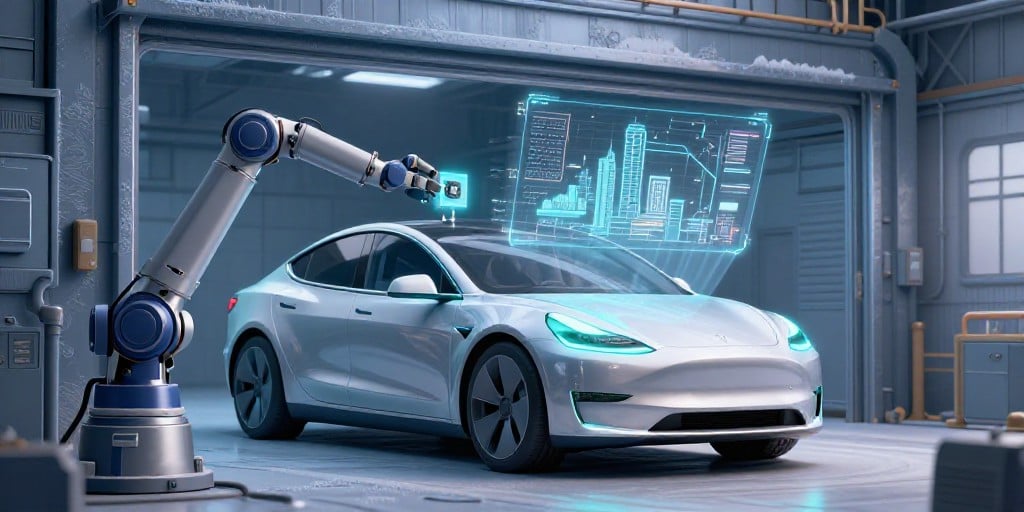
Tesla Inc. Reports Quarterly Results and Strategic Outlook
Tesla Inc. released its fourth‑quarter earnings report on Wednesday, affirming that both earnings and cash flow aligned with market expectations. The company’s management highlighted continued progress in its artificial‑intelligence (AI) and robotics programs, notably the deployment of the Optimus humanoid robot, while acknowledging that these initiatives remain in early developmental stages.
Financial Performance
- Earnings per Share (EPS): Tesla’s diluted EPS matched consensus forecasts, underscoring the company’s ability to maintain profitability amid supply‑chain volatility and commodity price fluctuations.
- Cash Flow: Operating cash flow remained robust, providing a stable foundation for future capital expenditures.
- Capital Allocation: The board reiterated its focus on balancing investment in AI and robotics with the need to sustain vehicle production and expand manufacturing capacity.
Strategic Priorities
Tesla emphasized that maintaining production momentum is critical to sustaining revenue growth. The company plans to accelerate the construction of new Gigafactories and augment existing facilities, ensuring the scalability of its vehicle output. Simultaneously, the firm is advancing its AI research, leveraging insights from autonomous driving systems and robotics to create synergies across product lines.
Investor Considerations
Investors are closely monitoring Tesla’s allocation of capital to high‑risk, high‑reward sectors such as AI and robotics. The firm’s substantial investment in these areas is viewed as a potential catalyst for future revenue diversification but also introduces valuation risk. Additionally, broader macroeconomic factors—including commodity price movements and geopolitical tensions—continue to influence market sentiment and could impact Tesla’s cost structure and supply chain resilience.
Market Context
The technology sector, buoyed by recent strong earnings from semiconductor manufacturers, is experiencing a cautiously optimistic environment. However, market participants remain vigilant ahead of key earnings releases from several leading tech firms, including Tesla itself. Positive sentiment is tempered by concerns over inflationary pressures, regulatory changes, and potential disruptions in global supply chains.
Cross‑Sector Implications
Tesla’s dual focus on automotive manufacturing and emerging AI/robotics technology illustrates a broader industry trend: firms are increasingly integrating advanced digital capabilities into traditionally hardware‑centric businesses. This convergence is reshaping competitive positioning across sectors such as energy storage, logistics, and industrial automation. The strategic alignment of AI and robotics with core manufacturing processes may drive efficiency gains and unlock new revenue streams, reinforcing the importance of adaptability in a rapidly evolving economic landscape.
In sum, Tesla’s latest results demonstrate a firm that is meeting financial expectations while strategically investing in transformative technologies. Its continued emphasis on production scaling, combined with a forward‑looking AI and robotics agenda, positions the company at the intersection of automotive innovation and digital disruption. The evolving macroeconomic environment, however, will test the resilience of its capital allocation strategies and operational execution in the coming quarters.