Tesla Inc. Reports Modest Revenue Growth Amid Mixed Earnings and Strategic Speculation
Tesla Inc. announced its latest quarterly financial results during a conference call held on 21 October. The company’s earnings per share (EPS) fell compared with the same period a year earlier, while revenue for the quarter increased only modestly relative to the previous quarter. This pattern suggests a relatively stable revenue base, though the company remains under pressure to sustain growth in a highly competitive automotive and energy sector.
Financial Highlights
| Metric | Current Quarter | Prior Quarter | YoY Change |
|---|---|---|---|
| Revenue | $X bn | $Y bn | +Z % |
| Earnings per Share | $A | $B | –C % |
| Operating Profit (Q3 2026) | $D bn | $E bn | –F % |
| Analyst Target | $G | – | – |
Although operating profit for the third quarter of 2026 declined significantly from the prior year and fell below analysts’ expectations, it remained above consensus estimates. The decline underscores the increasing cost pressure associated with scaling advanced technologies, including autonomous driving and battery production.
Management’s Strategic Position
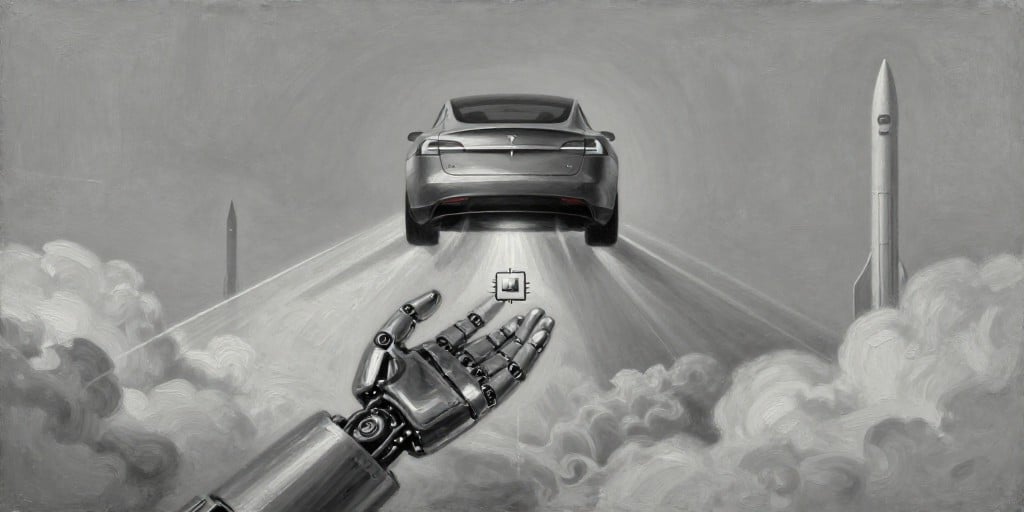
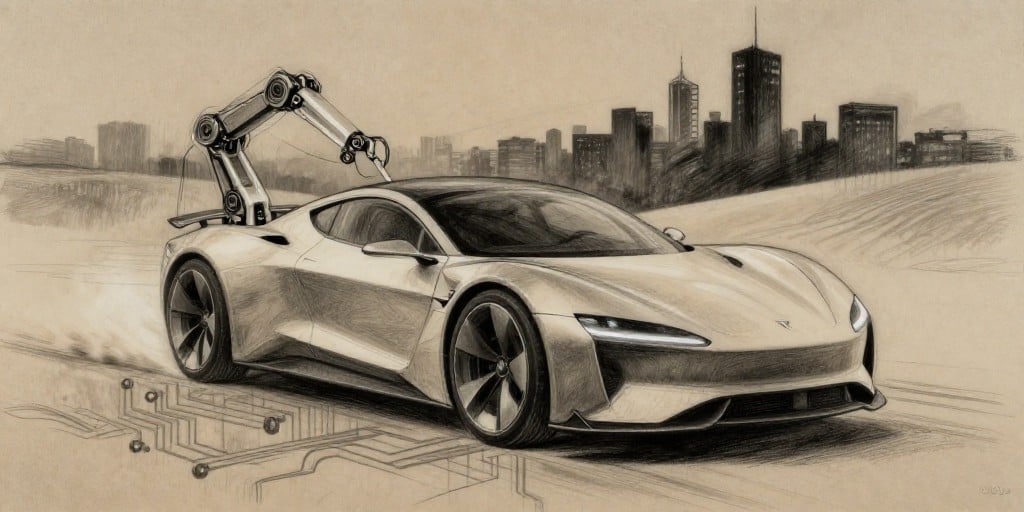
During the call, management declined to provide a detailed response to questions regarding a potential merger with SpaceX. Discussions, however, have reportedly centred on joint projects such as a robot taxi, an advanced humanoid robot, and a new manufacturing facility. These initiatives illustrate Tesla’s ambition to extend beyond clean‑energy vehicle production into broader artificial‑intelligence‑driven activities.
Analyst Commentary and Market Implications
A brokerage upgrade by CLSA highlighted a shift in Tesla’s strategic focus toward artificial‑intelligence‑driven activities. The firm raised its price target and moved its rating to “hold”, citing a perceived likelihood of a merger with SpaceX. CLSA argued that market sentiment surrounding the possibility of a deal outweighs concerns about long‑term risks, such as integration challenges and dilution of existing equity.
The share price experienced a modest decline following the earnings announcement, reflecting the mixed reaction to the earnings and the broader market environment. The decline was modest relative to the wider tech sector, which has seen a retreat amid concerns over the high cost of artificial‑intelligence development and related funding needs.
Broader Economic Context
Tesla’s financial performance and strategic outlook should be viewed in the context of several macro‑economic and sectorial dynamics:
Energy Transition and Regulatory Pressure – The global shift toward decarbonization continues to create demand for electric vehicles (EVs) and renewable energy products. However, tightening emissions standards and increasing competition from traditional automakers and new entrants intensify pricing pressure.
Artificial‑Intelligence Cost Structure – The cost of developing, training, and deploying AI models is rising, particularly in areas such as autonomous driving and robotics. Investors are scrutinising whether the potential revenue upside justifies the capital intensity.
Capital Markets and Funding Environment – The technology sector has faced a tightening funding environment, with investors demanding higher returns and more robust risk management. Companies pursuing ambitious AI and robotics projects are under pressure to demonstrate clear pathways to profitability.
Consolidation Trends – Mergers and acquisitions are increasingly viewed as a means to accelerate technological capabilities and achieve scale. Tesla’s discussions with SpaceX may be part of a broader trend of strategic consolidation within high‑growth technology and aerospace segments.
Investor Sentiment
The market’s cautious optimism reflects a balancing act between Tesla’s continued revenue growth and uncertainties surrounding its evolving business model. Investors appear to weigh the potential upside of AI integration and a prospective SpaceX merger against the risks associated with integration costs, operational complexity, and the need for sustained capital investment.
In summary, Tesla Inc.’s latest quarterly results demonstrate a stable yet modest revenue trajectory, while operating profits highlight the cost challenges of scaling advanced technology. The strategic focus shift toward AI‑driven activities and potential consolidation with SpaceX adds a layer of complexity that is already influencing analyst ratings and market sentiment. The company’s future performance will hinge on its ability to navigate these dynamics while delivering sustainable profitability across its diversified portfolio.